Soccer Equipment Checklist for Beginners
Starting soccer should be simple. This beginner checklist explains the gear a new player actually needs for practices and games, which items can wait, and how parents can avoid buying the wrong shoes, ball size, or unnecessary extras.
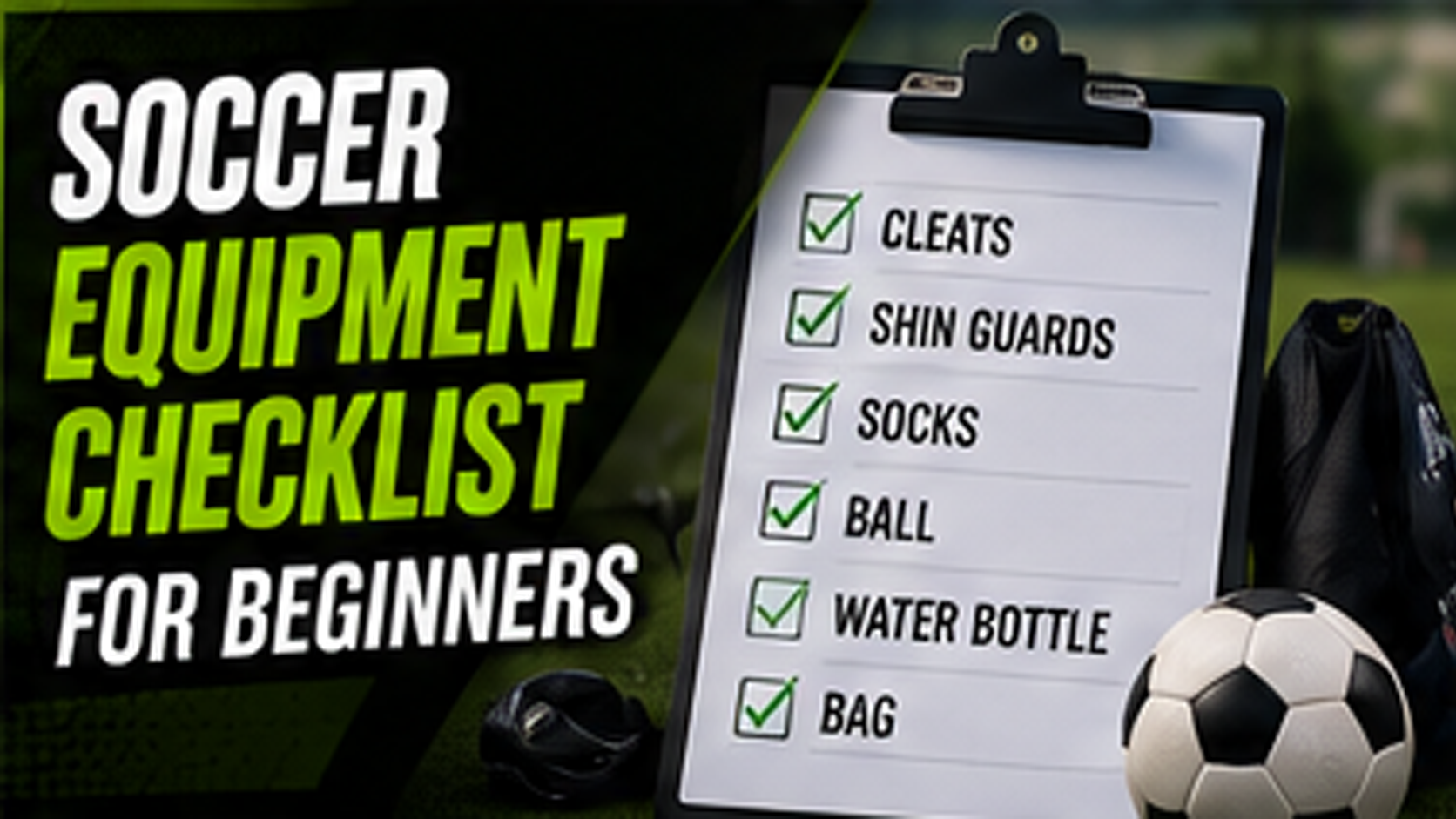
Beginner Soccer Equipment Checklist
What Is Required and What Can Wait?
| Item | Priority | Why It Matters |
|---|---|---|
| Soccer shoes | Required | Provide traction and support for the playing surface. |
| Shin guards | Required | Protect the lower legs and are required by most leagues. |
| Soccer socks | Required | Cover the guards and reduce rubbing inside the shoes. |
| Water bottle | Required | Supports hydration during practices and games. |
| Soccer ball | Strongly recommended | Allows extra practice at home and may be requested by the coach. |
| Soccer bag | Optional | Keeps equipment organized and easier to carry. |
| Cones or small goal | Optional | Useful for home practice but unnecessary on day one. |
| Goalkeeper gloves | Position-specific | Needed only for players who regularly train in goal. |
Soccer Cleats, Turf Shoes, or Indoor Shoes
The correct shoe depends on the field, not the player's position or favorite brand. Natural grass usually calls for firm ground or multi-ground cleats. Artificial grass is better matched with AG or MG outsoles, short hard turf requires turf shoes, and indoor courts require flat indoor soccer shoes.
Simple Surface Rule
- Natural grass: FG or MG
- Artificial grass: AG or MG
- Short turf: TF turf shoes
- Indoor court: IN shoes
Avoid These Mistakes
- Buying excessive growing room
- Using long studs on hard turf
- Choosing a narrow model for wide feet
- Buying only by color or logo
Start with our best soccer cleats for beginners guide, then compare firm ground cleats, artificial grass cleats, and turf shoes.
Compare Soccer CleatsShin Guards and Soccer Socks
Most youth leagues require shin guards during games. For a beginner, simple slip-in guards are usually enough. Younger children may prefer a guard with ankle coverage, while older players often choose lighter low-profile designs.
- The guard should cover the vulnerable front of the shin without restricting movement.
- Long soccer socks should fully cover the guard.
- The guard should stay in place while running and kicking.
- Replace cracked guards or guards the player has clearly outgrown.
Choosing the Correct Soccer Ball Size
Using the right ball size helps beginners learn control with equipment that matches their age and strength. League rules can vary, so parents should confirm the required size with the coach.
| Typical Age Group | Common Ball Size | Best Use |
|---|---|---|
| Ages 8 and under | Size 3 | Young beginners and small-sided play |
| Ages 8 to 12 | Size 4 | Youth training, passing, and ball control |
| Ages 13 and older | Size 5 | Older youth, high school, and adult soccer |
See our full guide to soccer ball sizes for kids.
Compare Soccer BallsWhat Should Kids Bring to Soccer Practice?
For a more detailed list, see what a child needs for soccer practice.
Common Beginner Equipment Buying Mistakes
Start with league requirements and add optional equipment after the player shows continued interest.
Match the outsole to the surface rather than treating every soccer shoe as interchangeable.
Oversized cleats can cause sliding, blisters, instability, and poor touch.
Confirm uniform colors, ball size, and required equipment before ordering.
What Should a Beginner Buy First?
Begin with the essentials: shoes for the correct surface, shin guards, long socks, a properly sized ball, comfortable athletic clothing, and a water bottle. A soccer bag is the most useful first upgrade because it keeps everything organized, while cones, goals, specialty clothing, and goalkeeper equipment can wait.
Best first upgrade: soccer bag
Best money-saving rule: buy only what the league requires, then add extras as the player becomes more involved
Helpful Beginner Soccer Guides
Soccer Equipment Checklist FAQ
What equipment does a beginner soccer player need?
A beginner usually needs soccer shoes matched to the field, shin guards, long soccer socks, comfortable athletic clothing, a properly sized ball, and a water bottle.
Do beginners need expensive soccer cleats?
No. Beginners need comfortable shoes that fit securely and match the playing surface. An affordable entry-level model is usually enough for a first season.
Are shin guards required for youth soccer?
Most youth leagues require shin guards during games, and many coaches also expect players to wear them at practice.
What size soccer ball should a beginner use?
Most children age eight and under use size 3, players around ages eight to twelve commonly use size 4, and players age thirteen and older generally use size 5.
Should a beginner buy firm ground cleats or turf shoes?
Choose based on the field. Firm ground or multi-ground cleats suit natural grass, while turf shoes are better for short, hard synthetic turf.
How should beginner soccer cleats fit?
They should feel snug through the heel and midfoot without painful pressure. Leave only a small amount of space in front of the toes rather than buying excessive growing room.
What should a child bring to soccer practice?
Bring soccer shoes, shin guards, soccer socks, a water bottle, and a ball when the coach requests one. An extra shirt, towel, or light snack can also be useful.
Does a beginner need a soccer bag?
A soccer bag is optional, but it makes it easier to keep shoes, shin guards, socks, water, and other small items together.
Do beginners need goalkeeper gloves?
Only players who regularly practice or play as goalkeeper need their own gloves. Field players do not need them.
How many pairs of soccer socks does a beginner need?
Two or three pairs are usually enough for a first season, especially when the player has more than one practice or game each week.
Are training cones and a backyard goal necessary?
No. They can make home practice more fun, but a ball and a small open space are enough for many beginner drills.
What is the biggest mistake parents make when buying beginner soccer gear?
The most common mistake is buying too much or choosing shoes for the wrong surface. Start with the required essentials and add optional gear later.