Soccer Gear Checklist by Age
The soccer gear a child needs changes with age, field surface, playing level, and training frequency. Young beginners mainly need comfort and safety, while older youth players need better fit, the correct ball size, and equipment that matches their position and playing environment.
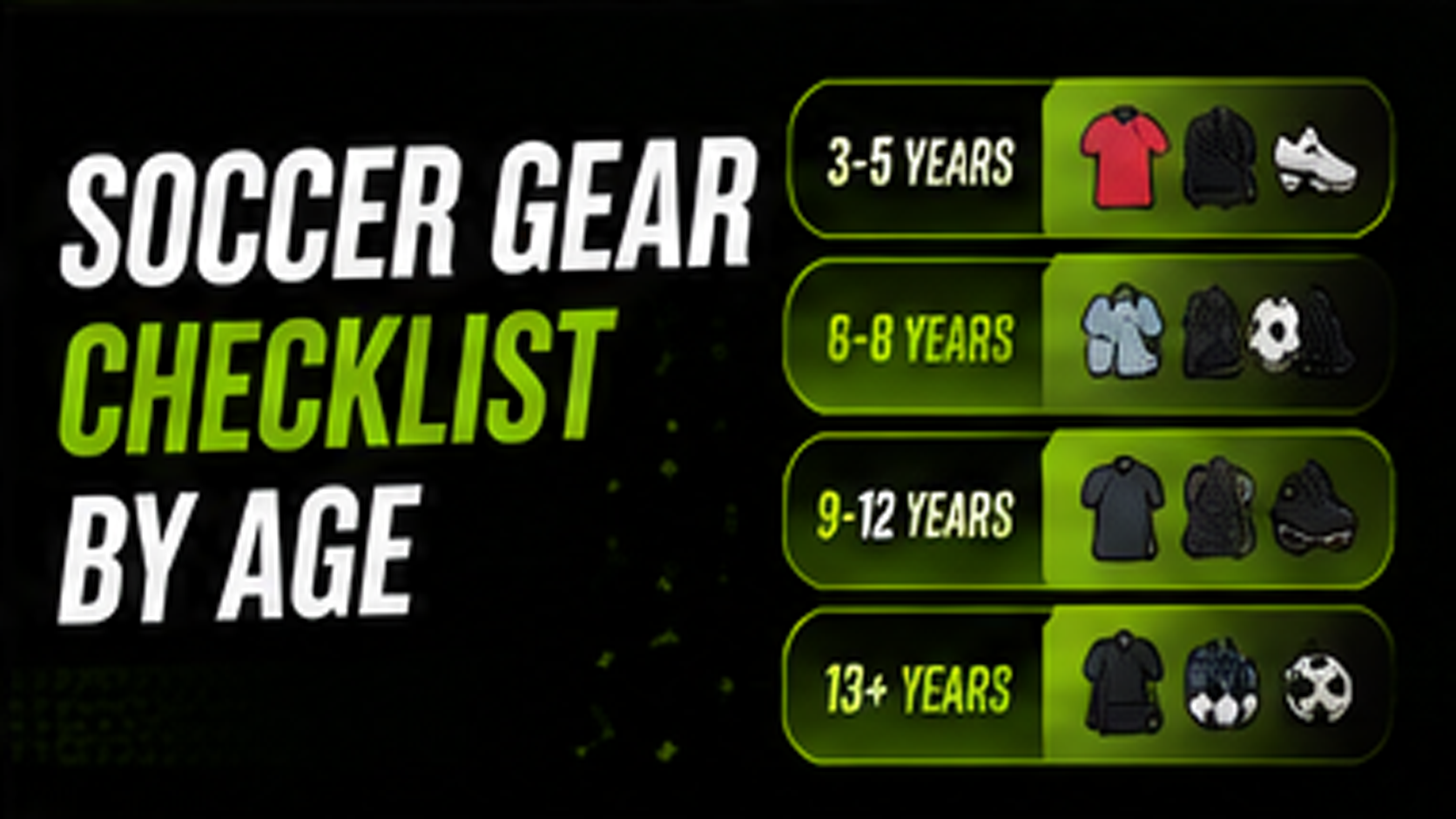
Ages 4–6: comfortable shoes, shin guards, soccer socks, water bottle, and size 3 ball.
Ages 7–9: cleats or turf shoes, shin guards, socks, water, and size 3 or 4 ball.
Ages 10–12: surface-specific cleats, size 4 ball, shin guards, and a practice bag.
Ages 13+: size 5 ball, better-fitting cleats, training layers, and position-specific gear.
What Changes as Kids Get Older?
Soccer Gear Checklist by Age — Quick Chart
| Age Group | Essential Gear | Common Ball Size | Main Buying Priority |
|---|---|---|---|
| Ages 4–6 | Comfortable shoes, shin guards, socks, water bottle | Size 3 | Comfort and simplicity |
| Ages 7–9 | Cleats or turf shoes, shin guards, socks, ball, water | Size 3 or 4 | Correct surface and secure fit |
| Ages 10–12 | Surface-specific cleats, shin guards, ball, practice bag | Size 4 | Fit, durability, and organization |
| Ages 13+ | Better cleats, size 5 ball, training clothes, position extras | Size 5 | Performance, durability, and role |
Soccer Gear Checklist for Ages 4–6
Young beginner players need simple, comfortable gear. The goal is not to buy expensive equipment. The priority is helping the child move freely, stay protected, and enjoy practice.
- Comfortable soccer shoes: Some programs allow athletic shoes, while others require cleats for grass.
- Youth shin guards: Choose a small, comfortable size that does not feel bulky.
- Long soccer socks: These cover the shin guards and help keep them in place.
- Size 3 soccer ball: Easier for young children to kick and control.
- Water bottle: Essential for outdoor sessions.
- Simple athletic clothes: Lightweight shorts and shirts are usually enough.
Start with our Soccer Equipment Checklist for Beginners before adding extra training equipment.
What Parents Should Avoid at Ages 4–6
Soccer Gear Checklist for Ages 7–9
Around ages 7 to 9, many children begin organized practices and games. Cleats, shin guards, socks, water, and the correct ball size become more important.
- Soccer cleats or turf shoes: Choose based on grass, artificial grass, turf, or indoor play.
- Shin guards: Required by most youth leagues.
- Soccer socks: Needed to cover the shin guards.
- Size 3 or size 4 ball: Confirm local league rules.
- Water bottle: Bring it to every practice and game.
- Small soccer bag: Helpful once the child carries several items.
Helpful guides include Best Soccer Cleats for Beginners, What Does a Child Need for Soccer Practice?, and What Size Soccer Ball for Kids?.
Parent Priorities for Ages 7–9
Match the outsole to grass, artificial grass, turf, or indoor courts.
The heel should stay in place and the toes should not be painfully compressed.
Use comfortable shin guards that remain covered by long socks.
Confirm ball size, footwear, uniform, and jewelry requirements.
Soccer Gear Checklist for Ages 10–12
Ages 10 to 12 are often when players begin training more frequently and becoming more serious. Gear still does not need to be Elite level, but fit, surface type, and durability matter more.
| Gear | Why It Matters | Buying Tip |
|---|---|---|
| Correct-surface cleats | Improves traction and comfort on the primary field type | Choose FG, AG, turf, or indoor shoes carefully |
| Shin guards | Required for games and contact drills | Use youth sizing that protects without restricting movement |
| Size 4 ball | Common for many leagues in this age range | Confirm the league requirement before buying |
| Soccer bag | Keeps equipment organized for multiple weekly sessions | Choose separate wet and shoe compartments if possible |
| Training cones | Useful for dribbling and footwork practice at home | A small set is enough for most families |
Compare Firm-Ground Soccer Cleats, Artificial-Grass Soccer Cleats, Turf Soccer Shoes, and our Soccer Cleat Size Chart.
Soccer Gear Checklist for Ages 13+
Older youth players need equipment that fits better, lasts longer, and matches their position, playing style, and field surface. Players generally use a size 5 ball and may begin choosing cleats based on speed, comfort, control, or support.
- Size 5 soccer ball: Standard size for older youth players and adults.
- Better-fitting cleats: Fit becomes more important as speed and training intensity increase.
- Surface-specific shoes: FG, AG, turf, and indoor shoes should be chosen carefully.
- Low-profile shin guards: Many older players prefer lighter protection.
- Training clothes: Breathable shirts, shorts, and weather layers.
- Position extras: Goalkeeper gloves, grip socks, or specialized training tools.
- Recovery basics: Extra water, a towel, and dry clothes may become useful for tournaments.
Older players can compare Soccer Cleats for Speed, Soccer Cleats for Comfort, and Soccer Cleats for Ball Control.
Shop Soccer Gear for KidsPosition-Specific Gear for Older Players
What Soccer Gear Changes as Kids Get Older?
The biggest changes are ball size, cleat fit, field surface, training frequency, and position-specific needs. Younger children mainly need comfort and safety. Middle youth players need correct sizing and organization. Teenagers need durable gear that matches their role and training volume.
Younger kids = comfort and simple gear
Middle youth players = correct surface and good fit
Older youth players = durability, performance, and position needs
Common Parent Buying Mistakes
- Buying adult-size gear too early.
- Choosing cleats with excessive growing room.
- Ignoring the primary field surface.
- Buying too many accessories for a beginner.
- Using the wrong ball size.
- Choosing by color instead of fit.
- Failing to replace worn or outgrown shin guards.
- Buying premium gear before confirming the child enjoys the sport.
Game-Day Soccer Gear Checklist
| Essential | Helpful Extra | Weather or Tournament Item |
|---|---|---|
| Cleats or correct shoes | Soccer bag | Rain jacket |
| Shin guards | Extra socks | Cold-weather layer |
| Soccer socks | Towel | Sunscreen |
| Uniform | Backup shirt | Hat between games |
| Water bottle | Healthy snack | Extra water |
Final Verdict: Soccer Gear Checklist by Age
The best soccer gear checklist starts simple and grows with the player. Ages 4 to 6 need comfortable shoes, shin guards, socks, water, and a size 3 ball. Ages 7 to 12 need the correct surface shoes, protection, water, and the league-approved ball size. Players age 13 and older generally use a size 5 ball and may need more durable, position-specific equipment.
The best rule is to buy for the player’s current age, field surface, comfort, and fit—not for appearance or future growth.
Shop Kids Soccer GearRelated Soccer Guides
Soccer Gear Checklist by Age FAQ
What soccer gear does a 4-year-old need?
A 4-year-old usually needs comfortable athletic shoes or beginner soccer shoes, shin guards, long soccer socks, a water bottle, simple athletic clothing, and a size 3 soccer ball.
What soccer gear does a 5-year-old need?
A 5-year-old usually needs comfortable soccer shoes, shin guards, soccer socks, a water bottle, and a size 3 soccer ball.
What soccer gear does a 6-year-old need?
A 6-year-old generally needs youth soccer shoes, shin guards, long socks, a water bottle, lightweight practice clothes, and a size 3 ball.
What soccer gear does a 7-year-old need?
A 7-year-old usually needs soccer cleats or turf shoes, shin guards, soccer socks, water, and a size 3 or size 4 ball depending on league rules.
What soccer gear does an 8-year-old need?
An 8-year-old usually needs soccer cleats or turf shoes, shin guards, long soccer socks, water, and a size 3 or size 4 soccer ball depending on league rules.
What soccer gear does a 9-year-old need?
A 9-year-old typically needs correct-surface shoes, shin guards, soccer socks, a water bottle, and the ball size required by the league.
What soccer gear does a 10-year-old need?
A 10-year-old usually needs correct-surface soccer cleats, shin guards, soccer socks, water, a size 4 ball, and a soccer bag for practices and games.
What soccer gear does an 11-year-old need?
An 11-year-old usually needs well-fitting cleats for the correct surface, shin guards, socks, water, a size 4 ball, and a practice bag.
What soccer gear does a 12-year-old need?
A 12-year-old generally needs size-appropriate cleats, shin guards, soccer socks, a size 4 ball, a water bottle, and a gear bag.
What soccer gear does a teenager need?
A teenager usually needs a size 5 soccer ball, well-fitting cleats for the correct surface, shin guards, soccer socks, training clothes, and position-specific gear if needed.
Do kids need different soccer gear as they get older?
Yes. Ball size, cleat fit, training volume, and position-specific equipment can change as children grow and play more often.
What size soccer ball should a 4- to 6-year-old use?
A size 3 ball is the common choice for young beginner players because it is lighter and easier to control.
What size soccer ball should a 7- to 9-year-old use?
Many leagues use size 3 or size 4 balls in this range, so parents should confirm the local rules.
What size soccer ball should a 10- to 12-year-old use?
A size 4 soccer ball is common for this age group.
What size soccer ball should a teenager use?
Players age 13 and older generally use a size 5 soccer ball.
Do young kids need soccer cleats?
Some beginner programs allow athletic shoes, but cleats may be needed for grass fields. Parents should check league rules and field conditions.
Should kids wear turf shoes or cleats?
Use turf shoes on short artificial turf, FG cleats on natural grass, and AG cleats on modern artificial grass when available.
Are shin guards required for youth soccer?
Most organized youth leagues require shin guards for practices, scrimmages, and games.
How should youth shin guards fit?
They should cover the vulnerable front portion of the shin without interfering with the knee or ankle.
Do kids need soccer socks?
Yes. Long soccer socks help keep shin guards covered and secure.
Should parents buy soccer cleats a size bigger?
Usually no. Excessively large cleats can cause heel slip, blisters, and poor control. Choose a snug but comfortable fit.
How often should kids replace soccer cleats?
Replace cleats when they are outgrown, worn down, separating, or causing discomfort.
Do beginners need expensive soccer gear?
No. Beginners usually need safe, comfortable basics rather than premium equipment.
When should a child get a soccer bag?
A bag becomes useful once the player carries cleats, shin guards, socks, water, a ball, and extra clothes to practices or games.
Do kids need their own soccer ball?
A personal ball makes home practice easier and helps players become comfortable with the size used by their league.
What should kids bring to soccer practice?
Most players should bring shoes, shin guards, soccer socks, water, weather-appropriate clothing, and any ball or equipment requested by the coach.
What position-specific gear might teenagers need?
Goalkeepers may need gloves and padded clothing, while field players may add grip socks, compression layers, or specialized training equipment.
What cold-weather soccer gear do kids need?
Breathable base layers, gloves, a warm training top, and weather-appropriate pants may be useful if league rules allow them.
What is the biggest mistake parents make when buying youth soccer gear?
Buying the wrong size or wrong surface type is one of the most common mistakes. Fit, comfort, and field compatibility matter more than color or brand.
What is the best overall soccer gear checklist by age?
Start with comfortable shoes, shin guards, socks, water, and the correct ball size. Add a bag, training tools, and position-specific gear only as the player gets older and plays more often.
As an Amazon Associate, we may earn from qualifying purchases at no extra cost to you.