Best Soccer Cleats for High Arches
Players with high arches often need more than a lightweight upper and an aggressive stud plate. They need enough room over the instep, a secure heel, a soleplate that does not feel harsh under the foot, and an upper that can wrap the midfoot without creating painful pressure. This guide explains which soccer cleat families are usually the safest starting points, how to compare comfort and support, when insoles may help, and how parents can choose the right pair for kids and youth players.
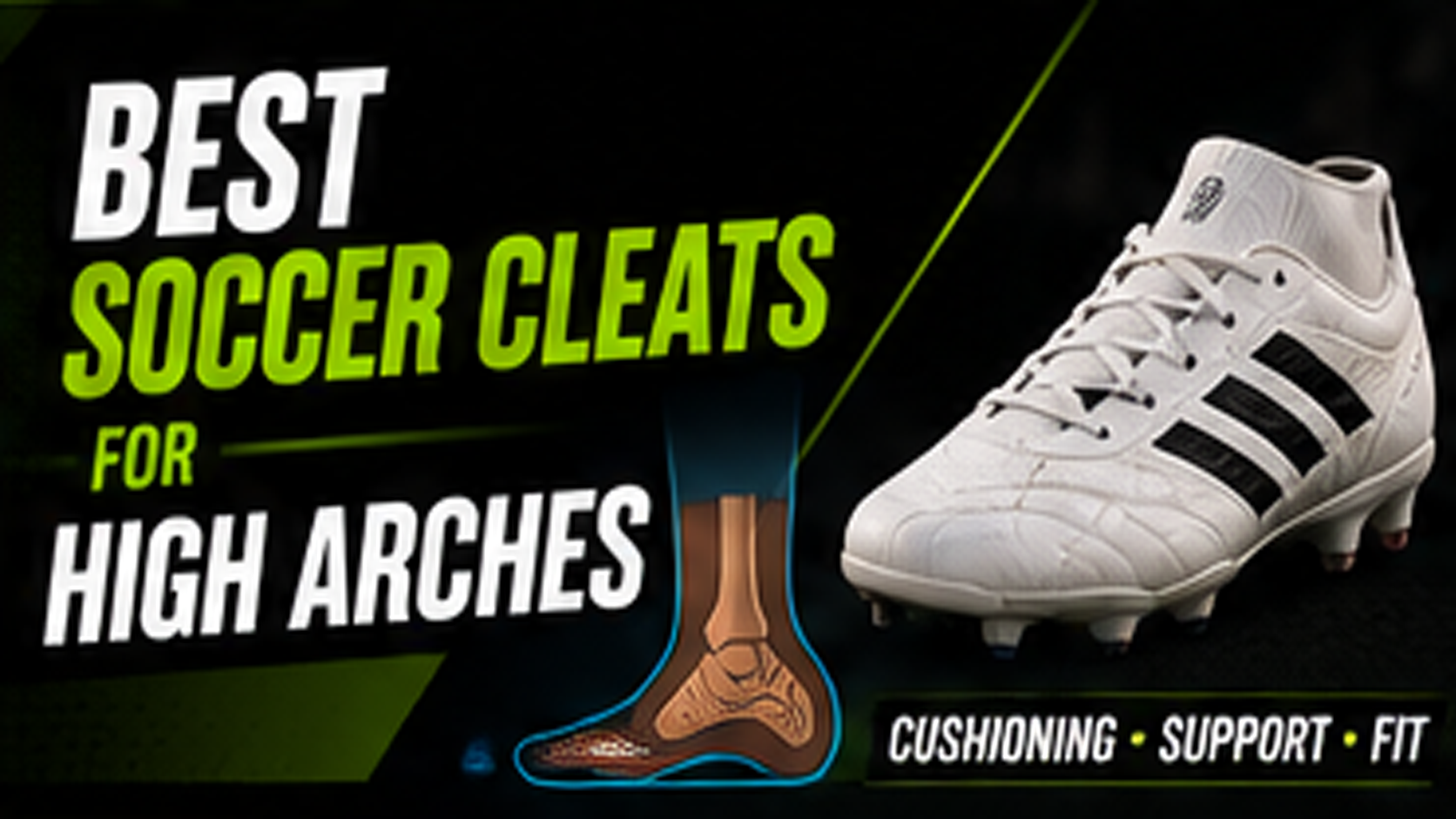
For most players with high arches, the best starting points are comfort-focused cleats with a softer upper, moderate midfoot volume, a secure heel, and a less punishing soleplate. Nike Tiempo and Nike Legend models are strong all-around options, Adidas Copa models are excellent for a softer traditional feel, Puma Future can work well for players who need adaptive midfoot volume, and budget models such as Adidas Goletto or Nike Legend Club can make sense for beginners when the fit is right.
Best Soccer Cleats for High Arches: Quick Comparison
| Cleat Family | Best For | Why It Can Work for High Arches | Main Caution |
|---|---|---|---|
| Nike Tiempo / Nike Legend | Best overall comfort | Soft feel, forgiving forefoot, stable heel, and a less aggressive fit than many speed boots. | Some lower tiers feel firmer than premium versions. |
| Adidas Copa | Best classic comfort option | Usually softer and more accommodating across the upper, with a traditional fit profile. | Fit varies by generation and tier. |
| Puma Future | Best adaptive midfoot option | Often provides more flexible lacing and volume adjustment over the instep. | Some versions may feel snug around the collar. |
| Adidas Goletto | Best beginner budget choice | Simple, practical, and affordable for kids who need a straightforward fit. | Synthetic upper is firmer and less adaptable. |
| Nike Legend Club | Best budget comfort alternative | Traditional shape and comfort-oriented design at an entry-level price. | Less cushioning and refinement than higher tiers. |
| Puma Attacanto | Best low-cost alternative | Affordable for growing players and easy to compare against other budget models. | May not provide enough instep volume for every foot. |
What High Arches Change About Soccer Cleat Fit
A high arch does not automatically mean a wide foot. Many players with high arches have a relatively narrow heel and a higher instep, which means the main fit problem appears across the top of the foot rather than at the sides. Others have a high arch and a wide forefoot. These differences matter because one player may need more vertical volume while another needs more horizontal width.
The most common high-arch fit issue is pressure under the midfoot or across the instep. A cleat can be the correct length yet still feel painful because the upper sits too low over the top of the foot. Tight laces, a rigid synthetic upper, or a shallow internal shape can make this worse.
High arches can also change how pressure is distributed through the heel and forefoot. Players may feel more impact under the heel or ball of the foot, particularly on hard artificial surfaces or in firm soleplates. The best cleat therefore needs to balance secure lockdown with a more forgiving underfoot feel.
What to Prioritize in a High-Arch Soccer Cleat
Enough room over the top of the foot without requiring excessively loose lacing.
A locked-in heel that does not rub or lift during cuts and stops.
A material that adapts around the foot instead of pressing sharply into the arch.
An outsole appropriate for grass, AG, turf, or indoor play to reduce unnecessary pressure.
Best Overall: Nike Tiempo and Nike Legend
Nike Tiempo and Nike Legend models are among the safest starting points for players who care more about comfort than an ultra-tight speed-boot sensation. Their shape is generally more traditional, and the upper often feels softer and more forgiving through the forefoot and midfoot.
For high-arched players, the main advantage is that the upper tends to wrap the foot without creating the same sharp pressure found in some thin, highly structured speed cleats. The heel is usually secure, and the toe box is often less tapered than aggressive performance boots.
Higher-tier Tiempo models usually provide the best material softness and adaptation. Lower-tier Legend Club or Academy models are more affordable, but they may feel firmer and require more careful fit testing. A budget version can still work well if the player has enough room over the instep and no heel movement.
Helpful guide: Nike Legend Sizing Guide.
Best Adidas Option: Adidas Copa
Adidas Copa models are another strong choice because they prioritize touch, comfort, and a more traditional fit. Players with high arches often benefit from an upper that softens and conforms rather than remaining rigid over the midfoot.
The exact feel depends on the Copa generation and tier. Premium versions tend to adapt better, while budget versions may use firmer synthetic materials. Even so, Copa is usually a better starting point than a narrow, aggressively tapered speed cleat for a player who frequently experiences top-of-foot pressure.
Players should still check heel security. A softer forefoot does not guarantee a perfect heel shape, and some players with narrow heels may need careful lacing to prevent movement.
Best Adaptive Fit: Puma Future
Puma Future can be a strong option for players who need more adjustability through the midfoot. Many versions use flexible lacing zones or adaptive upper structures that allow the player to fine-tune tension over the instep.
This can be useful for a high-volume foot because the player does not have to force the laces tight across the arch. The upper can often accommodate different foot shapes better than a rigid one-piece speed boot.
The main caution is the collar. Some Future versions use a higher or more elastic opening that may feel snug around the ankle. Players should test entry, collar pressure, and heel depth before keeping the cleats.
Best Budget Soccer Cleats for High Arches
Players with high arches do not automatically need expensive elite cleats. A well-fitting budget model is better than a premium cleat that presses into the instep or creates heel pain.
Adidas Goletto, Nike Legend Club, and Puma Attacanto are practical starting points for beginners and growing kids. They provide basic traction and durability without a premium price. The tradeoff is that budget synthetic uppers are usually firmer and less adaptive, so fit must be checked carefully.
| Budget Model | Strength | High-Arch Consideration |
|---|---|---|
| Adidas Goletto | Simple, affordable, widely available | Check instep pressure because the upper is relatively structured. |
| Nike Legend Club | Traditional comfort-focused shape | Often a safer starting point than a narrow speed model. |
| Puma Attacanto | Low price and lightweight feel | Compare collar and midfoot volume before buying. |
Helpful guides: Best Budget Soccer Cleats, Best Soccer Cleats Under $50, and Best Soccer Cleats Under $75.
Are Wide Soccer Cleats Better for High Arches?
Sometimes, but not always. High arches describe the shape underneath and through the midfoot, while width describes the horizontal space of the forefoot and midfoot. A player can have high arches and narrow feet, high arches and average-width feet, or high arches and wide feet.
If pressure appears mainly over the top of the foot, the player may need more instep volume rather than a wider forefoot. If the sides of the foot also hurt, a wider cleat may help. Buying a longer size is rarely the best solution because extra length can create heel slip without fixing the shape problem.
Helpful guide: Best Kids Soccer Cleats for Wide Feet.
High Arch, High Instep, and Wide Foot: What Is the Difference?
| Foot Characteristic | Where Pressure Appears | What to Look For |
|---|---|---|
| High arch | Under the midfoot or heel | Comfortable insole, moderate soleplate stiffness, good pressure distribution. |
| High instep | Across the top of the foot | More vertical volume and adjustable lacing. |
| Wide forefoot | Along the sides near the toes | Wider toe box and softer forefoot upper. |
| Narrow heel | Back of heel lifts or rubs | Deep heel cup and secure lacing. |
How Should Soccer Cleats Fit High Arches?
A high-arch cleat should feel snug without compressing the top of the foot. The heel should remain stable, the toes should lie flat, and the player should not feel a hard ridge pressing under the arch.
During an indoor fit test, ask the player to stand, jog lightly, stop, and move side to side. Pressure that increases quickly is a warning sign. Mild new-shoe firmness can improve, but numbness, sharp pain, or burning should not be dismissed as normal break-in.
- The heel stays down during movement.
- The laces secure the foot without crushing the instep.
- The toes lie flat and do not hit the front.
- The soleplate does not feel harsh under the arch.
- The upper does not create a painful line across the top of the foot.
For more fit help, read Soccer Cleat Size Chart, How to Fit Soccer Shoes, and Should Soccer Cleats Be a Size Bigger?.
Do Soccer Cleats Have Arch Support?
Most soccer cleats provide less cushioning and built-in arch structure than running shoes. They are designed to keep the player close to the ground and maintain a responsive platform for cutting and ball control.
Some insoles have a slightly shaped midfoot, but this is not the same as a structured orthotic. Players who require meaningful arch support may need a replacement insole or professional guidance.
Any insert must fit inside the cleat without raising the heel too high or reducing toe space. A thick insert can make a previously comfortable shoe feel shallow and tight.
Should Players With High Arches Use Insoles?
An insole may help some players by improving pressure distribution, heel cushioning, or comfort under the arch. It is not automatically necessary for every high-arched foot.
If a player has recurring pain, frequent ankle problems, heel pain, or a diagnosed foot condition, parents should consult a qualified podiatrist, physical therapist, or sports medicine professional. This article is buying guidance, not medical diagnosis.
When testing an aftermarket insole, remove the original liner unless the manufacturer or clinician directs otherwise. Stacking two insoles often makes the shoe too shallow.
| Insert Type | Potential Benefit | Main Risk |
|---|---|---|
| Thin comfort insole | Improved cushioning | May still reduce internal space. |
| Structured arch insole | More defined support | Can create pressure if the shape does not match the foot. |
| Custom orthotic | Designed for individual needs | May require a higher-volume cleat. |
Signs a Cleat Is Wrong for High Arches
The upper or laces may be compressing a high instep.
The insole shape or soleplate may not match the foot.
The heel shape may be too loose or too shallow.
The shoe may be too narrow or the surface may be too hard.
Best Cleats for Kids With High Arches
Children need a cleat that is easy to wear, comfortable during full practices, and affordable enough to replace when they grow. Parents should avoid assuming that a painful shoe will become comfortable simply because the child is young.
Nike Legend Club, Adidas Goletto, and Puma Attacanto are common budget starting points. For children who need a softer upper or more adaptable fit, Nike Tiempo, Adidas Copa, or Puma Future may be worth the additional cost.
The best youth option is the pair that allows the child to run without pain and keeps the heel stable. A premium logo does not compensate for poor fit.
Best Cleats for Teen Players With High Arches
Teen players often train more frequently and at higher intensity than younger children. They may feel the effects of a poor soleplate or tight instep sooner because of repeated sprinting, cutting, and tournament play.
At this stage, it becomes more important to compare premium and mid-tier models. A softer upper, better heel construction, and more refined soleplate can improve comfort over long sessions.
Teen players should test the exact sock setup used in matches, including grip socks or ankle tape. Small changes in volume can alter the fit over a high instep.
Best Cleats for Adults With High Arches
Adults may already know whether they need more instep room, a wider forefoot, or a replacement insole. Comfort-focused models remain the safest starting point, especially for recreational players who value pain-free play over maximum speed-boot responsiveness.
Adults who use orthotics should test them inside the cleat before deciding. Some elite boots have a shallow internal shape that becomes too tight once the factory insole is replaced.
Best Firm-Ground Cleats for High Arches
Firm-ground cleats use longer molded studs designed for suitable natural grass. Players with high arches should pay attention to stud pressure, especially on dry or compacted fields.
A comfort-focused upper cannot compensate for an outsole that feels harsh under the forefoot or arch. If the ground is very hard, an MG or AG-style plate may feel more comfortable when permitted and appropriate for the surface.
Helpful guide: Best Soccer Cleats for Firm Ground.
Best Artificial-Grass Cleats for High Arches
Artificial grass can create more repetitive impact than soft natural grass. An AG plate usually uses more, shorter studs to spread pressure across a larger area.
This can be especially helpful for players who feel concentrated pressure under the forefoot. Players should avoid using aggressive FG studs on artificial grass when a suitable AG or MG option is available.
Helpful guides: Best Soccer Cleats for Artificial Grass and FG vs AG Soccer Cleats.
Best Turf Shoes for High Arches
Turf shoes use many small rubber lugs, which generally distribute pressure more evenly than traditional cleats. For hard, short-pile turf, this can feel significantly more comfortable under a high arch.
The upper still needs enough instep volume. A flat outsole does not solve top-of-foot pressure caused by a shallow upper.
Helpful guide: Best Soccer Cleats for Turf.
Best Indoor Shoes for High Arches
Indoor soccer shoes use a flat rubber outsole and often include more cushioning than outdoor cleats. This can help players who experience stud pressure, but the low-profile shape may still feel tight over a high instep.
Look for a model with a flexible upper, removable insole, and secure heel. Test quick lateral movement because an indoor shoe that feels comfortable while standing may still allow the heel to shift.
Surface Guide for High-Arched Players
| Surface | Recommended Outsole | Why It Matters |
|---|---|---|
| Natural grass | FG or appropriate MG | Correct traction without excessive pressure on suitable fields. |
| Artificial grass | AG or MG | More studs can spread impact more evenly. |
| Short turf | TF | Small rubber lugs reduce concentrated stud pressure. |
| Indoor court | IC | Flat outsole provides stable court contact. |
Nike Tiempo vs Adidas Copa for High Arches
Both are comfort-first choices, but they feel different. Tiempo often provides a secure, structured heel with a soft forefoot. Copa often emphasizes a traditional touch and a more relaxed upper feel.
Players with narrow heels may prefer Tiempo, while players who want more forefoot softness may prefer Copa. The exact answer depends on the model generation and tier, so both should be tested when possible.
| Category | Nike Tiempo | Adidas Copa |
|---|---|---|
| Heel security | Usually very stable | Varies by model |
| Forefoot softness | Soft and controlled | Often very forgiving |
| Instep feel | Moderate volume | Often adaptable |
| Best for | Players who want comfort with structure | Players who want a traditional soft feel |
Puma Future vs Nike Tiempo for High Arches
Puma Future offers more adjustability through the midfoot, while Tiempo offers a more traditional and stable fit. A player with a particularly high instep may prefer Future’s flexible lacing structure.
A player who values a secure heel and predictable traditional fit may prefer Tiempo. Collar comfort should be tested carefully in Future models.
Adidas Goletto vs Adidas Copa for High Arches
Goletto is the practical budget option, while Copa is the more comfort-oriented choice. Goletto uses a firmer synthetic upper and may feel less adaptable over a high instep.
Copa generally provides a softer and more refined fit, but it costs more. For a beginner or fast-growing child, Goletto may still be the better value if it fits without pressure.
Helpful guides: Adidas Goletto Sizing Guide and Adidas Goletto vs Adidas Copa.
Should High-Arched Players Avoid Speed Cleats?
Not necessarily. Some players with high arches fit speed cleats perfectly, especially if they have narrow feet and a compatible instep shape.
The problem is that many speed boots use a tapered forefoot, shallow upper, and rigid soleplate. These characteristics can increase pressure for players who need more midfoot volume or underfoot comfort.
A high-arched player who wants a speed cleat should test it carefully rather than assuming it will break in. A thin upper may soften slightly but will not create significant new volume.
Do Laceless Cleats Work for High Arches?
Laceless cleats can work, but they provide less control over midfoot tension. A player with a high instep may struggle to enter the shoe or may feel constant pressure from the elastic upper.
Laced models are generally safer because the player can loosen specific zones. If a laceless cleat fits perfectly, it can be comfortable; if it does not, there are fewer ways to adjust it.
How to Lace Cleats for a High Instep
Players can reduce top-of-foot pressure by loosening the middle eyelets while keeping the forefoot and ankle reasonably secure. The goal is to create a small pressure-relief zone over the highest part of the instep.
Do not leave the entire shoe loose. The heel still needs to stay locked during cuts. If pressure remains even with relaxed lacing, the cleat is probably too shallow.
Break-In Advice for High-Arched Players
A new cleat may feel firm during the first few sessions, but break-in should improve mild stiffness only. It should not be used to justify sharp arch pain, numbness, or severe top-of-foot pressure.
- Wear the cleats indoors for short periods first.
- Use the exact game socks and insoles.
- Begin with a light technical session.
- Inspect the foot for redness or hot spots.
- Do not use heat or hot water to force stretching.
High Arches and Heel Pain
Heel discomfort can come from impact, heel movement, a shallow heel cup, or an insert that raises the foot too high. Players should first confirm that the heel is secure and that the outsole matches the surface.
Persistent heel pain should be evaluated by a qualified professional. Continuing to play through recurring pain can make it harder to identify the real cause.
High Arches and Forefoot Pressure
Some high-arched players load more pressure through the heel and forefoot. On hard surfaces, this can create burning or soreness under the ball of the foot.
An AG or TF outsole may distribute pressure more comfortably than an aggressive FG plate on hard ground. A thin comfort insole may also help if it fits without reducing space.
High Arches vs Flat Feet in Soccer Cleats
High arches and flat feet can produce very different fit needs. High-arched players often need more instep volume and better pressure distribution. Flat-footed players may need more midfoot width and a shape that does not press upward into the arch.
Both groups benefit from correct heel security, appropriate surface traction, and a cleat that matches the actual foot shape rather than a general label.
Related guide: Best Soccer Cleats for Flat Feet.
How Cushioning Affects High-Arched Players
Cushioning in soccer cleats is limited compared with running shoes, but small differences still matter. A slightly more padded insole, a softer heel liner, or a less rigid soleplate can reduce the harsh feeling that some high-arched players experience during repeated sprints and stops.
More cushioning is not automatically better. A thick, soft platform can make the foot feel unstable during cuts. The goal is controlled comfort: enough material to reduce harsh impact without separating the player too far from the ground.
Players who train on multiple surfaces may notice that the same cleat feels comfortable on soft natural grass but harsh on dry turf. That is often a surface issue rather than a sizing issue. Matching the outsole to the field usually improves comfort more than adding a bulky insert.
Soleplate Flexibility and Arch Comfort
A very rigid soleplate can feel responsive and fast, but it may also resist the natural movement of a high-arched foot. Comfort-focused cleats usually offer a more progressive flex through the forefoot while remaining stable through the midfoot.
When testing a cleat, the player should not feel as though the shoe is forcing the arch into an unnatural position. The plate should bend primarily near the forefoot rather than folding through the middle. Excessive midfoot flex can feel unstable, while excessive rigidity can feel harsh.
| Soleplate Feel | Possible Experience | Best Use |
|---|---|---|
| Very rigid | Fast response but more concentrated pressure | Players already comfortable in aggressive boots |
| Moderately flexible | Balanced comfort and stability | Most high-arched players |
| Very soft | Comfortable but potentially less stable | Light practice or recreational use |
Premium vs Academy vs Club Tiers for High Arches
Within the same cleat family, different price tiers can fit and feel noticeably different. Premium versions often use softer uppers, more refined heel padding, and better-shaped insoles. Academy or League tiers balance price and comfort, while Club-level models use firmer materials and simpler construction.
A player with high arches may benefit more from moving up one tier in a comfort-focused family than from buying the cheapest version of a narrow speed boot. The softer upper can reduce pressure over the instep, and improved heel construction can provide better lockdown without overtightening the laces.
| Tier | Typical Benefit | High-Arch Buying Advice |
|---|---|---|
| Elite / Ultimate | Softest materials and most refined fit | Best for frequent players who already know the model fits. |
| Pro | Strong balance of comfort and price | Often the best value for competitive youth players. |
| Academy / League / Match | Affordable performance features | Good starting point, but check upper stiffness. |
| Club / Entry | Lowest cost and simple durability | Fine for beginners if the instep is not compressed. |
Best Cleat Choice by Player Position
Position does not determine foot shape, but it can influence what the player values. Defenders may prioritize stability and durability, midfielders may prefer comfort and touch, while wingers may want a lighter feel. High-arch comfort should remain the first filter regardless of position.
| Position | Useful Cleat Traits | Good Starting Family |
|---|---|---|
| Goalkeeper | Stable heel and dependable traction | Nike Tiempo or Adidas Copa |
| Defender | Structured support and durable upper | Nike Tiempo |
| Midfielder | Comfort, touch, and adjustable fit | Adidas Copa or Puma Future |
| Winger | Light feel without instep pressure | Puma Future or a carefully fitted speed model |
| Striker | Secure fit and responsive forefoot | Tiempo, Copa, or compatible speed cleat |
How Long Practices Change Fit
A cleat that feels acceptable for five minutes may become uncomfortable after an hour because feet warm up and swell slightly during play. High-arched players should pay particular attention to increasing pressure over the instep and under the forefoot.
Before keeping a pair, wear it indoors for at least ten to fifteen minutes with the actual soccer socks and insoles. For competitive players, a short light practice is a better test than immediately wearing the cleats in a full match.
Parents should ask children specific questions after practice: Did the top of the foot hurt? Did the heel rub? Did the toes go numb? Did the forefoot feel hot? Specific questions produce more useful answers than simply asking whether the cleats were comfortable.
Tournament Advice for High-Arched Players
Tournaments can involve several matches over one or two days, which magnifies small fit problems. A minor hot spot during the first game can become a blister by the third.
- Break in new cleats before tournament weekend.
- Bring a second comfortable pair when possible.
- Pack dry socks for later matches.
- Check the feet between games for redness or rubbing.
- Do not introduce a new insole on tournament day.
- Use the correct outsole for each field.
Weather and High-Arch Cleat Comfort
Hot weather can increase swelling, while cold weather can make synthetic uppers feel firmer. Wet grass may soften the overall feel underfoot, but waterlogged socks can increase friction and blister risk.
Players should avoid choosing a size that only works when the foot is cold and inactive. Testing after several minutes of movement gives a more realistic picture of how the cleat will feel during a match.
Parent Guide: Choosing Between Two Sizes
When a child is between sizes, compare both pairs indoors. The smaller size should be rejected if the toes press into the front or the instep becomes painful. The larger size should be rejected if the heel lifts or the foot slides forward during stops.
The best size is the smallest option that allows the toes to lie flat, gives modest room at the front, and keeps the heel secure. A full size of growth room is usually too much for soccer because the foot must remain stable during rapid direction changes.
| Observation | Likely Decision |
|---|---|
| Smaller size is snug but painless and heel is secure | Usually choose the smaller size |
| Smaller size compresses toes or instep | Try the larger size or a different shape |
| Larger size creates heel lift | Return to smaller size or another model |
| Both sizes cause side or instep pain | Choose a different cleat family |
When a Different Model Is Better Than a Different Size
Changing size only changes length and, to a limited degree, overall volume. It does not transform the basic shape of the cleat. If a player has correct toe room but painful instep pressure, moving up may create heel slip without solving the problem.
A different model is usually the better answer when pressure is concentrated in one area, the heel and forefoot cannot both fit securely, or an orthotic makes the shoe too shallow. Foot shape compatibility matters more than staying loyal to one brand.
High-Arch Cleat Care and Comfort
Proper care helps the cleat maintain its shape and cushioning. Remove wet insoles after play, allow the shoes to dry naturally, and avoid placing them near direct heat. Heat can harden or distort synthetic materials and reduce comfort.
Replace worn insoles when they become compressed or uneven. A flattened heel area or damaged arch section can change pressure distribution even when the upper still looks usable.
Common Buying Mistakes
- Buying a longer size to solve top-of-foot pressure.
- Assuming a wide cleat automatically solves a high instep.
- Choosing a stiff speed boot based only on appearance.
- Testing without soccer socks or orthotics.
- Ignoring heel lift because the forefoot feels comfortable.
- Using FG studs on hard artificial surfaces.
- Expecting a synthetic upper to stretch dramatically.
- Keeping a cleat that causes numbness during an indoor test.
How to Test Cleats at Home
Keep the cleats clean and test them indoors. Wear the real game socks, insert any orthotic, and lace the shoe as it would be worn during play.
Stand for several minutes, walk, jog lightly, and perform controlled side steps. Ask where pressure appears and whether it increases with movement.
| Test | What It Reveals |
|---|---|
| Standing toe check | Length and toe compression |
| Light jog | Heel movement and underfoot pressure |
| Side steps | Midfoot security and forefoot width |
| Controlled stop | Forward sliding inside the shoe |
| Five-minute wear | Developing instep pressure or numbness |
When to Replace Cleats
Replace the cleats when the player outgrows them, the heel lining breaks down, the sole separates, or the studs become excessively worn. High-arched players should also replace a pair that develops a collapsed or uneven insole that increases pressure.
For growing children, check fit every few weeks during an active season. A child may outgrow the internal volume before the shoe looks small from the outside.
Who Should Buy Nike Tiempo or Nike Legend?
Choose Tiempo or Legend when the player wants a traditional shape, stable heel, and soft upper. It is particularly suitable for players who dislike the tight, tapered feel of speed cleats.
Who Should Buy Adidas Copa?
Choose Copa when the player values forefoot softness and a more classic feel. It is a strong option for high-arched players who also need a forgiving upper.
Who Should Buy Puma Future?
Choose Future when the player needs adjustability over the instep and wants a more modern performance fit. Test the collar and heel carefully.
Who Should Buy a Budget Model?
Choose Goletto, Legend Club, or Attacanto when price, growth, and beginner use matter most. The shoe still needs to pass the same comfort and fit checks as a premium model.
Final Verdict
The best soccer cleats for high arches are not defined by one brand or one model. They are the cleats that provide enough room over the instep, stable heel lockdown, a comfortable upper, and an outsole that matches the field.
Nike Tiempo and Nike Legend are strong overall comfort options. Adidas Copa is excellent for a softer traditional fit. Puma Future is useful for adjustable midfoot volume. Adidas Goletto, Nike Legend Club, and Puma Attacanto are practical budget choices for beginners and growing kids.
Players with recurring pain, heel problems, or a need for structured orthotics should seek professional guidance. No cleat should be expected to correct a medical condition by itself.
Check Prices on AmazonRelated Soccer Guides
FAQ: Best Soccer Cleats for High Arches
What soccer cleats are best for high arches?
Comfort-focused models with enough instep volume, a secure heel, and a forgiving soleplate are usually the best starting point.
Is Nike Tiempo good for high arches?
Often yes. Tiempo usually offers a softer upper and traditional fit, but players should still check instep pressure.
Is Adidas Copa good for high arches?
Yes for many players. Copa is often soft and adaptable through the forefoot and midfoot.
Is Puma Future good for high arches?
It can be, especially for players who need adjustable lacing and more midfoot flexibility.
Are wide cleats better for high arches?
Only when the player also has a wide foot. High arches often require vertical instep space rather than additional width.
Do soccer cleats have arch support?
Most provide limited built-in support compared with running shoes.
Should players use insoles?
Some players benefit from insoles, but the insert must fit without making the cleat too tight or shallow.
Can orthotics fit in soccer cleats?
Yes in some models, but thicker orthotics may require a higher-volume cleat.
Should high-arched players avoid speed cleats?
Not always, but narrow or shallow speed boots may create more pressure.
Are laceless cleats good for high arches?
They can work if the volume matches perfectly, but laced models offer more adjustment.
What causes pain over the top of the foot?
A shallow upper, tight laces, or a high instep may create top-of-foot pressure.
What causes pressure under the arch?
The insole shape, soleplate stiffness, or surface may not match the player’s foot.
Are AG cleats better for high arches?
On artificial grass, AG plates can spread pressure more evenly than aggressive FG studs.
Are turf shoes comfortable for high arches?
Often yes because the small lugs distribute pressure, but instep volume still matters.
Are indoor shoes better cushioned?
Many indoor shoes feel more cushioned, but they can still be shallow over the instep.
How should high-arch cleats fit?
They should be snug, secure in the heel, and comfortable across the instep without numbness or sharp pressure.
Should kids size up?
Not automatically. Extra length does not solve instep pressure and can create heel slip.
How long should break-in take?
Mild firmness may improve over several short sessions, but pain should not be considered normal break-in.
What is the best budget cleat?
Adidas Goletto, Nike Legend Club, and Puma Attacanto are practical starting points if they fit correctly.
What is the best premium cleat?
Nike Tiempo, Adidas Copa, and Puma Future are strong premium or mid-tier families to compare.
Can heel-lock lacing help?
It can reduce minor heel movement, but it cannot fix a clearly oversized shoe.
Can high arches cause heel pain?
Some players with high arches experience heel pressure, but persistent pain should be evaluated professionally.
Can high arches cause forefoot pain?
Pressure can concentrate under the forefoot, especially on hard surfaces or aggressive studs.
How often should parents recheck fit?
Every few weeks during rapid growth or whenever the child reports new discomfort.
When should a player see a professional?
Seek professional advice for recurring pain, diagnosed foot conditions, or orthotic needs.
As an Amazon Associate, we may earn from qualifying purchases at no extra cost to you. This guide is general buying information and is not medical advice.