
Best Lightweight Shin Guards for Soccer Players
Lightweight shin guards are made for soccer players who want protection without feeling slowed down by bulky gear. This guide explains what makes a shin guard lightweight, who should use them, how they compare to regular shin guards, and what features matter most for speed, comfort, and match-day protection.
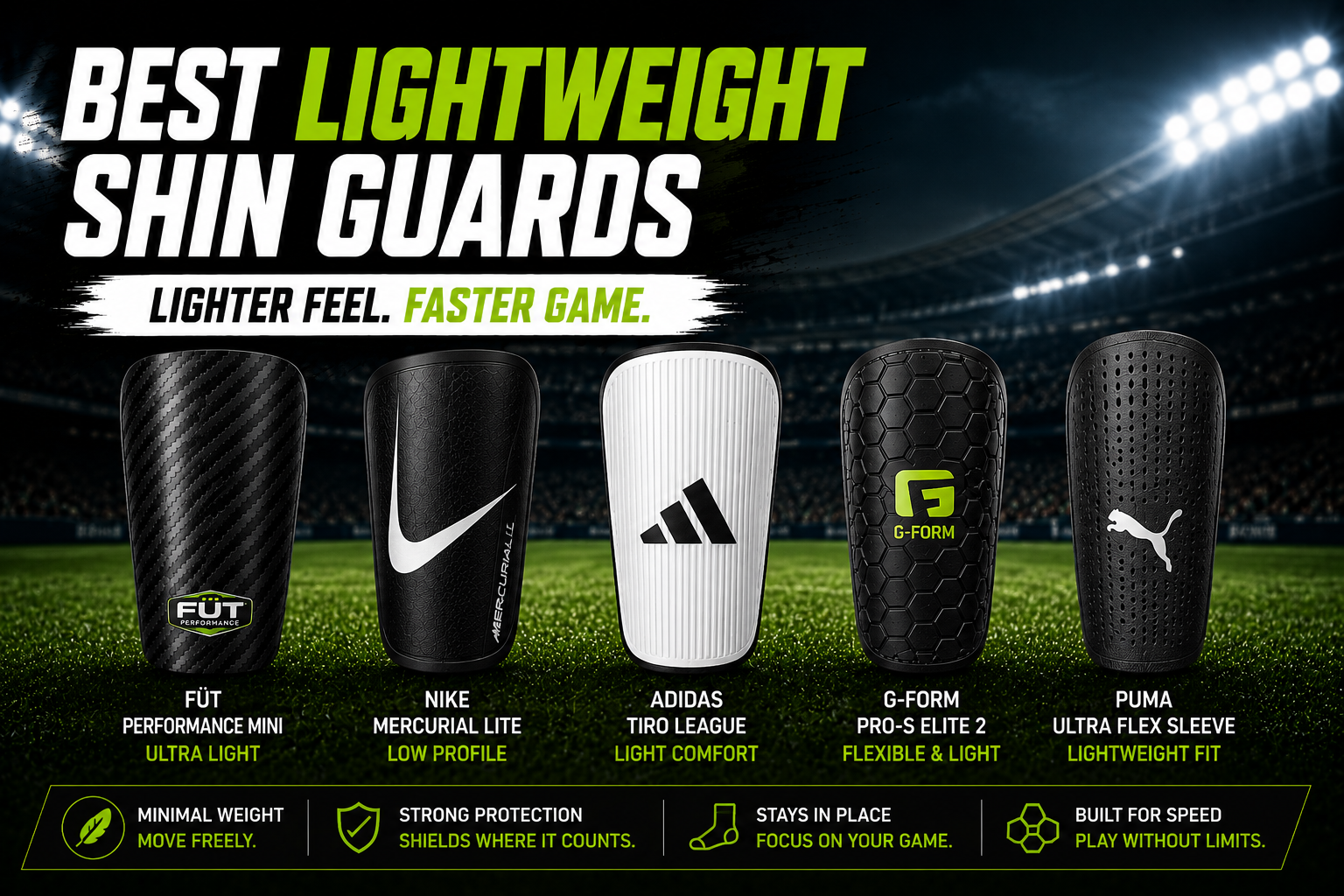
The best lightweight shin guards for soccer players are slim, comfortable, secure under socks, and protective enough for the player’s age, position, and level of contact. Slip-in guards and mini shin guards are usually the most lightweight options, while larger guards offer more coverage.
What Are Lightweight Soccer Shin Guards?
Lightweight soccer shin guards are designed to reduce bulk while still protecting the front of the shin. They usually have a thinner shell, softer backing, lower-profile shape, and less material than traditional ankle shin guards.
Many players choose lightweight shin guards because they want to move freely, sprint faster, turn more easily, and avoid the heavy feeling that comes with larger protective gear. They are especially popular with attacking players, midfielders, wingers, and experienced players who want a cleaner fit under soccer socks.
The main tradeoff is coverage. A lighter shin guard can feel better, but it may protect less of the leg. The best lightweight option should still cover the main impact area of the shin and stay secure during real play.
Why Soccer Players Choose Lightweight Shin Guards
Lightweight shin guards are popular because they make protective gear feel less distracting during training and matches.
Best Features to Look For in Lightweight Shin Guards
The best lightweight shin guards should not simply be the smallest guards available. They should offer a smart balance of reduced weight, proper fit, and realistic protection for the type of soccer you play.
A slim outer shell reduces bulk while still helping absorb contact from tackles and kicks.
EVA foam or padded backing improves comfort and prevents the shell from pressing into the shin.
Lightweight guards should stay locked in place under socks, sleeves, or compression gear.
The guard should protect the central shin area without being too short for the player.
Smooth edges reduce rubbing and irritation during long games and training sessions.
Even lightweight guards should be strong enough to handle regular contact and repeated use.
Lightweight Shin Guard Types
Lightweight shin guards come in a few different styles. The right one depends on how much protection, comfort, and freedom of movement you want.
Best for most players who want lightweight protection with enough coverage for training and matches.
Best for experienced players who want the lowest-profile and lightest feel possible.
Best for players who want the guard to stay secure without straps or ankle padding.
Best for players who want a lighter feel but still need better coverage than mini guards.
Who Should Use Lightweight Shin Guards?
Lightweight shin guards are a strong choice for players who value comfort, speed, and a natural feel. They are especially useful for players who dislike bulky ankle guards or who constantly adjust their shin guards during games.
They are popular with midfielders, forwards, wingers, and adult players who want a low-profile fit. They can also work for older youth players, but parents should make sure the guards provide enough protection for the player’s age and league.
Lightweight Shin Guards vs Regular Shin Guards
The biggest difference is the balance between comfort and coverage. Lightweight guards feel better under socks, while regular shin guards usually provide more protection.
| Shin Guard Type | Best For | Main Advantage | Main Tradeoff |
|---|---|---|---|
| Lightweight Slip-In Guards | Most players who want comfort and mobility | Good balance of protection and low bulk | Needs socks or sleeves to stay secure |
| Mini Shin Guards | Experienced players, attackers, adults | Very light and low-profile | Less coverage than larger guards |
| Regular Shin Guards | Youth players, defenders, physical games | More coverage and protection | Can feel bulkier under socks |
| Ankle Shin Guards | Beginners and players wanting extra ankle coverage | Added ankle protection and built-in fit | Heavier and less minimal |
If comfort is your main priority, lightweight guards are usually better. If maximum protection is your priority, a larger traditional shin guard may be the safer option.
Are Lightweight Shin Guards Safe?
Lightweight shin guards can be safe when they fit properly and provide enough coverage for the player’s age, position, and level of contact. The issue is not weight by itself. The issue is choosing a guard that is too small or too thin for the type of soccer being played.
For adult players, lightweight guards may be perfectly fine for pickup games, training, and attacking positions. For young players, defenders, or physical leagues, a slightly larger lightweight guard may be a better choice than the smallest mini option.
Best Lightweight Shin Guards by Position
Position can help you decide how light or protective your shin guards should be.
- Forwards: Lightweight slip-in or mini guards can work well for speed and agility.
- Midfielders: Balanced lightweight guards are usually better than ultra-small guards.
- Defenders: Choose lightweight guards with more coverage and stronger padding.
- Goalkeepers: Choose guards that stay secure but do not interfere with diving or kicking.
- Youth players: Prioritize coverage and fit over the smallest possible design.
Lightweight Shin Guards for Youth Players
Lightweight shin guards can be good for youth players if they still provide enough protection. Many kids dislike bulky ankle guards, but that does not mean they should wear the smallest possible mini guards.
Parents should choose lightweight guards that fit the child’s height, stay secure under socks, and meet league expectations. If the player is young, new to soccer, or often involved in tackles, a larger lightweight slip-in guard may be better than a very small mini guard.
Common Mistakes When Buying Lightweight Shin Guards
- Choosing the smallest guard possible instead of the best fitting guard.
- Ignoring protection because the guard feels comfortable.
- Buying lightweight guards without sleeves or secure socks.
- Using guards that slide around during running or tackling.
- Choosing mini guards for young players who need more coverage.
- Keeping old guards after they crack, warp, or lose padding.
Ready to Compare Lightweight Shin Guards?
Lightweight shin guards are a great choice for players who want comfort, speed, and less bulk under soccer socks. For the best results, choose a pair that feels light but still provides enough coverage, padding, and secure fit for your position and level of play.
Shop Shin Guards on AmazonRelated Soccer Shin Guard Guides
Continue comparing shin guards, sleeves, sizing, and related soccer gear with these guides.
Lightweight Shin Guards FAQ
Are lightweight shin guards good for soccer?
Yes. Lightweight shin guards are good for soccer players who want comfort, mobility, and protection without bulky gear.
Are lightweight shin guards safe?
Lightweight shin guards can be safe when they fit properly and provide enough coverage for the player’s age, position, and level of contact.
What type of shin guards are the lightest?
Mini shin guards and slim slip-in shin guards are usually the lightest options, but they may provide less coverage than traditional guards.
Are lightweight shin guards good for kids?
They can be good for older youth players, but younger players usually need enough coverage and protection. Parents should not choose the smallest guard only for comfort.
Do lightweight shin guards need sleeves?
Most lightweight slip-in shin guards work best with sleeves or tight soccer socks because they help keep the guards secure during play.
Who should use lightweight shin guards?
Lightweight shin guards are best for players who value comfort, speed, and mobility, especially forwards, midfielders, wingers, and experienced players.
We may earn a commission from qualifying purchases at no extra cost to you.