
Best Shin Guards for Defenders
Defenders need shin guards that can handle tackles, blocked shots, clearances, shoulder-to-shoulder contact, and physical match situations. This guide explains what makes a good defender shin guard, which styles work best, and how to choose the right balance of protection, comfort, and performance.
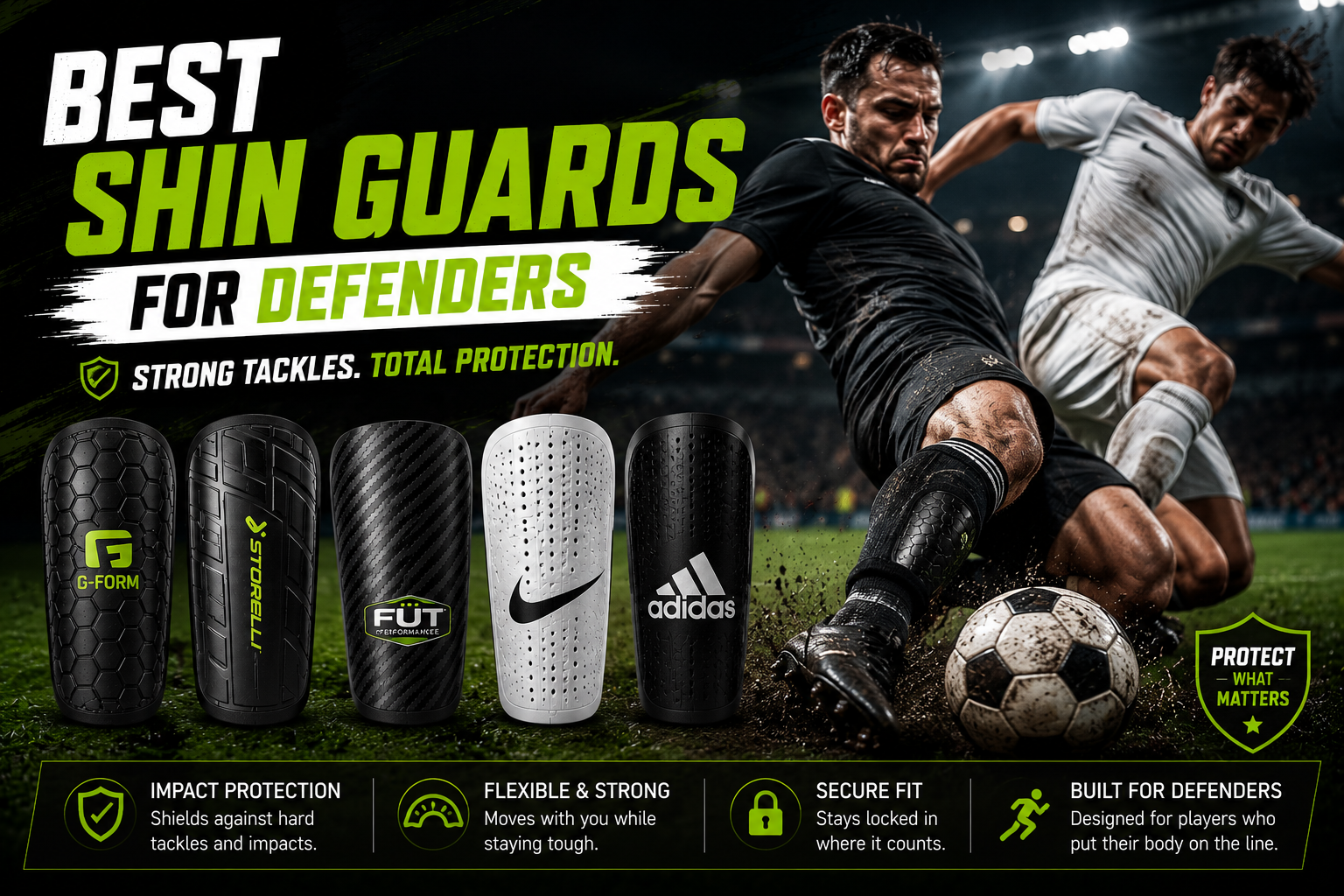
The best shin guards for defenders usually provide more coverage, stronger impact protection, secure fit, and comfortable padding. Defenders should be careful with ultra-small mini guards because center backs, fullbacks, and defensive midfielders often take more contact than attacking players.
Why Defenders Need Different Shin Guards
Defenders face a different type of contact than many other soccer players. They block shots, step into tackles, clear loose balls, challenge attackers, and often take contact from players running at speed. That means shin guards for defenders should prioritize protection more than minimal feel.
A winger or forward may prefer the smallest lightweight guard possible, but defenders usually need a more balanced setup. The shin guard should still be comfortable, but it should also cover enough of the shin to protect against hard contact.
For a complete overview of shin guard types, visit the main Soccer Shin Guards Hub.
Best Shin Guard Types for Defenders
The best defender shin guard depends on age, position, level of play, and how physical the match is.
Best Features to Look For in Defender Shin Guards
Defenders should not choose shin guards only because they look slim or professional. The right pair should protect the main shin area, stay secure during tackles, and feel comfortable enough to wear for a full match.
Defenders usually benefit from longer and wider guards that protect more of the central shin.
A strong shell helps absorb contact from tackles, shots, and accidental kicks.
Foam backing improves comfort and reduces pressure from repeated impact.
The guard should stay centered during sliding, blocking, sprinting, and changing direction.
A curved design helps the guard fit the leg better and reduces movement under socks.
Center backs may need more protection, while fullbacks may prefer a lighter protective style.
Defender Shin Guards by Position
Not every defender plays the same way. Center backs, fullbacks, wingbacks, and defensive midfielders may need slightly different shin guard setups.
Choose larger, more protective guards with strong shells and comfortable backing for tackles and blocked shots.
Choose protective slip-in guards that balance coverage with speed for overlapping runs and defensive recovery.
Choose lightweight protective guards that stay secure during constant running up and down the field.
Choose balanced guards with good coverage because this position often takes contact from every direction.
Best Shin Guards for Center Backs
Center backs usually need the most protection. They are often involved in headers, tackles, blocked shots, emergency clearances, and direct contact with forwards. A very small mini guard may feel comfortable, but it may not provide enough coverage for this role.
The best shin guards for center backs usually have a stronger shell, enough length to cover the main shin area, and padded backing that stays comfortable during physical play.
Best Shin Guards for Fullbacks and Wingbacks
Fullbacks and wingbacks need protection, but they also need speed. These players defend, overlap, sprint, recover, cross, and tackle throughout the match.
For most fullbacks, a protective slip-in guard is a smart choice. It offers a better balance than bulky ankle guards while still providing more coverage than very small mini guards.
- Choose lightweight guards with enough coverage for tackles.
- Use sleeves if the guards slide during sprinting.
- Avoid guards that feel too bulky when running forward.
- Do not choose ultra-small guards if you defend aggressively.
Best Shin Guards for Defensive Midfielders
Defensive midfielders may not be listed as defenders, but they often take defender-level contact. They challenge for loose balls, shield under pressure, tackle from central areas, and receive contact from attackers and midfielders.
A defensive midfielder should usually choose a balanced shin guard with enough protection for contact but enough comfort for constant running. Slip-in guards with padded backing are often a strong option.
Slip-In vs Ankle vs Mini Shin Guards for Defenders
Defenders can use different styles, but the best choice depends on how much protection and mobility they need.
| Shin Guard Type | Best For | Main Advantage | Main Tradeoff |
|---|---|---|---|
| Protective Slip-In Guards | Most defenders | Good balance of protection, comfort, and mobility | Needs sleeves or snug socks to stay secure |
| Ankle Shin Guards | Younger defenders and physical players | Extra ankle coverage and built-in support | Can feel bulky or restrictive |
| Mini Shin Guards | Experienced defenders in lower-contact play | Very light and low-profile | Less coverage for tackles and blocked shots |
| Large Protective Guards | Center backs and adult league defenders | More impact protection and coverage | May feel heavier under socks |
For most defenders, protective slip-in shin guards are the best middle ground. They offer more freedom than ankle guards but more coverage than most mini shin guards.
Are Mini Shin Guards Good for Defenders?
Mini shin guards can work for some defenders, but they are not the best choice for every defensive player. A defender who plays in a physical league, blocks shots often, or challenges hard for tackles may need more coverage.
Mini guards are better for experienced players who understand the protection tradeoff and play in lower-contact situations. If you are a center back, defensive midfielder, or physical fullback, a larger slip-in guard is usually a safer choice.
For a deeper comparison, read our Best Mini Shin Guards for Soccer Players guide.
Best Shin Guards for Youth Defenders
Youth defenders usually need more protection than style-focused mini guards provide.
Kids and younger defenders are still learning how to tackle, block, shield, and avoid contact. That makes coverage very important. A youth defender should use shin guards that fit properly, stay secure, and provide enough protection for league play.
- Choose youth shin guards based on height and fit.
- Do not buy tiny guards only because they look professional.
- Consider ankle protection for younger or beginner defenders.
- Use sleeves or snug socks if slip-in guards move.
- Replace guards when they crack, warp, or become uncomfortable.
How Should Defender Shin Guards Fit?
Defender shin guards should sit centered over the shin and protect the main contact area. They should not reach too close to the knee or ankle, but they also should not be so small that large parts of the shin are exposed.
The guard should feel secure under the sock and should not slide during tackles, sprinting, or changes of direction. If it moves constantly, try a sleeve, tighter socks, or a different size.
For more sizing help, read our How to Size Soccer Shin Guards guide.
Common Mistakes Defenders Make When Buying Shin Guards
- Choosing guards that are too small for regular defensive contact.
- Prioritizing lightweight feel over protection.
- Using loose socks that allow guards to slide during tackles.
- Ignoring ankle protection for younger defenders who need it.
- Using cracked or worn-out guards in competitive matches.
- Buying based only on brand instead of fit, coverage, and position.
Ready to Compare Defender Shin Guards?
The best shin guards for defenders offer strong protection, enough coverage, comfortable padding, and a secure fit. Choose a pair that matches your position, contact level, and comfort needs instead of choosing the smallest or lightest guard available.
Shop Shin Guards on AmazonRelated Soccer Shin Guard Guides
Continue comparing shin guards, sleeves, sizing, and related soccer gear with these guides.
Shin Guards for Defenders FAQ
What shin guards are best for defenders?
The best shin guards for defenders are protective, properly sized, comfortable, and secure enough to handle tackles, blocked shots, and physical contact.
Should defenders wear bigger shin guards?
Defenders usually benefit from more coverage than attacking players, but the guards should still fit comfortably and not interfere with movement.
Are mini shin guards good for defenders?
Mini shin guards can work for some experienced defenders, but they provide less coverage and may not be ideal for physical defensive play.
Are ankle shin guards good for defenders?
Ankle shin guards can be good for younger defenders, beginners, and players who want extra ankle coverage, though they may feel bulkier than slip-in guards.
What shin guards should center backs wear?
Center backs should usually choose larger protective shin guards with strong shells, comfortable padding, and a secure fit for contact-heavy play.
How should defender shin guards fit?
Defender shin guards should sit centered over the shin, cover the main impact area, and stay secure under socks or sleeves during tackles and sprinting.
We may earn a commission from qualifying purchases at no extra cost to you.