Best Solo Soccer Trainers
Solo soccer trainers help players practice ball control, first touch, passing, shooting, juggling, and repetition without needing another player. The best solo soccer trainer should match the player’s age, skill level, space, and training goal, especially for kids and youth players who want to improve at home.
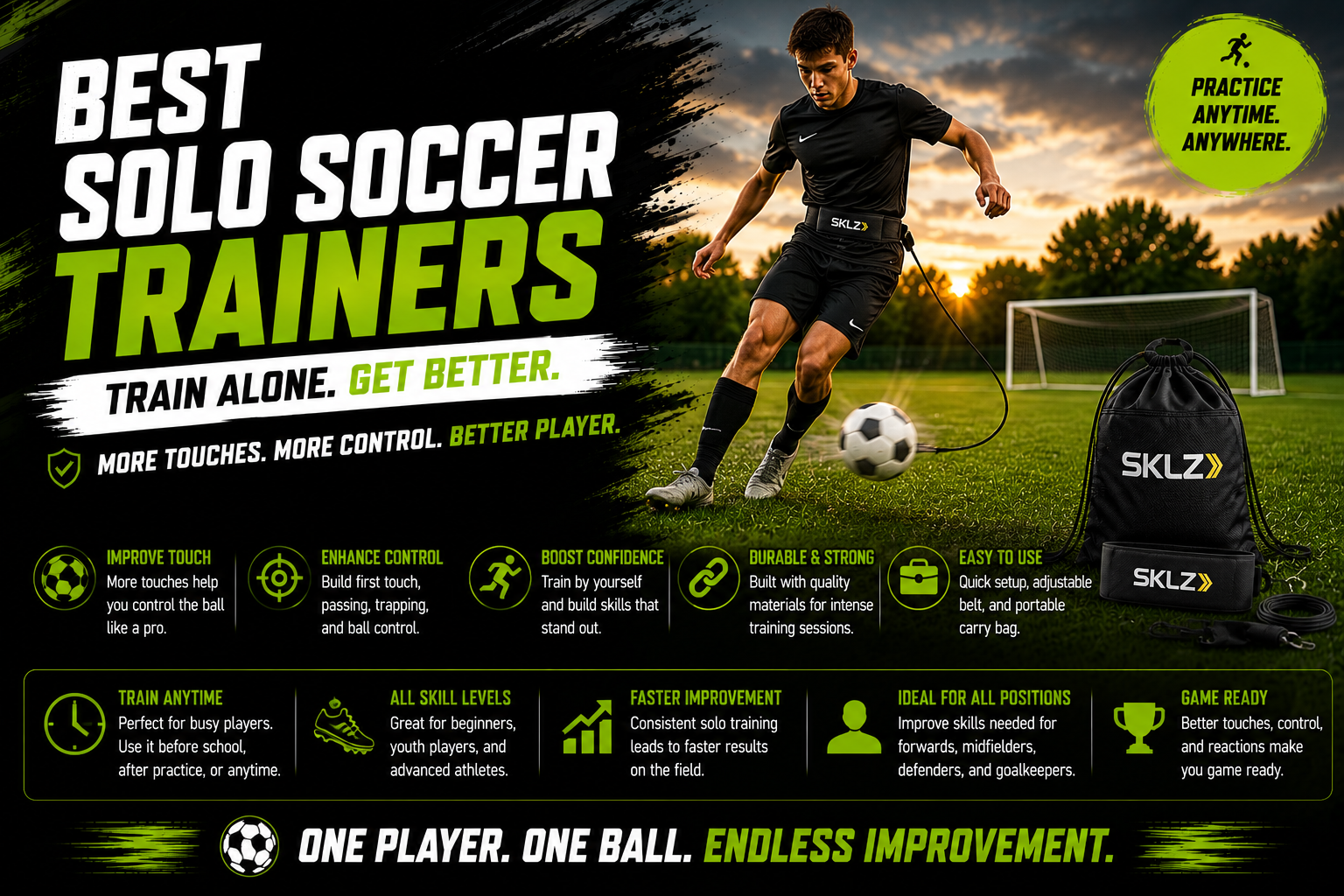
The best solo soccer trainers are easy to use, durable, adjustable, and built for repeated touches. Ball-on-a-cord trainers are best for younger players and beginners, rebounders are better for passing and first touch, and target nets or training goals are better for shooting practice.
Why Solo Soccer Trainers Are Useful
The biggest advantage of a solo soccer trainer is repetition. Players improve faster when they get more touches on the ball, but it is not always possible to have a teammate, coach, or parent available for every practice session.
Solo trainers make it easier to work on ball control, passing rhythm, first touch, volleys, shooting mechanics, juggling, and confidence. For kids, they can also make practice more fun because the ball comes back instead of constantly rolling away.
For the full category overview, visit the main Soccer Training Equipment Hub.
Best Solo Soccer Trainer Types
Best Features to Look For
A good solo soccer trainer should make practice easier, not more frustrating. The best option is simple to set up, safe for the player’s age, and durable enough for repeated kicks and touches.
Waist belts, cords, and straps should adjust for different ages, heights, and training styles.
Solo trainers should handle repeated kicks, pulls, rebounds, and outdoor use.
Kids are more likely to train if the equipment is quick to use and easy to put away.
Choose a trainer based on the skill: touch, passing, shooting, juggling, or first touch.
Younger players need gear that does not create tripping hazards or snap back too aggressively.
Some trainers work in small yards, while rebounders and nets may need more room.
What Solo Soccer Trainers Help Improve
Solo soccer trainers are most useful when they create repeatable touches and help players build confidence with the ball.
Repeated touches help players improve control with both feet.
Rebounders and return trainers help players prepare their body and receive cleaner.
Solo tools can create repeated passing reps without needing a teammate.
More touches at home help kids feel more comfortable during games and team practice.
Solo Soccer Trainers Compared
Different solo soccer trainers solve different problems. A ball-on-a-cord trainer helps younger players get touches without chasing the ball, while a rebounder is better for realistic passing and receiving practice.
| Trainer Type | Best For | Main Advantage | Buying Tip |
|---|---|---|---|
| Ball-on-a-Cord Trainer | Kids and beginners | Keeps the ball close for repeated touches | Best for younger players learning control |
| Soccer Rebounder | Passing and first touch | Returns the ball like a training partner | Best long-term solo training tool |
| Training Net | Shooting and backyard practice | Creates a target and catches the ball | Best if the player practices finishing |
| Target Trainer | Accuracy and placement | Forces players to aim at specific zones | Good for older youth and serious players |
Best Solo Soccer Trainers for Kids
Kids usually benefit most from simple solo trainers that make practice fun and reduce frustration. A ball-on-a-cord trainer can help younger players practice touches without constantly chasing the ball, while a small rebounder can help older kids work on passing and first touch.
Parents should choose a trainer based on the child’s patience and skill level. If the gear feels too complicated or too advanced, the player may stop using it after a few sessions.
For a complete youth setup, compare this guide with our Best Soccer Training Equipment for Kids guide.
Best Solo Soccer Trainers for Ball Control
For ball control, the best solo trainer should create repeated touches with both feet and allow the player to work at their own pace.
Ball-on-a-cord trainers are useful for beginners because they keep the ball nearby. Players can practice inside touches, outside touches, laces touches, toe taps, and controlled strikes without chasing the ball across the yard.
- Start slow and focus on clean touches.
- Practice with both feet, not only the strong foot.
- Use short sessions so kids stay focused.
- Move from stationary touches to light movement.
- Add cones later for more realistic dribbling patterns.
Best Solo Soccer Trainers for Passing
For passing practice, a rebounder is usually better than a cord-style trainer. Rebounders return the ball at different speeds and angles, helping players practice body position, first touch, one-touch passing, and receiving.
A good rebounder can act like a wall, but with more training variety. Players can practice short passes, driven passes, volleys, and first-touch direction changes without needing another player.
Compare options in our Best Soccer Rebounders guide.
Best Solo Soccer Trainers for Shooting Practice
For shooting, the best solo setup is usually a training net, small goal, or target system.
Players who want to improve finishing should practice accuracy, placement, and technique instead of only power. A target trainer or small goal gives them something specific to aim at and makes shooting practice more focused.
- Use targets to practice corners and placement.
- Start closer before increasing distance.
- Practice both feet and different shooting angles.
- Use cones to create game-like approach angles.
- Use a backstop net if missed shots create problems.
Best Solo Soccer Trainers for Home Practice
For home practice, space matters. A small yard may be better for a ball-on-a-cord trainer, cones, or a compact target. A larger yard can support a rebounder, training net, or small goal.
The best home setup is simple enough to use several times per week. A solo trainer works even better when paired with cones, a properly sized soccer ball, and short practice routines.
Common Solo Soccer Trainer Mistakes
- Buying a trainer that is too advanced for a young beginner.
- Choosing a cord trainer when the player really needs passing practice.
- Buying a rebounder or net without enough safe space.
- Only using the strong foot during solo drills.
- Doing long boring sessions instead of short consistent practice.
- Expecting one tool to replace real game-like training.
Are Solo Soccer Trainers Worth It?
Yes, solo soccer trainers are worth it for players who want more touches outside team practice. They can help kids and youth players build confidence, develop ball control, and practice at home without always needing a partner.
The best value depends on the player’s goal. Beginners may benefit from a ball-on-a-cord trainer, while serious players often get more long-term value from a rebounder, target net, or small training goal.
Ready to Compare Solo Soccer Trainers?
The best solo soccer trainer should match the player’s age, skill goal, and practice space. Choose cord trainers for simple touch work, rebounders for passing and first touch, and nets or targets for shooting practice.
Shop Solo Soccer Trainers on AmazonRelated Soccer Training Guides
Solo Soccer Trainers FAQ
Are solo soccer trainers good for kids?
Yes. Solo soccer trainers can help kids get more touches, improve confidence, and practice ball control at home without always needing another player.
What is the best solo soccer trainer for beginners?
A ball-on-a-cord trainer is usually best for younger beginners, while a small rebounder is better for players ready to practice passing and first touch.
Do solo soccer trainers improve ball control?
Yes. They can improve ball control when players use them consistently and practice with both feet using controlled touches.
Is a rebounder better than a solo soccer trainer?
A rebounder is better for passing and first touch, while a cord-style solo trainer is better for simple ball control and touch repetition.
Can solo soccer trainers be used at home?
Yes. Many solo soccer trainers are designed for home use, but players should choose equipment that fits the available yard, driveway, garage, or indoor space.
What should I use with a solo soccer trainer?
Solo soccer trainers work well with cones, a properly sized soccer ball, a small goal, a rebounder, or target nets for more complete training sessions.
We may earn a commission from qualifying purchases at no extra cost to you.