
Best Ice Packs for Soccer Injuries
The best ice packs for soccer injuries help players manage bumps, bruises, ankle soreness, knee discomfort, swelling, and post-game recovery needs. Soccer is a contact sport with sprinting, cutting, tackles, falls, and sudden stops, so having reliable cold packs in a soccer bag, first-aid kit, or home recovery setup can be very useful.
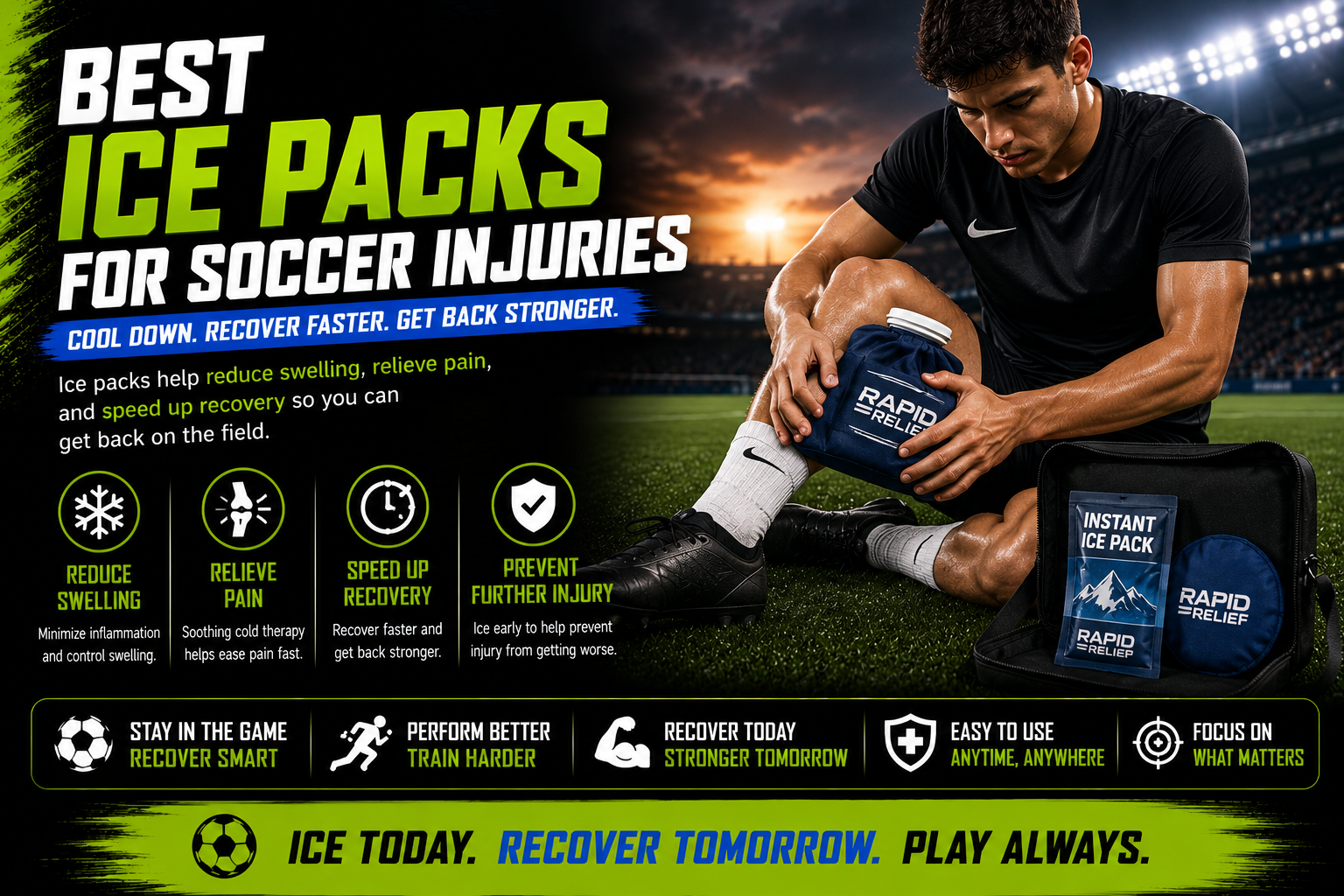
The best ice packs for soccer injuries are flexible, reusable, easy to wrap around ankles or knees, and safe to use with a protective cloth layer. For soccer families, a good setup includes reusable gel ice packs at home, instant cold packs in the soccer bag, and wrap-style cold packs for ankles, knees, calves, and thighs.
Why Ice Packs Matter for Soccer Players
Soccer players can take knocks, land awkwardly, twist ankles, collide with opponents, or finish games with sore knees and tired legs. Ice packs are a simple recovery and first-aid tool that can help players respond quickly after minor bumps, bruises, or swelling.
Cold therapy is not a replacement for medical care. If a player has severe pain, major swelling, inability to walk, numbness, deformity, or symptoms that worsen, they should be evaluated by a qualified professional. Ice packs are useful tools, but they should not be used to hide serious injuries.
For the full recovery category, visit the Recovery Gear Hub. If you are building a full recovery kit, compare this guide with Best Recovery Gear for Soccer Players.
Best Ice Pack Types for Soccer
Best Features to Look For
Flexible gel packs wrap better around ankles, knees, calves, and thighs.
Reusable packs are better for home recovery and frequent soccer families.
Instant cold packs are useful when there is no freezer nearby.
Wrap-style packs stay in place better during post-game recovery.
Ice packs should be used with a cloth layer to protect the skin.
Small packs work for ankles; larger packs work better for thighs and hips.
What Ice Packs Help Soccer Players With
Useful after minor twists, soreness, or knocks around the ankle area.
Wrap-style ice packs can fit around the knee after hard games.
Cold packs can be useful after contact, bumps, and tackles.
Reusable packs can support a simple recovery routine after intense sessions.
Ice Packs Compared
| Ice Pack Type | Best For | Main Advantage | Buying Tip |
|---|---|---|---|
| Reusable Gel Ice Pack | Home recovery | Flexible and reusable | Best first choice for most soccer families |
| Instant Cold Pack | Sidelines and soccer bags | No freezer needed | Keep extras in a first-aid kit |
| Wrap Ice Pack | Ankles, knees, calves | Stays in place better | Useful for players who need hands-free cooling |
| Large Flexible Pack | Quads, hamstrings, hips | Covers bigger areas | Good for older players and intense training weeks |
| Hot/Cold Pack | Flexible recovery use | Can be used cold or warm | Follow product directions carefully |
Best Ice Packs for Soccer Ankles
Ankles are one of the most common areas soccer players worry about because of cutting, landing, tackles, and uneven steps. A flexible wrap-style ice pack is often the best option for ankles because it can curve around the joint and stay in place.
Reusable gel packs work well at home, while instant cold packs are useful on the sideline. If ankle pain is severe, swelling is significant, or the player cannot bear weight, do not rely on ice alone.
Best Ice Packs for Soccer Knees
Knees take stress from sprinting, cutting, shooting, landing, and contact.
For knees, wrap-style ice packs or flexible gel packs are usually easier to use than stiff blocks. The pack should sit comfortably around the front or side of the knee without squeezing too tightly.
- Choose a flexible pack that bends around the knee.
- Use a cloth barrier between the ice pack and skin.
- Do not wrap so tightly that it affects circulation.
- Stop if the player feels numbness or skin pain.
- Get medical advice for major swelling or worsening pain.
For support-related gear, compare Best Compression Soccer Socks and Recovery Gear Hub.
Best Instant Cold Packs for Soccer Bags
Instant cold packs are useful because they do not require a freezer. Coaches, parents, and players can keep them in a soccer bag or first-aid kit for practices, games, and tournaments.
They are usually single-use, so they are not as cost-effective as reusable gel packs. But for the sideline, away games, and travel, they are one of the easiest cold therapy tools to carry.
- Keep several in the team first-aid kit.
- Use for sideline bumps or minor swelling support.
- Replace them after use.
- Check expiration dates and packaging.
- Do not use leaking or damaged packs.
Best Reusable Ice Packs for Soccer Families
Reusable gel packs are the best value for home recovery.
If your family has a player training several times per week, reusable ice packs are worth keeping in the freezer. A mix of small, medium, and large packs gives you better coverage for ankles, knees, calves, quads, and hips.
- Keep at least two reusable packs in the freezer.
- Choose flexible gel packs instead of stiff blocks.
- Use different sizes for different body areas.
- Store them where players can find them quickly.
- Replace packs if they leak or harden too much.
Ice Packs vs Other Recovery Gear
Ice packs are useful for cold therapy after bumps, bruises, soreness, or swelling, but they are only one part of recovery. Foam rollers, massage balls, compression socks, and stretching tools support different needs.
| Tool | Best For | Main Advantage | Guide |
|---|---|---|---|
| Ice Packs | Bumps, bruises, swelling support | Cold therapy | This guide |
| Foam Rollers | Calves, quads, hamstrings, glutes | Large muscle recovery routine | Foam Rollers |
| Massage Guns | Targeted muscle relief | Convenient focused pressure | Massage Guns |
| Massage Balls | Feet, arches, small tight areas | Portable targeted pressure | Massage Balls |
| Compression Socks | Lower-leg support feel | Firm recovery or travel feel | Compression Socks |
Other Recovery Gear to Pair with Ice Packs
Useful for large lower-body muscle groups after training.
Good for feet, arches, calves, and small tight areas.
Useful for players who like a firmer lower-leg recovery feel.
Comfortable after cleats come off following games or tournaments.
Simple Ice Pack Safety Tips
- Use a towel or cover between the ice pack and skin.
- Do not place frozen packs directly on bare skin.
- Do not wrap ice packs too tightly.
- Stop if the skin feels painful, numb, or irritated.
- Do not use damaged or leaking gel packs.
- Use medical care for severe pain, major swelling, deformity, or inability to walk.
- Follow the product instructions for timing and use.
- Do not use cold therapy to keep playing through a serious injury.
What to Keep in a Soccer First-Aid Recovery Kit
A simple soccer recovery kit can help parents, coaches, and players respond faster after minor bumps.
- Instant cold packs.
- Elastic wrap or reusable cold wrap.
- Reusable gel packs at home.
- Small towel or cloth barrier.
- Basic bandages and first-aid supplies.
- Water bottle and hydration support.
- Recovery slides for after games.
- Emergency contact and medical information for youth players.
Common Ice Pack Mistakes
- Putting frozen packs directly on skin.
- Wrapping ice packs too tightly.
- Using ice to ignore serious pain.
- Keeping only reusable packs but no sideline instant packs.
- Using leaking or damaged gel packs.
- Not replacing used instant cold packs.
- Using a pack that is too small for the body area.
- Forgetting that ice is only one part of recovery.
Are Ice Packs Worth It for Soccer Players?
Ice packs are worth it for soccer players, families, and teams because they are affordable, easy to use, and helpful after minor bumps, bruises, swelling, or soreness. They are one of the simplest tools to keep in a soccer recovery setup.
The best approach is to keep reusable gel packs at home and instant cold packs in the soccer bag. That gives players cold therapy access both after games and on the sideline.
Ready to Compare Ice Packs for Soccer?
Choose reusable gel packs for home recovery, instant cold packs for the soccer bag, wrap-style packs for ankles and knees, and larger flexible packs for thighs, hips, and hamstrings. Always use a cloth barrier and seek medical help for serious or worsening injuries.
Shop Soccer Recovery Gear on AmazonRelated Soccer Gear Guides
Ice Packs for Soccer Injuries FAQ
What are the best ice packs for soccer injuries?
The best ice packs for soccer injuries are flexible gel packs, wrap-style packs, and instant cold packs that are easy to use for ankles, knees, calves, thighs, and bruises.
Should soccer players keep ice packs in their bag?
Yes. Instant cold packs are useful in a soccer bag or first-aid kit because they do not require a freezer.
Are reusable ice packs better than instant cold packs?
Reusable ice packs are better for home recovery, while instant cold packs are better for sidelines, travel, and games without freezer access.
What ice pack is best for soccer ankles?
A flexible wrap-style ice pack is usually best for ankles because it can curve around the joint and stay in place better.
Can ice packs be used directly on skin?
No. Use a towel, sleeve, or cover between the ice pack and skin to help prevent irritation or cold injury.
Are ice packs good for soccer bruises?
Ice packs can be useful after minor bumps and bruises, but severe pain, major swelling, or worsening symptoms should be checked by a professional.
What should be in a soccer first-aid recovery kit?
A simple kit can include instant cold packs, a cloth barrier, elastic wrap, bandages, hydration support, and access to reusable ice packs at home.
When should a soccer player get medical help instead of using ice?
Get medical help for severe pain, major swelling, deformity, numbness, inability to walk, or symptoms that worsen instead of improving.
We may earn a commission from qualifying purchases at no extra cost to you.