
Best Ankle Braces for Soccer
The best ankle braces for soccer should support the ankle without making cleats uncomfortable or restricting quick movement. Soccer players sprint, cut, plant, tackle, jump, and change direction constantly, so ankle support gear needs to balance stability, comfort, protection, and cleat fit.
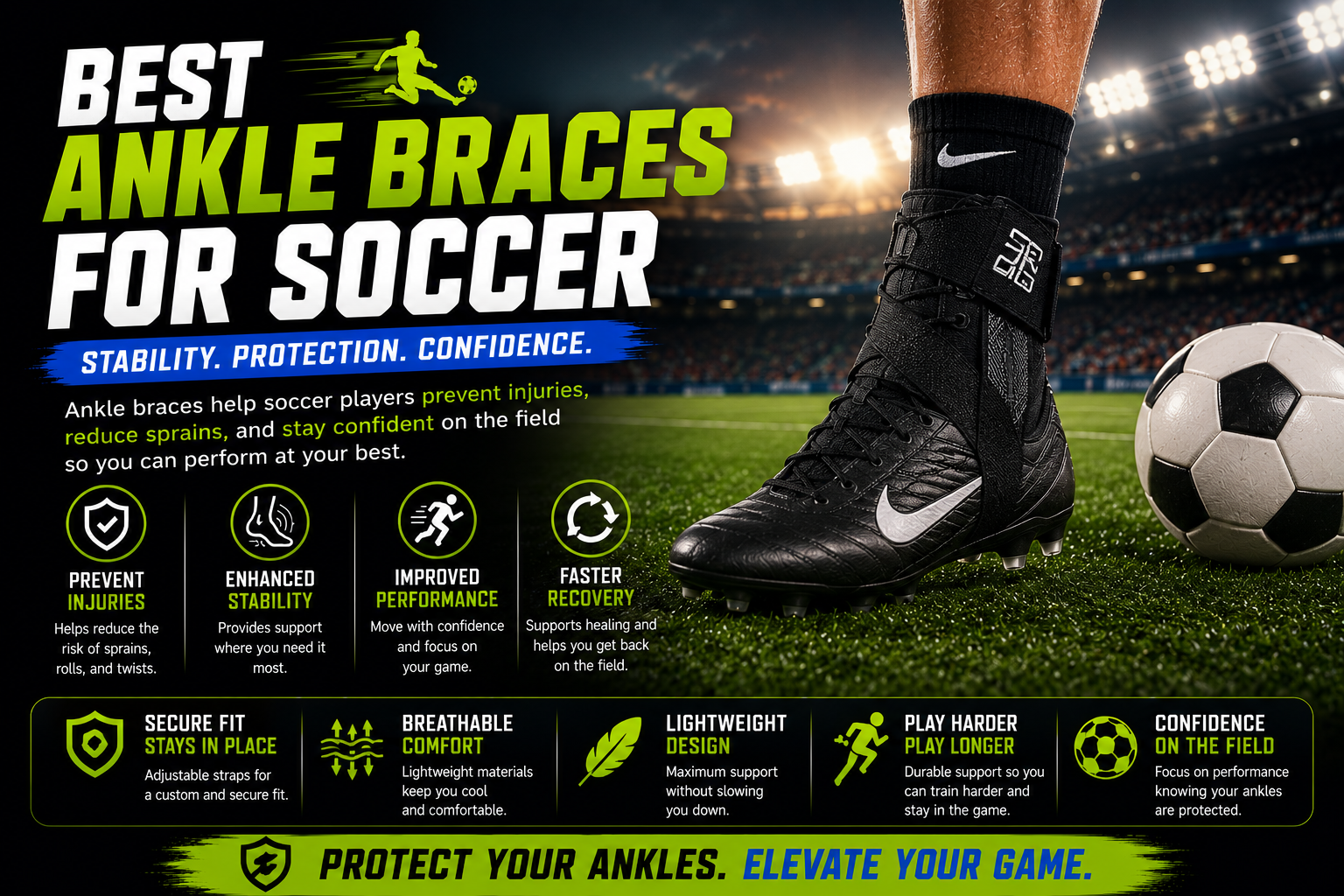
The best ankle brace for soccer is low-profile, supportive, breathable, and comfortable enough to fit inside soccer cleats. Light ankle sleeves are best for mild support feel, lace-up braces offer more stability, and strap-style braces can help players who want adjustable support. Any brace should be tested in practice before being used in a match.
Why Ankle Braces Matter for Soccer Players
Soccer ankles deal with constant stress from cutting, pivoting, tackling, landing, sprinting, and quick changes of direction. A good ankle brace can help some players feel more supported during training or games, especially if they want extra stability around the ankle.
An ankle brace should never be used to ignore serious pain or an injury that needs attention. If a player has major swelling, sharp pain, instability, numbness, bruising, or difficulty walking, they should get proper medical guidance instead of simply tightening a brace and continuing to play.
For the full recovery category, visit the Recovery Gear Hub. You can also compare this guide with Best Knee Braces for Soccer and Best Ice Packs for Soccer Injuries.
Best Ankle Brace Types for Soccer
Best Features to Look For
Soccer ankle braces must work with cleats. A brace that feels supportive in regular shoes may feel too bulky, tight, or awkward inside soccer boots.
The brace should fit inside cleats without squeezing the foot or changing touch.
Good ankle support should stay in place during sprinting, cutting, and tackling.
The brace should support the ankle without ruining natural soccer movement.
Soccer players sweat heavily, so ankle support should not trap too much heat.
Laces or straps can help players customize support and comfort.
Always test the brace with the actual cleats used for training and games.
What Ankle Braces Help Soccer Players With
Some players like a firmer, more secure feel around the ankle.
Stronger braces may help players who want more structure during movement.
A comfortable brace can help players feel more prepared during training.
Wraps, ice packs, and compression tools can support post-game ankle care.
Ankle Braces for Soccer Compared
| Ankle Support Type | Best For | Main Advantage | Buying Tip |
|---|---|---|---|
| Ankle Sleeve | Light support and compression feel | Low-profile and easy to wear | Best first option for many players |
| Lace-Up Ankle Brace | More stability | Adjustable and structured | Can feel bulky inside tight cleats |
| Strap Ankle Brace | Custom support | Adjustable compression and hold | Check that straps do not rub inside cleats |
| Elastic Wrap | Temporary support or recovery | Flexible and adjustable | Can loosen during play if not applied well |
| Cold Therapy Wrap | Post-game recovery | Combines compression and cold therapy | Better after play than during games |
Best Ankle Sleeves for Soccer
Ankle sleeves are often the easiest ankle support option for soccer because they are usually thinner than lace-up braces. They can provide a light compression feel while still fitting inside many cleats.
An ankle sleeve is best for players who want mild support without much bulk. It may not be enough for players who need stronger stability, but it is usually more soccer-friendly than a large brace.
For related compression support, compare Best Compression Sleeves for Soccer and Best Compression Soccer Socks.
Best Lace-Up Ankle Braces for Soccer
Lace-up ankle braces offer more structure, but they can be harder to fit inside cleats.
A lace-up ankle brace may be useful for players who want more stability than a simple sleeve. However, soccer cleats are usually narrow and close-fitting, so the brace must be low-profile enough to avoid pressure, rubbing, or tightness.
- Test the brace with soccer cleats before game day.
- Check for pressure on the top of the foot.
- Make sure the heel sits correctly inside the cleat.
- Avoid braces that change running or cutting mechanics.
- Do not use a brace to keep playing through serious pain.
Best Ankle Braces for Youth Soccer
Most young players should not wear bulky ankle braces unless they have a clear reason. Kids need comfortable cleats, proper socks, shin guards, warmups, strength, balance, and safe movement first.
If a youth player uses an ankle brace, it should fit properly and not make the cleat painfully tight. Parents should watch for complaints about pressure, numbness, rubbing, or altered running form.
- Choose youth sizing when available.
- Start with low-profile support.
- Check cleat fit carefully.
- Do not use braces to hide ankle pain.
- Get professional advice for swelling, instability, or repeated ankle problems.
For youth gear, read Best Soccer Cleats for Kids, Best Soccer Socks for Kids, and Best Soccer Shin Guards for Kids.
Ankle Brace vs Soccer Tape
Some players compare ankle braces with athletic tape because both can provide ankle support.
| Option | Best For | Main Advantage | Possible Drawback |
|---|---|---|---|
| Ankle Brace | Reusable support | Easy to put on repeatedly | Can feel bulky inside cleats |
| Athletic Tape | Custom support | Can be applied closely to the ankle | Requires skill and is single-use |
| Ankle Sleeve | Light support | Thin and comfortable | Less structure than braces or tape |
| Cold Therapy Wrap | Recovery after play | Useful for post-game ankle care | Not for active match support |
For first-aid and recovery tools, visit Best Ice Packs for Soccer Injuries.
Best Ankle Braces for Cleat Fit
The biggest challenge with ankle braces for soccer is cleat fit. Soccer cleats are designed to be snug. Adding a brace can make the shoe feel tight, change the way the foot sits, or create pressure around the ankle and top of the foot.
If a player plans to wear an ankle brace often, they should test the brace with the cleats they actually use. Some players may need thinner socks, a lower-profile brace, or a different cleat fit.
For more fit help, read How to Fit Soccer Shoes and Soccer Cleat Size Chart.
Other Recovery Gear to Pair with Ankle Braces
Useful after ankle knocks, swelling support, and soccer first-aid routines.
Good for feet, arches, calves, and small tight areas around the lower leg.
Helpful for players who want a firmer lower-leg recovery feel.
Comfortable footwear after cleats come off following games or tournaments.
When Soccer Players Should Wear an Ankle Brace
- When the brace fits comfortably inside soccer cleats.
- When the player needs extra support or stability feel.
- During practice before using it in a match.
- When it does not cause numbness, rubbing, or pain.
- When it does not change running or cutting mechanics badly.
- Not to hide sharp pain or major swelling.
- Not if it makes cleats painfully tight.
- Not instead of proper care for serious ankle symptoms.
Common Ankle Brace Mistakes
- Buying a brace that is too bulky for soccer cleats.
- Testing the brace for the first time during a game.
- Using an ankle brace to ignore serious pain.
- Wearing socks that make the cleat too tight with the brace.
- Choosing adult sizing for youth players without checking fit.
- Wrapping straps too tightly and causing numbness.
- Assuming every player needs ankle support.
- Forgetting to build strength, balance, warmup, and recovery habits.
Are Ankle Braces Worth It for Soccer?
Ankle braces can be worth it for soccer players who want extra support, stability, or confidence around the ankle. They are most useful when they fit properly inside cleats and do not interfere with movement.
They are not necessary for every player. Many players only need properly fitted cleats, good socks, warmups, balance work, and recovery habits. The best ankle support is the one that matches the player’s real need without making soccer movement worse.
Ready to Compare Ankle Braces for Soccer?
Choose an ankle sleeve for light support, a lace-up brace for more structure, a strap brace for adjustability, or cold therapy wraps for recovery. Always test ankle support with the player’s actual soccer cleats before match day.
Shop Soccer Ankle Support GearRelated Soccer Recovery Guides
Ankle Braces for Soccer FAQ
What is the best ankle brace for soccer?
The best ankle brace for soccer is low-profile, supportive, breathable, and comfortable enough to fit inside soccer cleats without restricting movement.
Can soccer players wear ankle braces during games?
Yes, if the brace fits safely inside cleats, does not restrict movement, and is allowed by the team or league.
Are ankle sleeves good for soccer?
Ankle sleeves can be good for light support and compression feel because they are usually thinner and easier to fit inside cleats.
Are lace-up ankle braces good for soccer?
Lace-up ankle braces can offer more stability, but they may feel bulky inside tight soccer cleats, so players should test them in practice first.
Can kids wear ankle braces for soccer?
Kids can wear ankle braces if needed, but the brace should fit correctly, avoid painful pressure, and not change running mechanics.
Can ankle braces prevent soccer injuries?
Ankle braces may provide support, but they do not guarantee injury prevention and should not replace warmups, balance work, strength, rest, or medical care.
Should an ankle brace feel tight in soccer cleats?
An ankle brace should feel secure, but it should not make cleats painfully tight or cause numbness, tingling, or rubbing.
Is tape or an ankle brace better for soccer?
Tape can provide custom support but requires skill and is single-use. An ankle brace is reusable and easier to apply, but may feel bulkier inside cleats.
We may earn a commission from qualifying purchases at no extra cost to you.