
Best Soccer Compression Shirts
The best soccer compression shirts should feel breathable, supportive, flexible, and comfortable under a jersey during training or games. Soccer players sprint, press, shoot, defend, tackle, and change direction constantly, so a good compression shirt needs to move naturally without overheating, bunching, or restricting the shoulders and chest.
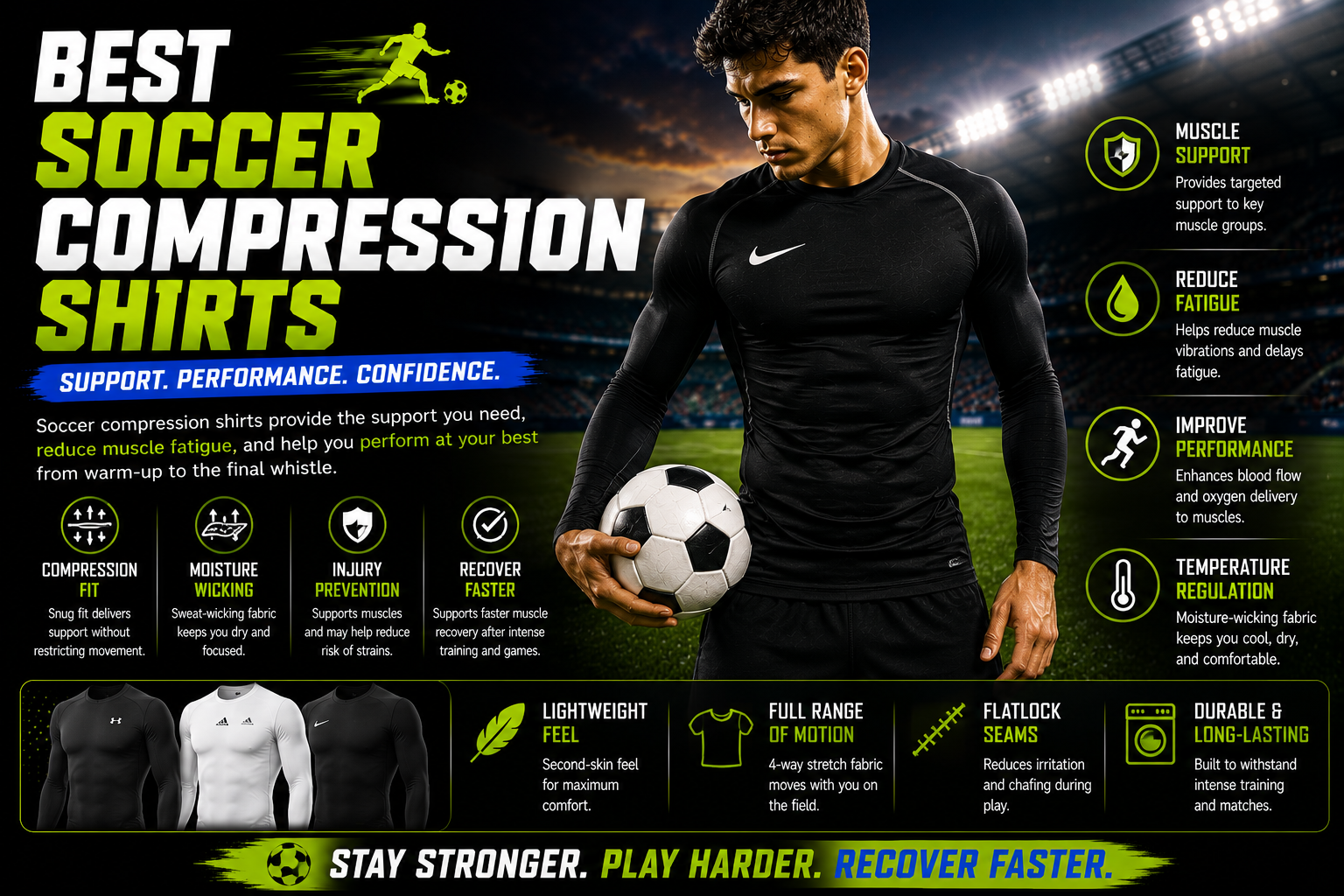
The best soccer compression shirts are lightweight, breathable, stretchy, and snug without being painfully tight. Most players should choose a shirt that fits smoothly under a jersey, manages sweat, allows full shoulder movement, and matches team or league color rules when worn in games.
Why Soccer Players Wear Compression Shirts
Soccer compression shirts are usually worn as a base layer under a jersey. They can help players feel more supported, stay covered in cool weather, reduce friction from the jersey, and create a smoother fit during running, pressing, jumping, and tackling.
Compression shirts are also popular for training because they keep the upper body covered while still feeling athletic and close to the body. Some players wear short sleeve compression shirts in warm weather, while others choose long sleeve compression shirts for colder practices or games.
For more soccer clothing guides, visit the Soccer Apparel Hub. If you are building a full match-day base layer setup, compare this guide with Best Soccer Compression Shorts and Soccer Socks Hub.
Best Soccer Compression Shirt Types
Best Features to Look For
Good soccer compression shirts should support movement instead of restricting it. The wrong shirt can feel too tight around the shoulders, trap heat, ride up, or become uncomfortable under a jersey.
Soccer players sweat heavily, so moisture control and airflow matter.
The shirt should move naturally during sprinting, shooting, jumping, and reaching.
The fit should feel snug and supportive, not painful or restrictive.
Flat seams help reduce rubbing under jerseys and training tops.
Short sleeves are lighter; long sleeves provide more coverage and warmth.
Many leagues require visible base layers to match the jersey sleeve color.
What Compression Shirts Help With
Compression shirts work as a base layer under jerseys for games and training.
Good fabric can reduce rubbing and help manage sweat during play.
Long sleeve and thermal shirts help during cold-weather soccer.
Some players like the snug athletic feel during intense sessions.
Soccer Compression Shirts Compared
| Type | Best For | Main Advantage | Buying Tip |
|---|---|---|---|
| Short Sleeve Compression Shirt | Warm weather and training | Lightweight base layer | Best first choice for most players |
| Long Sleeve Compression Shirt | Cool weather and extra coverage | More arm coverage | Check team color rules for games |
| Thermal Compression Shirt | Cold outdoor soccer | Warmth under jersey | Choose warmth without heavy bulk |
| Youth Compression Shirt | Kids and teens | Better sizing for young players | Avoid adult sizes that bunch or sag |
| Padded Compression Shirt | Goalkeepers and contact-heavy players | Extra upper-body protection | Make sure padding does not restrict movement |
Best Compression Shirts for Training
For training, lightweight compression shirts are usually the most practical option. They give players a close athletic fit without too much bulk. Short sleeve compression shirts are usually better for warm practices, while long sleeve shirts can help on cooler nights.
Training shirts should be easy to wash, quick-drying, and comfortable enough to wear several times per week. Players who train often may need multiple compression shirts so they always have a clean base layer ready.
Best Compression Shirts for Games
Match-day compression shirts should fit smoothly under the jersey and follow team or league rules.
For games, color matters. Many soccer leagues require visible undershirts or base layers to match the main sleeve color of the jersey. This is especially important with long sleeve compression shirts worn under short sleeve jerseys.
- Choose a color that matches team uniform rules.
- Make sure the shirt does not bunch under the jersey.
- Test full shoulder and arm movement.
- Use breathable fabric for hot-weather games.
- Use thermal fabric only when the weather requires it.
Best Long Sleeve Compression Shirts for Soccer
Long sleeve compression shirts are useful for cold-weather soccer, evening practices, winter tournaments, and players who want extra arm coverage. They can help players stay warmer without needing a bulky jacket during active play.
The key is choosing a shirt that stays breathable. A thick shirt that traps sweat can become uncomfortable once the player heats up. The best long sleeve soccer compression shirt should balance warmth, stretch, and moisture control.
For more cold-weather gear, compare Soccer Apparel Hub and Recovery Gear Hub.
Best Compression Shirts for Youth Soccer
Youth players need comfort, correct sizing, and simple base layers that do not distract them.
Kids and teens should wear compression shirts that fit snugly without squeezing. Adult sizes can be too long, loose in the wrong places, or awkward under youth jerseys. Youth sizing usually works better for younger players.
- Choose youth sizing when needed.
- Avoid compression that feels painfully tight.
- Check that sleeves do not restrict arm movement.
- Make sure the shirt fits under the team jersey.
- Prioritize comfort over advanced features.
For more youth gear, compare Best Soccer Cleats for Kids, Best Soccer Socks for Kids, and Recovery Tools for Youth Soccer Players.
Compression Shirts vs Regular Base Layers
Compression shirts and regular base layers can look similar, but they do not always feel the same. Compression shirts are usually snugger and more athletic, while regular base layers may feel looser and more casual.
| Option | Main Purpose | Best For | Possible Drawback |
|---|---|---|---|
| Compression Shirt | Snug athletic base layer | Training, games, layering, support feel | Can feel too tight if sized wrong |
| Regular Base Layer | Comfort and coverage | Players who dislike tight compression | May bunch more under jerseys |
| Thermal Base Layer | Cold-weather warmth | Winter soccer and cold practices | Can overheat in mild weather |
| Padded Compression Shirt | Protection and support | Goalkeepers and contact-heavy players | More bulk under the jersey |
Other Gear to Pair with Compression Shirts
A matching base layer setup can improve comfort under the full uniform.
Good socks support cleat comfort, shin guard fit, and lower-leg feel.
Goalkeepers may pair compression shirts with padded shorts or protective layers.
Stretching tools, foam rollers, and massage balls can help after hard training.
When Should Soccer Players Wear Compression Shirts?
- During training when they want a snug base layer.
- During games if team and league rules allow them.
- In cold weather when extra coverage helps.
- Under jerseys that feel rough or loose.
- For goalkeepers who want a layer under protective gear.
- Not if the shirt restricts shoulder movement.
- Not if the fabric causes overheating in warm weather.
- Not if the color violates uniform rules.
Common Compression Shirt Mistakes
- Buying a shirt that is too tight around the chest or shoulders.
- Using thermal shirts in warm weather.
- Ignoring team color or league uniform rules.
- Buying adult sizes for youth players.
- Choosing thick seams that rub under the jersey.
- Not testing the shirt under the actual game jersey.
- Assuming every player needs compression gear.
- Choosing fabric that traps sweat instead of managing it.
Are Soccer Compression Shirts Worth It?
Soccer compression shirts are worth it for players who want a secure base layer, extra coverage, comfort under the jersey, or cold-weather warmth. They can be especially useful for players who train often or play in changing weather.
They are not required for every player. Some players prefer loose base layers or no undershirt at all. The best compression shirt is the one that fits well, moves naturally, follows uniform rules, and does not distract the player.
Ready to Compare Soccer Compression Shirts?
Choose short sleeve compression shirts for warm weather, long sleeve compression shirts for cooler games, thermal shirts for winter soccer, youth sizing for kids, and padded compression shirts for goalkeepers who want extra protection.
Shop Soccer Compression ShirtsRelated Soccer Gear Guides
Soccer Compression Shirts FAQ
What are the best soccer compression shirts?
The best soccer compression shirts are breathable, stretchy, supportive, and comfortable enough to wear under a jersey without restricting movement.
Do soccer players wear compression shirts?
Yes. Many soccer players wear compression shirts under jerseys for layering, comfort, warmth, coverage, and a snug athletic feel.
Are compression shirts good for soccer?
Compression shirts can be good for soccer if they fit properly, manage sweat, and allow natural sprinting, shooting, jumping, and arm movement.
Should compression shirts be tight?
Compression shirts should feel snug and supportive, but they should not cause pain, breathing discomfort, shoulder restriction, or overheating.
Can kids wear compression shirts for soccer?
Yes, kids can wear compression shirts if they fit correctly, feel comfortable, and follow team or league uniform rules.
Are long sleeve compression shirts good for soccer?
Long sleeve compression shirts are useful for cool weather, winter practices, and extra arm coverage under short sleeve jerseys.
What color compression shirt should soccer players wear?
Players should choose compression shirts that match team or league uniform rules, especially when sleeves are visible under the jersey.
Can compression shirts help with recovery?
Compression shirts may provide a supportive feel, but recovery depends most on sleep, hydration, nutrition, rest, stretching, and smart training habits.
We may earn a commission from qualifying purchases at no extra cost to you.