Best Pop Up Soccer Goals
The best pop up soccer goals make practice quick, simple, and fun. They are ideal for kids, backyard games, park training, small-sided soccer, travel, and families who want a goal that sets up fast without permanent installation. A good pop up soccer goal should be lightweight, easy to fold, safe for the player’s age, and stable enough for casual shooting and training drills.
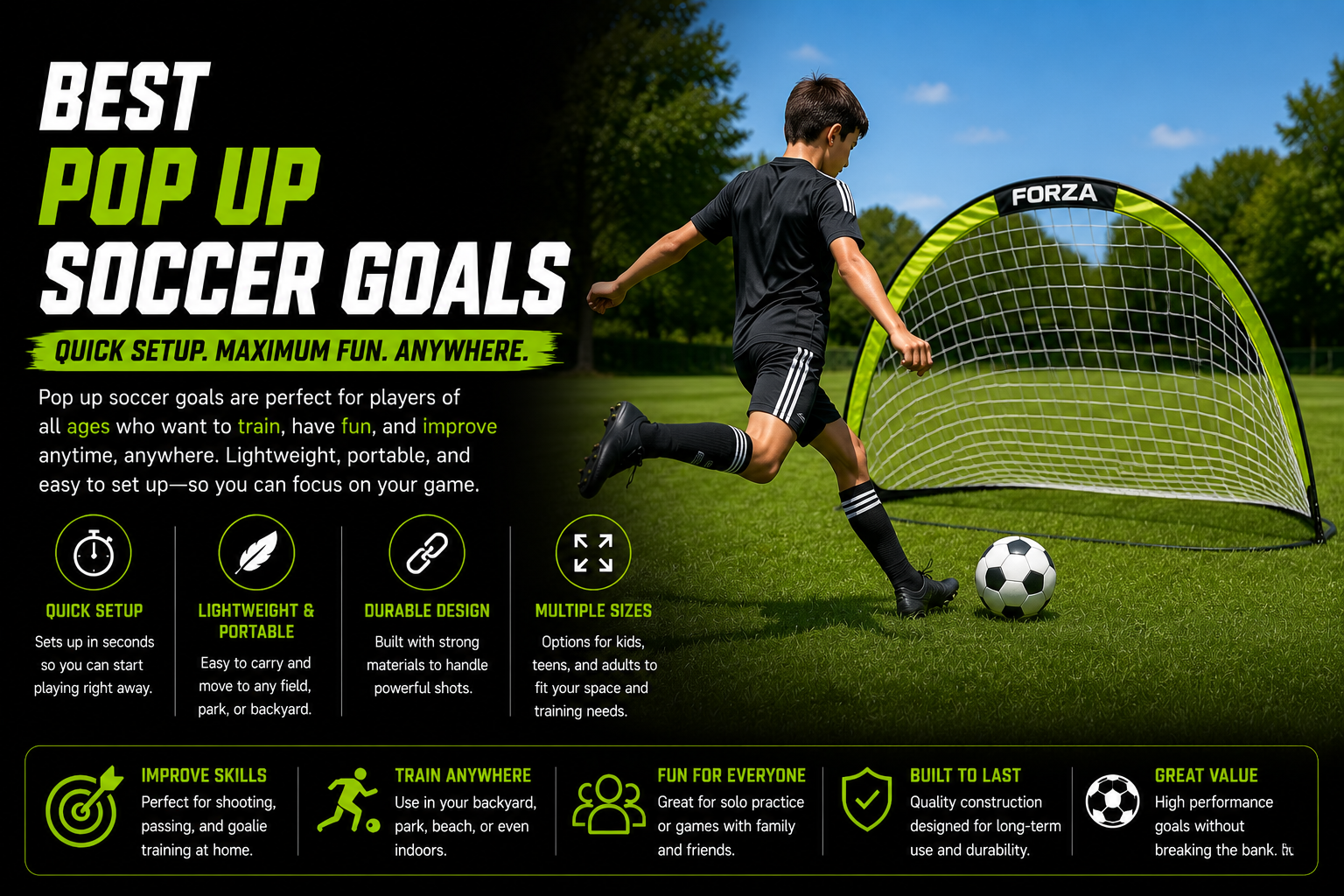
The best pop up soccer goals are lightweight, easy to open, simple to fold, and stable enough for kids, small-sided games, and light training. They are best for younger players, casual backyard use, park sessions, and quick practice setups. Older youth players with powerful shots usually need a stronger portable or training soccer goal instead.
Why Pop Up Soccer Goals Are Useful
Pop up soccer goals are useful because they remove the biggest barrier to home practice: setup time. Instead of building a heavy frame or needing a permanent goal, players can open a pop up goal, place it in the yard or park, and start playing quickly.
They are especially good for younger kids, small-sided games, footwork drills, passing targets, and casual finishing practice. Coaches also use pop up goals because they can turn open space into small fields for 1v1, 2v2, 3v3, or technical training.
For the full soccer goal category, visit the Soccer Goals Hub. If you want a stronger goal for older players, compare this guide with Best Portable Soccer Goals and Best Training Soccer Goals.
Best Pop Up Soccer Goal Types
Best Features to Look For
Pop up soccer goals are designed for convenience, but quality still matters. A cheap goal that twists, tips, or becomes impossible to fold can quickly become frustrating. Look for a goal that fits the player’s age, yard size, shot power, and storage needs.
The goal should open quickly and be ready for practice without complicated assembly.
Good pop up goals should fold back down without turning storage into a struggle.
Stakes, ground pegs, or a wide base help keep the goal in place during use.
The net should handle normal passes and youth shots without tearing quickly.
A carry bag makes pop up goals easier to store, travel with, and keep organized.
Smaller players need smaller goals; older players may need stronger portable goals.
What Pop Up Soccer Goals Help With
Players can start shooting, passing, and playing small games almost immediately.
Pop up goals are perfect for 1v1, 2v2, 3v3, and backyard games.
Small goals create a simple target for passing, placement, and first-touch drills.
Lightweight goals are easy to bring to parks, vacations, and team sessions.
Pop Up Soccer Goals Compared
| Goal Type | Best For | Main Advantage | Buying Tip |
|---|---|---|---|
| Mini Pop Up Goal | Young kids and tight spaces | Very easy to move and store | Best for light play and passing targets |
| Medium Pop Up Goal | Most kids and backyard games | Better balance of size and convenience | Best first choice for many families |
| Large Pop Up Goal | Older kids and small-sided games | More realistic target area | Check stability before harder shots |
| Coach Set Pop Up Goals | Team drills and training fields | Easy to create multiple small goals | Look for carry bags and strong stakes |
| Stronger Portable Goal | Older youth players | Handles harder shots better | Better choice than pop up for power shooting |
Best Pop Up Soccer Goals for Kids
Pop up soccer goals are one of the best goal types for kids because they are light, simple, and fun. Younger players do not always need a heavy goal. A smaller pop up goal can help them practice shooting, passing, and small games without needing a full-size setup.
For kids, the best goal is usually the one they will actually use often. If the goal is easy to open and store, parents are more likely to set it up and kids are more likely to play.
For more kid-focused buying help, compare Best Soccer Goals for Kids, Best Soccer Balls for Kids, and Best Soccer Training Equipment for Kids.
Best Pop Up Soccer Goals for Backyard Games
Backyard pop up goals are perfect for quick games, sibling matches, and small-space practice.
For backyard use, choose a pop up goal that fits the space safely. Smaller yards may need compact goals that encourage accuracy instead of hard shooting. Larger yards can handle medium or larger pop up goals for more realistic play.
- Choose a goal that fits the yard safely.
- Place goals away from windows, cars, and fences.
- Use stakes or anchors when included.
- Pick smaller goals for tight spaces.
- Store the goals after use if weather may damage them.
For backyard-specific comparisons, read Best Soccer Goals for Backyard.
Best Pop Up Soccer Goals for Coaches
Coaches often use pop up goals because they make training sessions easier to organize. A coach can create multiple small fields, finish technical drills with a target, or run quick small-sided games without needing large field goals.
For coaching use, durability and storage matter more. Look for sets with two goals, carry bags, ground stakes, and a size that fits common drills.
- Use two goals for 1v1, 2v2, or 3v3 games.
- Use small goals as passing targets.
- Choose carry bags for easy field transport.
- Check net and seam durability if used often.
- Use cones to create multiple small playing areas.
For more coach-friendly equipment, visit the Coaching Equipment Hub and Training Equipment Hub.
Pop Up Goals vs Portable Goals
Pop up goals are the fastest option, while portable goals are usually stronger and more realistic.
A pop up goal is best when convenience matters most. A stronger portable goal is better when players are older, shooting harder, or training more seriously. Many families start with pop up goals and upgrade later.
| Option | Best For | Main Advantage | Possible Drawback |
|---|---|---|---|
| Pop Up Goal | Kids, travel, quick games | Fast setup and easy storage | Less durable for hard shots |
| Folding Portable Goal | Backyard and regular practice | Better structure than pop up goals | Usually takes longer to set up |
| Training Soccer Goal | Older youth players | More realistic finishing practice | Heavier and harder to store |
| Permanent Goal | Dedicated large yard or field | Strongest setup | Not easy to move |
For the stronger portable category, read Best Portable Soccer Goals.
Best Pop Up Soccer Goal Sizes
The right size depends on the player and the space. Smaller goals are easier to store and better for accuracy. Larger pop up goals are better for small-sided games and older kids, but they may need better anchoring and more room.
| Pop Up Goal Size | Best For | Training Use |
|---|---|---|
| Mini Pop Up Goal | Young kids and small yards | Passing targets, light shooting, fun games |
| Small Pop Up Goal | Kids and travel | Quick backyard games and park sessions |
| Medium Pop Up Goal | Most families | Small-sided games and casual finishing |
| Large Pop Up Goal | Older kids and team drills | More realistic target for small-sided play |
Other Gear to Pair with Pop Up Soccer Goals
Use the correct ball size for the player’s age and training level.
Cones help create passing lanes, small fields, dribbling paths, and shooting angles.
Ladders can be paired with pop up goals for footwork-to-finish drills.
Rebounders add passing and first-touch reps before finishing into the goal.
Simple Pop Up Soccer Goal Drills
- Set up two pop up goals for 1v1 games.
- Use one pop up goal as a passing accuracy target.
- Practice finishing with both feet from short distance.
- Create a small field with cones and two goals.
- Use a rebounder before shooting into the pop up goal.
- Practice first-touch control and finish into a small target.
- Run dribbling cone drills that end with a shot.
- Track how many accurate finishes the player makes out of 20.
Pop Up Soccer Goal Safety Tips
- Use ground stakes or anchors when included.
- Do not let kids climb, sit, or jump on pop up goals.
- Place goals away from windows, cars, fences, and unsafe areas.
- Use age-appropriate ball size and shot distance.
- Check the goal for broken frames, torn fabric, or loose netting.
- Fold and store the goal safely when not in use.
- Move lightweight goals before strong wind or storms.
- Supervise younger kids during play.
Are Pop Up Soccer Goals Worth It?
Pop up soccer goals are worth it for families, young players, coaches, and anyone who wants quick soccer practice without heavy equipment. They are affordable, easy to store, and useful for fun games and simple training.
They are not the best choice for every player. Older youth players with powerful shots may outgrow pop up goals and need stronger portable or training goals. But for quick setup, kids, small-sided games, and travel, pop up goals are one of the easiest soccer goal options.
Ready to Compare Pop Up Soccer Goals?
Choose mini pop up goals for young kids, medium pop up goals for most families, coach sets for team drills, and stronger portable goals for older players who shoot harder. Prioritize setup, folding, safety, stability, storage, and how often the goals will be used.
Shop Pop Up Soccer GoalsRelated Soccer Gear Guides
Pop Up Soccer Goals FAQ
What are the best pop up soccer goals?
The best pop up soccer goals are lightweight, easy to set up, simple to fold, stable, safe, and sized correctly for the player’s age and training space.
Are pop up soccer goals good for kids?
Yes. Pop up soccer goals are especially good for kids because they are light, simple, fun, and easy to use for backyard games or park practice.
Are pop up soccer goals good for older players?
Pop up goals can work for light drills, but older players with powerful shots usually need stronger portable or training soccer goals.
What size pop up soccer goal should I buy?
Small goals are best for young kids and tight spaces, while medium or larger pop up goals are better for small-sided games and older kids.
Do pop up soccer goals need anchors?
Yes. Pop up soccer goals should be anchored with stakes or ground pegs when included, especially on grass or windy days.
Are pop up goals better than portable soccer goals?
Pop up goals are better for fast setup and travel, while stronger portable soccer goals are better for older players and harder shots.
Can pop up soccer goals be used indoors?
Some pop up goals can be used indoors if there is enough safe space and the ball is appropriate for indoor play.
What else should I buy with pop up soccer goals?
Useful extras include soccer balls, cones, ground stakes, a carry bag, a rebounder, and training targets for more focused practice.
We may earn a commission from qualifying purchases at no extra cost to you.