
Best Team Equipment Bags
The best team equipment bags help soccer coaches keep balls, cones, pinnies, whistles, pumps, coaching boards, first aid supplies, captain armbands, stopwatches, and match-day gear organized. A good soccer team bag should be durable, easy to carry, large enough for your coaching setup, and simple to use at practices, games, camps, and tournaments.
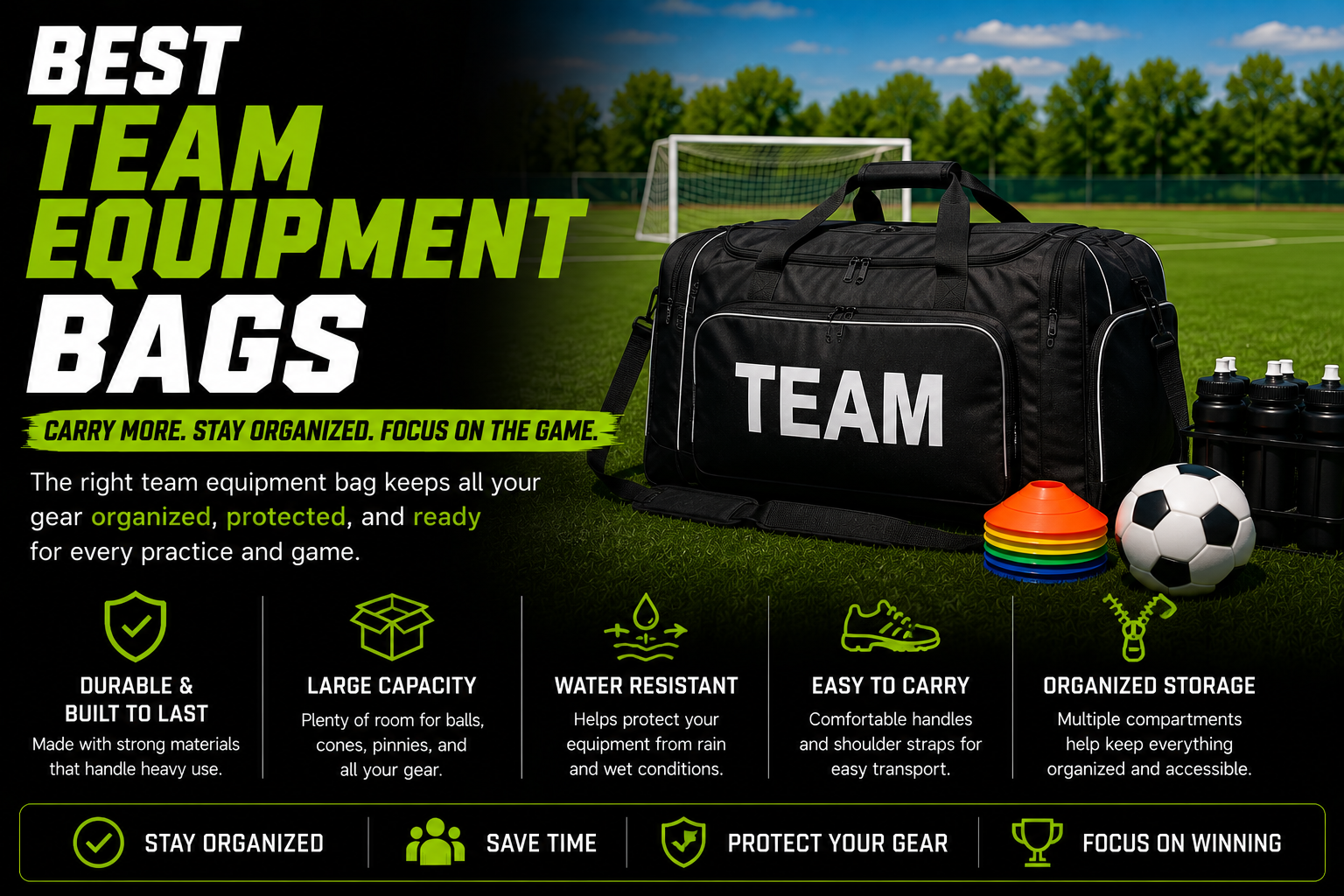
The best team equipment bag for most soccer coaches is a large, durable bag with strong straps, multiple compartments, room for balls or training gear, and pockets for small items like whistles, stopwatches, pumps, needles, tape, and first aid supplies. Coaches who carry many balls may also want a separate soccer ball bag.
Why Team Equipment Bags Matter
A team equipment bag is one of the easiest ways to make soccer coaching less stressful. When gear is scattered in a trunk, garage, or sideline pile, coaches waste time looking for cones, pinnies, pumps, whistles, and match-day items.
A good bag keeps everything in one place. It helps coaches arrive prepared, set up faster, run practices cleaner, and avoid forgetting important items before games or tournaments.
For the full coaching category, visit the Coaching Equipment Hub. If you are building a complete coach kit, compare this guide with Best Soccer Coaching Equipment, Best Soccer Ball Bags, and Best Training Bibs.
Best Team Equipment Bag Types
Best Features to Look For
Team bags can get heavy, so handles and shoulder straps need to be durable.
Pockets help separate whistles, pumps, first aid gear, keys, tape, and small tools.
The bag should fit your real coaching gear without being overloaded every practice.
Coaches need to grab items quickly during drills, warmups, and games.
Outdoor bags should handle grass, dirt, rain, trunks, benches, and weekly use.
Mesh panels or breathable sections help with wet pinnies, towels, and sweaty gear.
What Team Equipment Bags Help With
Carry cones, pinnies, balls, boards, whistles, and timers to the field faster.
Keep captain armbands, first aid supplies, lineups, tape, and warmup gear together.
Organize gear across multiple games, fields, breaks, and travel days.
Keep team gear together in the garage, car, equipment room, or field area.
Team Equipment Bags Compared
| Bag Type | Best For | Main Advantage | Buying Tip |
|---|---|---|---|
| Large Duffel Bag | Most soccer coaches | Big storage for mixed gear | Look for strong zippers and straps |
| Mesh Team Bag | Wet gear and balls | Breathable and easy to see inside | Best for pinnies, balls, and lightweight gear |
| Backpack Gear Bag | Walking to fields | Hands-free carrying | Choose padded straps for heavier loads |
| Rolling Equipment Bag | Large teams and tournaments | Easier transport for heavy gear | Best for smooth paths, less ideal on grass |
| Ball Bag | Carrying soccer balls | Keeps balls separate | Pair with a coach bag for small items |
Best Team Equipment Bags for Soccer Coaches
Most soccer coaches need a bag that can hold more than just soccer balls. A good team bag should carry cones, training bibs, whistles, stopwatches, pumps, extra needles, first aid basics, clipboards, captain armbands, and small match-day supplies.
The best setup for many coaches is one dedicated soccer ball bag plus one team equipment bag. That keeps balls easy to access while protecting smaller items from getting lost.
- Use one section for coaching tools.
- Use one section for first aid basics.
- Use one pouch for whistles, timers, and small items.
- Keep pumps and extra needles in a zip pocket.
- Store wet pinnies separately when possible.
What Should Be Inside a Soccer Team Equipment Bag?
A well-packed bag makes practices and games easier to manage.
| Item | Why It Matters | Related Guide |
|---|---|---|
| Whistle | Controls drills, transitions, and scrimmages | Best Soccer Whistles |
| Stopwatch | Times drills, rotations, and substitutions | Best Soccer Stopwatches |
| Training bibs | Separates teams and groups quickly | Best Training Bibs |
| Coaching board | Explains formations, drills, and set pieces | Best Soccer Coaching Boards |
| Captain armband | Identifies team leadership on match day | Best Captain Armbands |
| Ball pump | Keeps soccer balls ready for training | Soccer Balls Hub |
Best Equipment Bag for Practices
For practices, coaches need fast access to cones, pinnies, balls, whistles, timers, and pumps. A bag with wide openings and separate pockets is usually better than one large empty compartment where everything gets mixed together.
Practice bags should be easy to carry from the car to the field and easy to repack after training. If a coach has to dig through the whole bag every time, the setup is not efficient.
- Choose easy-access pockets.
- Keep cones and pinnies near the top.
- Use small pouches for pumps, needles, and whistles.
- Keep a copy of the practice plan or clipboard inside.
- Use a separate wet gear pouch when possible.
Best Equipment Bag for Match Day
Match-day bags should be organized for speed and reliability.
On game day, coaches may need captain armbands, lineup notes, substitution plans, player cards, tape, first aid supplies, extra pinnies, warmup balls, and a stopwatch. The best team equipment bag makes those items easy to find quickly.
- Keep lineups and notes in a dry folder.
- Store captain armband in a small pocket.
- Keep first aid basics easy to access.
- Bring a backup whistle and stopwatch.
- Pack extra pinnies for warmups or guest players.
Team Equipment Bag Size Guide
| Team Situation | Best Bag Size | Coach Tip |
|---|---|---|
| Parent coach / small team | Medium duffel or backpack bag | Enough for cones, bibs, whistle, pump, and first aid basics |
| Youth team coach | Large duffel plus ball bag | Best balance for weekly practices and games |
| Club coach | Large gear bag with compartments | Useful for multiple sessions and age groups |
| Tournament coach | Large or rolling equipment bag | Helpful for extra supplies and long days |
| Camp coach | Multiple bags or rolling storage | Separate balls, pinnies, cones, and medical basics |
Other Coaching Gear to Pair With a Team Bag
Separates soccer balls from smaller coaching tools and match-day supplies.
Useful for scrimmages, small-sided games, and team rotations.
Help control time, transitions, drills, and practice flow.
Useful for tactics, set pieces, positions, and halftime talks.
Common Team Equipment Bag Mistakes
- Buying a bag that is too small for real team gear.
- Throwing everything into one compartment with no organization.
- Mixing wet pinnies with papers, boards, or first aid supplies.
- Forgetting backup whistles, stopwatch, pump needles, or tape.
- Using weak straps for heavy team equipment.
- Not labeling the bag for tournaments or shared team spaces.
- Leaving dirty gear inside after rainy practices.
- Using the same bag for balls and small fragile items without separation.
Are Team Equipment Bags Worth It?
Team equipment bags are worth it for soccer coaches because they save time, reduce stress, and keep important gear organized. A good bag helps coaches arrive prepared and prevents small items from getting lost before practice or games.
The best bag is not always the biggest one. It is the bag that matches your team size, gear list, carrying distance, and coaching routine.
Ready to Compare Team Equipment Bags?
Choose a large duffel for most coaching gear, a mesh bag for breathable storage, a backpack bag for long walks to the field, or a rolling bag for tournaments and heavy loads. Prioritize storage, durability, easy access, strong straps, and smart compartments.
Shop Team Equipment BagsRelated Soccer Gear Guides
Team Equipment Bags FAQ
What is the best team equipment bag for soccer coaches?
The best team equipment bag for most soccer coaches is a durable large bag with strong straps, multiple compartments, and room for coaching tools, pinnies, pumps, first aid supplies, and match-day gear.
Do soccer coaches need a team equipment bag?
Yes. A team equipment bag helps coaches keep gear organized and makes practices, games, tournaments, and travel easier to manage.
What should be inside a soccer team bag?
A soccer team bag should include whistles, stopwatch, cones, pinnies, ball pump, extra needles, first aid basics, coaching board, captain armband, tape, and match-day notes.
Should balls go in the team equipment bag?
Some team bags can hold balls, but many coaches prefer a separate soccer ball bag plus a team equipment bag for smaller items.
Are mesh equipment bags good for soccer?
Mesh equipment bags are useful for breathable storage, wet gear, pinnies, and balls, but they may not protect small items as well as a duffel with compartments.
What size bag does a youth soccer coach need?
Most youth soccer coaches need a medium-to-large team bag or duffel, plus a separate ball bag if they carry many soccer balls.
Are rolling equipment bags good for soccer teams?
Rolling equipment bags can be helpful for tournaments and heavy loads, but they are less useful on rough grass, dirt, or uneven fields.
How do you organize a soccer coach bag?
Use separate pockets or pouches for small items, keep wet pinnies away from papers and first aid supplies, and store frequently used items near the top.
We may earn a commission from qualifying purchases at no extra cost to you.