
Best Protein for Young Athletes
The best protein for young athletes supports healthy growth, muscle repair, recovery, and consistent energy for sports. Most active kids and teens do not need complicated supplements. They usually benefit most from balanced meals built around eggs, milk, yogurt, lean meats, fish, beans, lentils, tofu, and other real foods.
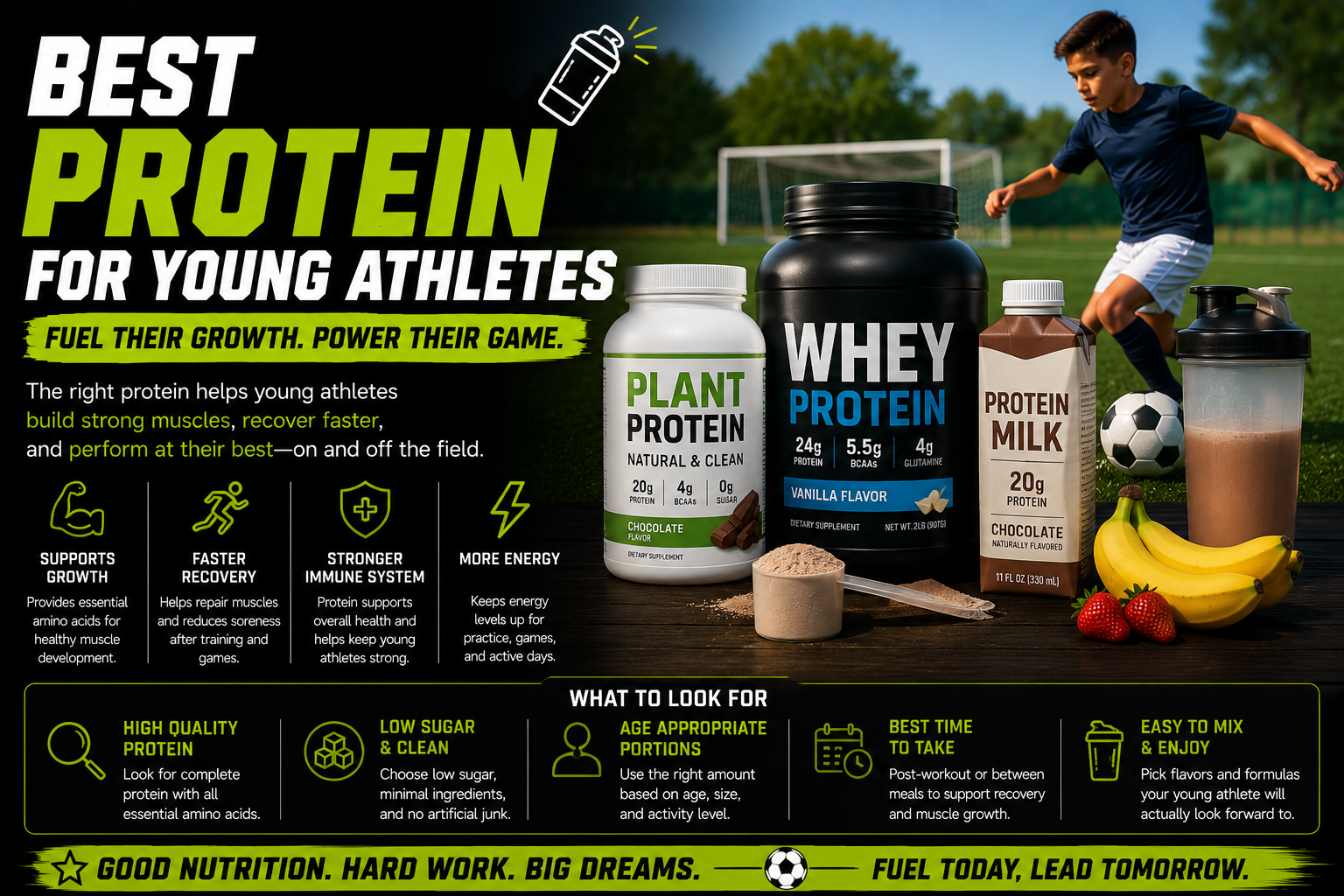
The best protein for young athletes usually comes from whole foods such as eggs, milk, Greek yogurt, chicken, turkey, fish, lean meats, beans, lentils, tofu, and balanced meals. Protein shakes can be useful for convenience, but food should stay the foundation for growing athletes.
Best Protein for Young Athletes at a Glance
Protein Options for Young Athletes — Quick Comparison
| Protein Source | Best For | Main Benefit | Buying / Serving Tip |
|---|---|---|---|
| Eggs | Breakfast and recovery meals | Simple, affordable whole-food protein | Pair with toast, fruit, or potatoes |
| Greek Yogurt | Snacks and post-practice recovery | Protein plus easy carbs when paired with fruit | Choose options that fit the athlete’s digestion |
| Chicken or Turkey | Lunch and dinner | Lean protein for growing athletes | Use in rice bowls, wraps, sandwiches, or meals |
| Fish | Balanced dinners | Protein plus healthy fats | Good with rice, potatoes, vegetables, or pasta |
| Beans and Lentils | Plant-based meals | Protein, fiber, and long-lasting energy | Pair with rice, tortillas, potatoes, or grains |
| Protein Shakes | Busy schedules and travel | Convenient when a meal is delayed | Use as backup, not the main nutrition plan |
Why Protein Matters for Young Athletes
Young athletes are still growing while also asking more from their bodies through practices, games, tournaments, strength work, and daily activity. Protein supports normal growth, muscle repair, tissue recovery, and overall training consistency.
Protein is important, but it is not the only thing that matters. Young athletes also need enough total calories, carbohydrates for energy, fluids for hydration, sleep for recovery, and balanced meals across the day.
For young soccer players specifically, protein should be part of a bigger nutrition plan. Helpful related guides include Nutrition for Youth Soccer Players, Best Protein for Soccer Players, Soccer Game Day Meal Plan, and Soccer Tournament Nutrition Guide.
Protein Features That Matter for Young Athletes
Whole foods provide protein plus vitamins, minerals, carbs, fats, and other nutrients.
The best protein is one the athlete can tolerate before or after sports.
Regular meals and snacks matter more than one perfect shake.
Young athletes need nutrition that supports both sport and normal development.
Best Whole-Food Protein for Young Athletes
Whole-food protein should be the first choice for most growing athletes. These foods provide protein along with other nutrients that support growth, energy, and recovery.
- Eggs for breakfast, snacks, or recovery meals.
- Milk and dairy foods if tolerated.
- Greek yogurt with fruit or granola.
- Chicken, turkey, and lean meats.
- Fish and seafood.
- Beans, lentils, rice bowls, and burritos.
- Tofu, tempeh, edamame, and soy foods.
- Nut butters when tolerated and appropriate.
Best Protein Foods by Time of Day
| Time | Protein Ideas | Why It Helps |
|---|---|---|
| Breakfast | Eggs, Greek yogurt, milk, tofu scramble | Starts the day with steady nutrition. |
| School Lunch | Turkey sandwich, chicken wrap, bean burrito, tuna, yogurt | Supports energy before afternoon practice. |
| Before Sports | Light protein with carbs if tolerated | Works only if it feels comfortable in the stomach. |
| After Sports | Milk, yogurt, smoothie, sandwich, eggs, dinner meal | Supports recovery after training or games. |
| Evening | Chicken, fish, lean meat, beans, tofu, rice, potatoes | Helps recovery and refueling overnight. |
Are Protein Shakes Good for Young Athletes?
Protein shakes can be useful when a young athlete has a busy schedule, late practice, tournament day, or long drive after training. They are convenient, but they should not replace normal meals as the main nutrition strategy.
Parents should choose simple protein products with clear labels and avoid products that look more like extreme bodybuilding or stimulant supplements. For active kids and teens, simple is usually better.
- Use shakes for convenience, not as a meal replacement habit.
- Choose simple labels with clear ingredients.
- Avoid stimulant-heavy products, especially for younger athletes.
- Check allergens such as dairy, soy, nuts, and gluten.
- Do not test a new shake on game day.
- Ask a qualified professional if the athlete has medical concerns or dietary restrictions.
Best Protein Snacks for Active Kids and Teens
Protein snacks help young athletes bridge the gap between school, practice, games, and dinner. The best snacks are simple, familiar, and easy to digest.
- Greek yogurt with fruit.
- Chocolate milk or regular milk.
- Turkey or chicken sandwich.
- Hard-boiled eggs.
- Cheese sticks with crackers or fruit.
- Hummus with pita or vegetables.
- Bean and cheese burrito.
- Smoothie with yogurt, milk, fruit, or nut butter.
- Protein bar used occasionally as a backup.
Protein Before or After Sports?
For most young athletes, protein is most useful after sports or as part of regular meals throughout the day. Before games or practices, the focus is usually easy energy from carbohydrates and good hydration.
| Timing | Best Focus | Example |
|---|---|---|
| Before Sports | Comfortable energy and hydration | Banana, toast, cereal, rice, fruit, water |
| After Sports | Protein plus carbohydrates | Yogurt with fruit, milk, sandwich, smoothie, dinner |
| Between Tournament Games | Light, familiar, easy-to-digest foods | Half sandwich, yogurt, fruit, bar, milk, water |
| Evening Recovery | Balanced meal | Chicken or beans with rice, pasta, potatoes, vegetables |
Best Protein for Young Soccer Players
Young soccer players often train multiple times per week, play weekend games, and sometimes spend long days at tournaments. Protein helps recovery, but soccer players also need carbohydrates because the sport requires running, sprinting, cutting, and repeated high-intensity effort.
For soccer, a good recovery snack often combines protein and carbs. Examples include chocolate milk, Greek yogurt with fruit, turkey sandwich, eggs and toast, rice with chicken, bean burrito, or a smoothie.
- Use protein after practice or games to support recovery.
- Pair protein with carbs for soccer refueling.
- Pack portable options for tournaments.
- Keep hydration part of the plan.
- Do not rely only on powders or bars.
Helpful guides: Best Protein for Soccer Players, Best Recovery Drinks for Soccer Players, and Protein Shake Before or After Soccer?.
Protein Mistakes Young Athletes Should Avoid
Protein shakes cannot fix poor eating habits if the athlete misses meals often.
Young athletes usually need food habits more than complicated products.
Sports require fuel, so protein alone is not enough for performance.
Never test a new shake, bar, or supplement before an important game.
When Protein Shakes Make Sense
Protein shakes are not required for most young athletes, but they can be useful in specific situations. The key is to use them as a practical backup, not as the foundation of the diet.
- Late evening practices when dinner is delayed.
- Long tournament days with limited food access.
- Travel games with long drives home.
- Busy school-to-practice schedules.
- Players who struggle to eat right after training.
- Occasional recovery support when real food is not available.
Protein Powder vs Protein Bars vs Whole Food
| Option | Best Use | Pros | Watch Out For |
|---|---|---|---|
| Whole Food | Daily meals and snacks | Best overall nutrition foundation | Requires planning and prep |
| Protein Shake | Post-practice convenience | Fast, easy, portable | Can replace meals too often if misused |
| Protein Bar | Backup snack or travel | Easy to pack | Some bars are high in sugar or hard to digest |
| Ready-to-Drink Shake | Tournaments or late games | No mixing needed | Can be more expensive per serving |
What to Avoid in Protein Products for Young Athletes
Protein products for young athletes should be simple. Avoid products that are marketed with extreme claims or loaded with ingredients that are not needed for kids or teens.
- High-caffeine protein products.
- Extreme muscle-building claims.
- Unclear proprietary blends.
- Products that upset the stomach.
- Too much added sugar for everyday use.
- Meal replacement habits without balanced food.
- New products before games or tournaments.
- Ignoring food allergies or sensitivities.
Final Verdict: What Is the Best Protein for Young Athletes?
The best protein for young athletes usually comes from normal foods: eggs, milk, yogurt, chicken, turkey, fish, lean meats, beans, lentils, tofu, soy foods, and balanced meals. These foods support recovery, growth, and energy better than relying only on powders.
Protein shakes and bars can help when schedules are busy, but they should be used as convenient backups. For growing athletes, the best plan is simple: consistent meals, enough calories, carbs for fuel, protein for recovery, hydration, sleep, and healthy habits.
Shop Protein OptionsRelated Nutrition Guides
Best Protein for Young Athletes FAQ
What is the best protein for young athletes?
The best protein for young athletes usually comes from whole foods such as eggs, milk, Greek yogurt, chicken, fish, lean meats, beans, lentils, tofu, and balanced meals.
Do young athletes need protein powder?
Most young athletes do not need protein powder if they eat balanced meals. Protein powder can be convenient when real food is not available, but it should not replace meals.
Is whey protein good for teenagers?
Whey protein can be a convenient option for teenagers who tolerate dairy, but parents should choose simple products and keep whole foods as the main nutrition source.
What protein foods are good after sports?
Good post-sports protein foods include Greek yogurt, milk, eggs, turkey sandwiches, chicken, fish, beans, tofu, smoothies, or balanced meals with protein and carbs.
Should young athletes eat protein before or after sports?
Protein is usually most useful after sports or across regular meals. Before sports, young athletes often need easy-to-digest carbohydrates and hydration.
Are protein bars good for kids?
Protein bars can be useful occasionally for travel or tournaments, but whole-food snacks are usually a better everyday choice.
Can young soccer players drink protein shakes?
Young soccer players can use protein shakes for convenience when real food is unavailable, but balanced meals should remain the primary nutrition strategy.
What should young athletes avoid in protein products?
Young athletes should avoid high-caffeine protein products, extreme supplement claims, unclear blends, products that upset the stomach, and using shakes as constant meal replacements.
We may earn a commission from qualifying purchases at no extra cost to you. This article is for general informational purposes only and is not medical advice.