Should Soccer Cleats Be a Size Bigger?
Soccer cleats should fit snugly, but many parents wonder whether they should buy a larger size for growing kids. This guide explains how much room is acceptable, how to spot an incorrect fit, and when it is safer to choose a different size or cleat shape.
Affiliate disclosure: Soccer Gear Guide may earn a commission from qualifying purchases at no additional cost to you.
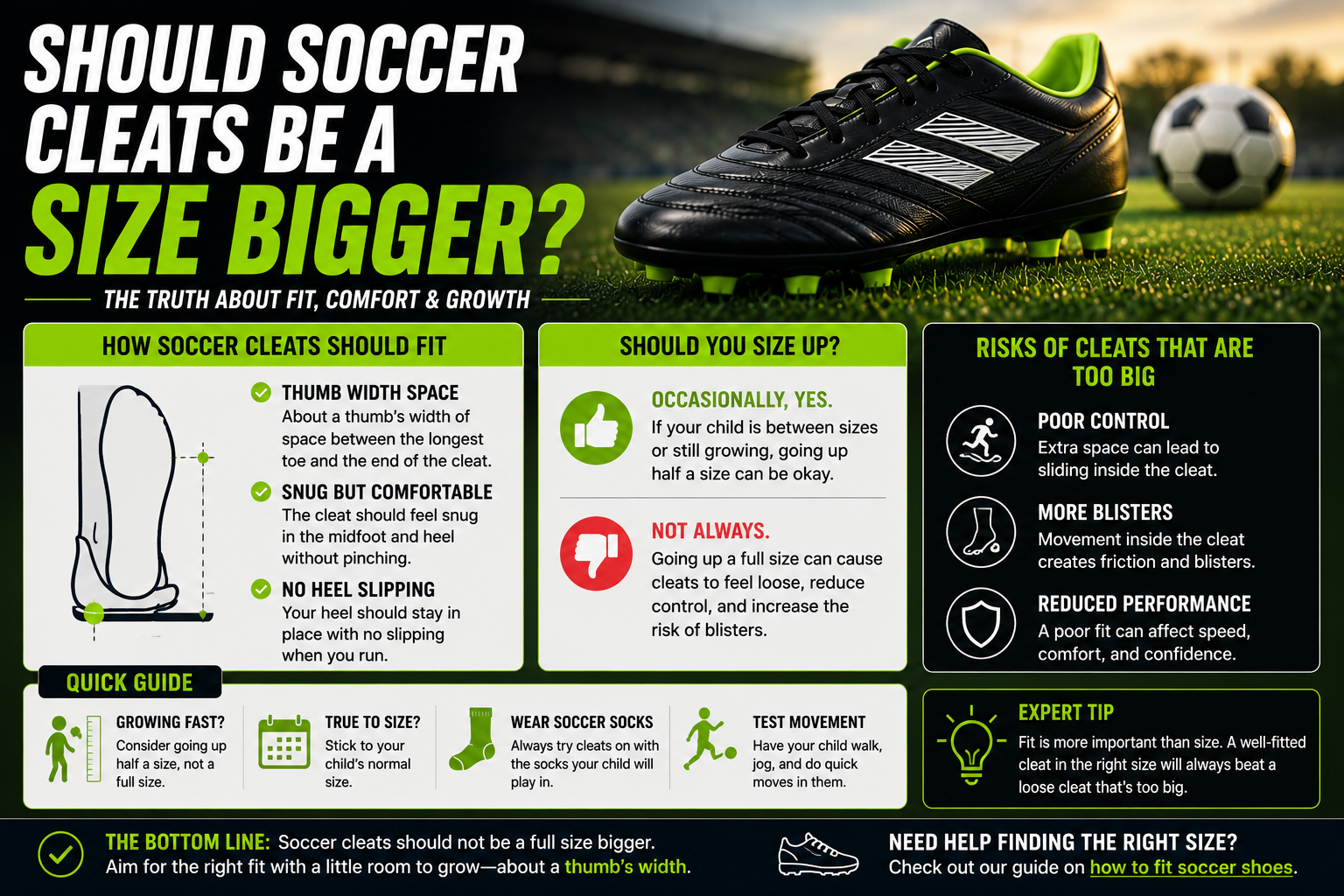
Soccer cleats should not be a full size bigger
A small amount of toe room is acceptable for growing kids, but the heel and midfoot must remain secure. If the foot slides, the heel lifts, or the child must overtighten the laces, the cleats are too large.
Should Soccer Cleats Be Bigger Than Regular Shoes?
In most cases, no. Soccer cleats are designed to fit more closely than everyday sneakers. The close fit helps the foot and shoe move together during acceleration, sharp cuts, tackles, passes, and shots.
A printed shoe size is only a starting point. Players may wear the same numerical size in sneakers and cleats, but the cleat will usually feel more fitted because it has less extra volume and a more performance-focused shape.
Best rule: Choose the smallest size that feels secure and comfortable without crushing the toes or squeezing the sides of the foot.How Soccer Cleats Should Fit
The best soccer cleat fit is snug but not painful. The foot should feel supported, the heel should remain locked in, and the toes should lie naturally without curling.
| Fit Area | Correct Fit | Warning Sign |
|---|---|---|
| Toe Room | Small amount of space in front of the longest toe | Large empty gap or toes pressed hard against the front |
| Heel | Secure with minimal lift | Heel rises repeatedly while running |
| Width | Snug without painful side pressure | Pinching, numbness, or foot spilling over the sole |
| Midfoot | Locked in without overtightening | Foot slides or laces must be pulled excessively tight |
| Movement | Comfortable while jogging, cutting, and kicking | Instability, rubbing, or hesitation during movement |
For exact sizing help, use our soccer cleat size chart and our guide on how to measure kids soccer cleats.
What Happens If Soccer Cleats Are Too Big?
Buying oversized cleats may delay the next purchase, but it can make soccer less comfortable and reduce a young player’s control and confidence.
Heel Slipping
The heel moves vertically and creates friction during running.
Blisters
Extra movement repeatedly rubs the skin against the lining.
Poor Ball Control
Empty space between the foot and boot makes touches feel less precise.
Unstable Cuts
The foot may slide before the outsole changes direction.
Toe Gripping
Players may curl their toes unconsciously to hold the shoe in place.
Reduced Confidence
Loose footwear can make children hesitant when sprinting or kicking.
Simple Fit Rule Slight toe room ✓ Correct Heel slipping Too big Foot sliding Too big Painful toe pressure Too smallShould Kids Have Room to Grow in Soccer Cleats?
Kids can have a little room to grow, but not so much that the cleat becomes loose. A small gap in front of the toes is reasonable when the heel and midfoot remain secure.
A full size bigger is usually excessive. If the child’s foot moves inside the shoe when running or stopping, the cleat is not providing the support needed for soccer.
Acceptable Growing Room
- Slight space near the toes
- Heel stays secure
- No side-to-side movement
- Comfortable with normal soccer socks
Too Much Growing Room
- Visible heel lift
- Foot slides during cuts
- Laces must be overtightened
- Blisters appear after activity
Should Parents Size Up for Wide Feet?
Not usually. If the problem is width, buying a longer cleat may leave too much empty space in front while the sides still feel tight. The better solution is a model with a more accommodating forefoot or a dedicated wide-width option.
For wide feet, change the shape of the cleat before changing the length.Helpful guides: Best Soccer Cleats for Wide Feet and Best Soccer Cleats for Comfort.
Do Different Cleat Brands and Lines Fit Differently?
Yes. Fit varies between brands and between product families. Players should never assume that every cleat in the same printed size will feel identical.
| Cleat Line | Typical Fit Feel | Often Best For |
|---|---|---|
| Nike Mercurial | Close and speed-focused | Narrow or medium feet and fast attackers |
| Nike Phantom | Snug with a more adaptable forefoot | Technical players focused on touch and control |
| Nike Tiempo | Softer and more forgiving | Players prioritizing comfort and natural feel |
| Adidas Predator | Secure and structured | Midfielders, defenders, and control players |
| Adidas F50 | Lightweight and close-fitting | Wingers and speed-focused attackers |
| Adidas Copa | Comfort-focused and natural | Players who dislike narrow speed boots |
| Puma Future | Adaptive and accommodating | Players needing flexibility through the forefoot |
How to Test Soccer Cleat Fit Before Playing
- Measure both feet. Use the larger foot when choosing the starting size.
- Wear normal soccer socks. Do not test the cleats with thin casual socks.
- Lace them normally. The foot should feel secure without excessive tightening.
- Walk and jog. Check for heel lift, rubbing, toe pressure, and side compression.
- Make controlled cuts. The foot should not slide before the shoe changes direction.
- Kick a ball gently. The toes should not strike the front of the cleat.
Do Not Buy Soccer Cleats a Full Size Bigger
For most kids, the correct soccer cleat is snug, secure, and comfortable with only slight toe room. A little room for growth is acceptable, but oversized cleats can cause heel slipping, blisters, unstable movement, and poorer ball control.
Best FitSnug around the heel and midfoot Toe SpaceSmall amount without sliding WidthComfortable with no pinching MovementStable while running and cuttingRelated Soccer Cleat Guides
Soccer Cleat Size Chart How to Measure Kids Soccer Cleats How to Fit Soccer Shoes What Age Do Kids Need Soccer Cleats? Best Soccer Cleats for Wide Feet Best Soccer Cleats for Narrow Feet Nike Mercurial Sizing Guide Adidas Predator Sizing GuideFrequently Asked Questions
Should soccer cleats be a full size bigger?
No. Soccer cleats should usually not be a full size bigger. They are designed to fit closer than everyday sneakers so the foot stays stable during running, cutting, passing, and shooting. A full extra size often creates heel lift, foot sliding, blisters, and less precise ball contact.
How much toe room should kids have in soccer cleats?
Most kids only need a small amount of space in front of the longest toe. The toes should not be crushed, but the foot should also not slide forward when the child stops or changes direction. A few millimeters of growing room is normally safer than buying an entire size larger.
Should kids have room to grow in soccer cleats?
Yes, but only a modest amount. A little extra toe room can accommodate normal growth, especially when the heel and midfoot remain secure. Cleats that feel loose even after the laces are tightened are too large and should not be purchased simply to extend their usable life.
Should soccer cleats fit tighter than sneakers?
Yes. Soccer cleats generally fit more snugly than casual sneakers because players need direct contact with the ball and stable footing during quick movement. Snug should not mean painful, however. Numb toes, sharp side pressure, or persistent rubbing indicate an incorrect size or shape.
How do I know if soccer cleats are too big?
Common signs include heel lifting, the foot sliding from side to side, toes gripping inside the shoe, repeated blisters, and unstable movement during cuts. If the player must overtighten the laces just to hold the foot in place, the cleats are probably too large.
How do I know if soccer cleats are too small?
Cleats are too small when the toes are curled or pressed hard against the front, the sides of the foot feel painfully squeezed, or the player experiences numbness and hot spots. Mild snugness is normal, but pain should never be treated as part of the break-in process.
Should parents size up for wide feet?
Usually not. Going up in length does not necessarily create enough width and may leave excessive empty space at the toe or heel. Players with wide feet are better served by choosing a naturally wider cleat shape or a model offered in a dedicated wide width.
Do different soccer cleat brands fit differently?
Yes. Fit varies between brands and even between product lines from the same brand. Nike Mercurial and Adidas F50 usually feel closer and more speed-focused, while Nike Tiempo, Adidas Copa, and Puma Future often feel more accommodating. Players should judge the specific model rather than relying only on the printed size.
Can oversized soccer cleats affect performance?
Yes. Extra movement inside the boot can reduce balance, traction, and confidence. It can also make first touch, passing, dribbling, and shooting feel less precise because the foot and cleat are not moving together as one unit.
Can cleat insoles fix a pair that is too big?
A slightly thicker insole or appropriate soccer sock may improve a very small fit difference, but it should not be used to correct cleats that are clearly too large. Adding excessive padding can change foot position, reduce stability, and create new pressure points.
Should players wear thick socks to fill extra space?
No. Players should wear the soccer socks they normally use when checking fit. Using unusually thick or doubled socks to compensate for oversized cleats may increase heat, friction, bunching, and blisters without creating proper heel lockdown.
When should a child move to the next cleat size?
Move up when the toes consistently press against the front, the forefoot feels cramped, or the child reports discomfort during movement. Measure both feet and check the fit while wearing normal soccer socks. Do not wait until the current cleats cause pain.
Should new soccer cleats feel tight at first?
They may feel snug and structured, but they should not be painful. Modern cleats often soften slightly after a few short practices, yet severe pressure or numbness is unlikely to disappear safely. The correct model should feel wearable from the beginning.
How should soccer cleats fit around the heel?
The heel should stay firmly seated with minimal vertical movement. A small amount of natural movement can occur, but repeated lifting while walking, jogging, or cutting is a sign that the boot is too large or the heel shape is not suitable for the player.
What is the safest soccer cleat fit for growing kids?
The safest fit is snug through the heel and midfoot, comfortable across the width, and long enough to provide slight toe room without allowing the foot to slide. Comfort while running, stopping, kicking, and changing direction matters more than leaving excessive room for future growth.
Ready to Compare Soccer Cleats?
Choose a model that fits the player’s actual foot shape instead of buying excessive growing room.
Browse Soccer Cleats on Amazon As an Amazon Associate, we may earn from qualifying purchases at no extra cost to you.