
Best Kids Soccer Cleats by Age Group
Choose kids soccer cleats by age group, playing level, foot development, field surface, and practical family budget.
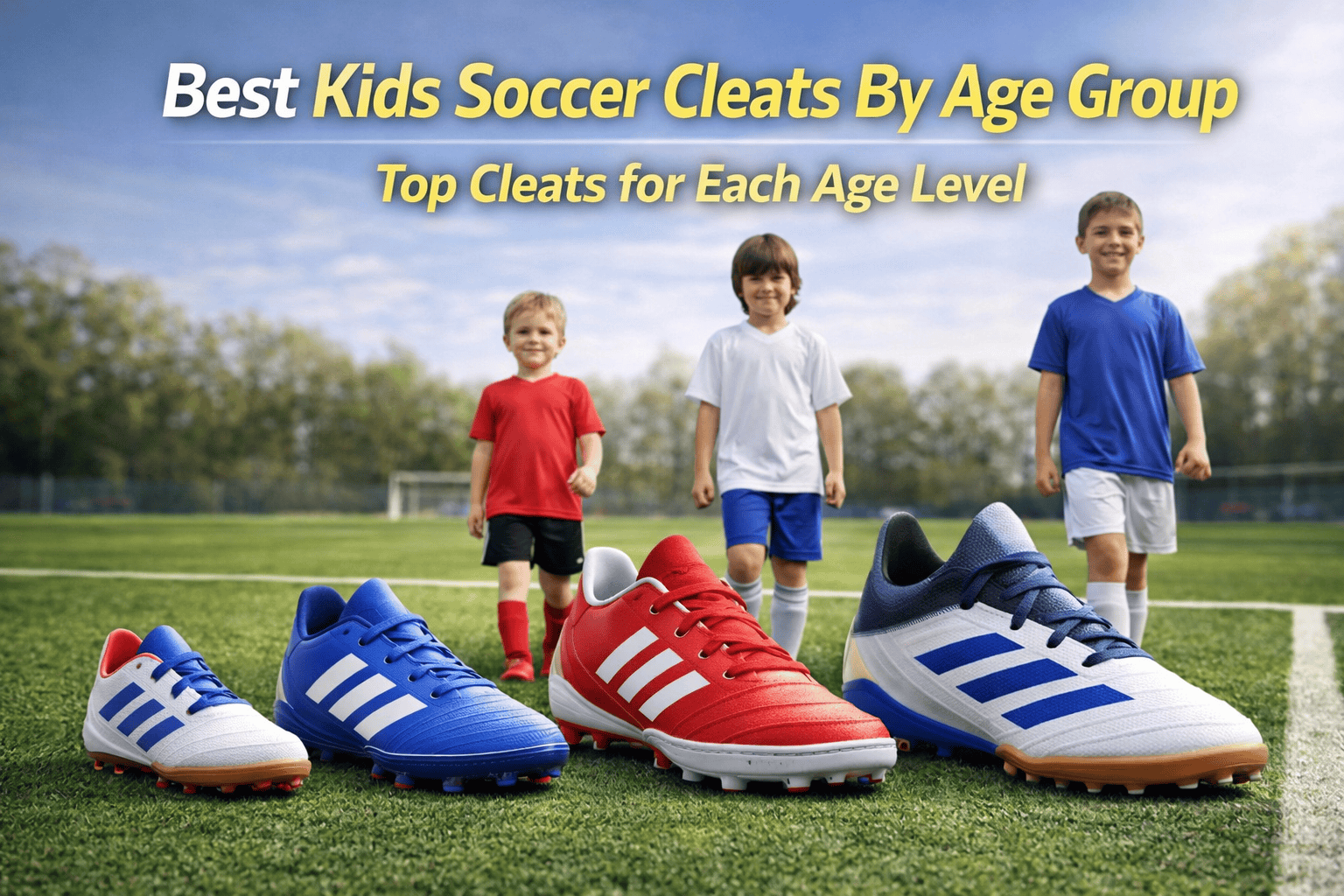
Affiliate disclosure: We may earn a commission from qualifying purchases, at no additional cost to you.
Quick answer
For ages 3–5, prioritize easy entry, flexibility, and comfort. Ages 6–8 need secure fit and the correct outsole. Ages 9–12 can choose by position and playing style, while teens can consider higher tiers only after fit and surface are settled.
At a glance
Best Kids Soccer Cleats by Age Group compared
Start with fit and surface, then use playing style, comfort, and budget to narrow the shortlist.
| Pick | Best for | Fit | Surface | Shop |
|---|---|---|---|---|
| 1Flexible Entry-Level Cleats | Best ages 3–5 | Roomy but secure | League surface | See options |
| 2Club-Level Youth Cleats | Best ages 6–8 | Secure comfort | FG/MG or TF | See options |
| 3Academy or League Cleats | Best ages 9–12 | Foot-shape matched | Surface-specific | See options |
| 4Academy to Pro-Level Cleats | Best teens | Performance fit | Surface-specific | See options |
Our shortlist
The strongest options by need
These recommendations preserve the useful distinctions from the legacy guide while using the clean approved buying-guide structure.
Flexible Entry-Level Cleats
Simple closures, comfort, and easy movement matter more than performance tier.
Club-Level Youth Cleats
Practical durability and stable fit for beginners developing technique.
Academy or League Cleats
Better lockdown and model choice for increasingly specific needs.
Academy to Pro-Level Cleats
Higher tiers can make sense for frequent competitive use and stable sizing.
Buying advice
How to choose correctly
Do not choose by color or brand alone. The correct outsole and a secure pain-free fit influence performance more than marketing tier.
Use TF for short artificial turf and select FG, AG, or MG only where that exact outsole is appropriate and permitted.
Fit the larger foot and check heel hold, toe room, width pressure, and comfort in match socks.
Speed, control, comfort, and stability labels help organize choices, but fit remains the deciding factor.
Club and Academy-level models are often the best value for growing players and recreational schedules.
How we evaluate
A player-first selection method
We use the legacy article’s useful model and use-case knowledge, then rebuild the recommendations around current, durable decision criteria.
- Foot shape and secure lockdown
- Surface and outsole compatibility
- Comfort during realistic playing time
- Role-specific movement and touch needs
- Value relative to growth and frequency
Questions answered
Best Kids Soccer Cleats by Age Group FAQ
What cleats are best for ages 3–5?
Flexible, comfortable, easy-to-put-on cleats with the correct surface outsole are more useful than stiff premium boots.
What cleats are best for ages 6–8?
Club-level youth cleats often provide the right balance of comfort, durability, and value for beginners.
When should kids move to Academy or League cleats?
Consider them when the child plays regularly, has a stable fit preference, and can benefit from improved lockdown or upper construction.
Do age groups determine soccer cleat size?
No. Age helps guide product type, but actual size must come from measuring both feet and checking the specific model.
How much growth room should kids have?
Only modest functional toe room. Excess length can create heel lift, blisters, and poor control.
Do young kids need position-specific cleats?
Usually not. Fit, comfort, and surface compatibility matter more until their role and preferences become consistent.
How often should parents check cleat fit?
Check before each season and whenever the child reports pressure, toe contact, heel movement, or sudden discomfort.
Choose for the player—not the logo
Confirm the exact model generation, size, outsole, and current availability before ordering.
Check current optionsExplore this topic