
Best Soft-Ground Soccer Cleats
Compare soft-ground soccer cleats for wet natural grass, including stud layouts, traction, fit, comfort, and match-day suitability.
Affiliate disclosure: We may earn a commission from qualifying purchases, at no additional cost to you.
Quick answer
The best soft-ground cleat is the one you reserve for wet, yielding natural grass. Look for an SG or Anti-Clog SG label, legal stud configuration, secure fit, and a pressure pattern you can tolerate. Do not choose SG as an all-surface outsole.
Current shortlist
Five indoor or surface-matched directions to compare
These are useful starting points, not a promise that one shape fits every player. Product generations and stock change, so confirm the exact outsole and size shown by the seller.
Nike Tiempo SG-Pro / Anti-Clog SG
Tiempo soft-ground versions suit players seeking a more natural fit and touch-focused upper. Verify current sizing, outsole label, and availability before ordering.
Nike Mercurial SG-Pro / Anti-Clog SG
A closer-fitting option for players who prefer the Mercurial silhouette and need wet-grass traction. Verify current sizing, outsole label, and availability before ordering.
Nike Phantom SG-Pro / Anti-Clog SG
A structured upper direction for players who value passing and striking feel. Verify current sizing, outsole label, and availability before ordering.
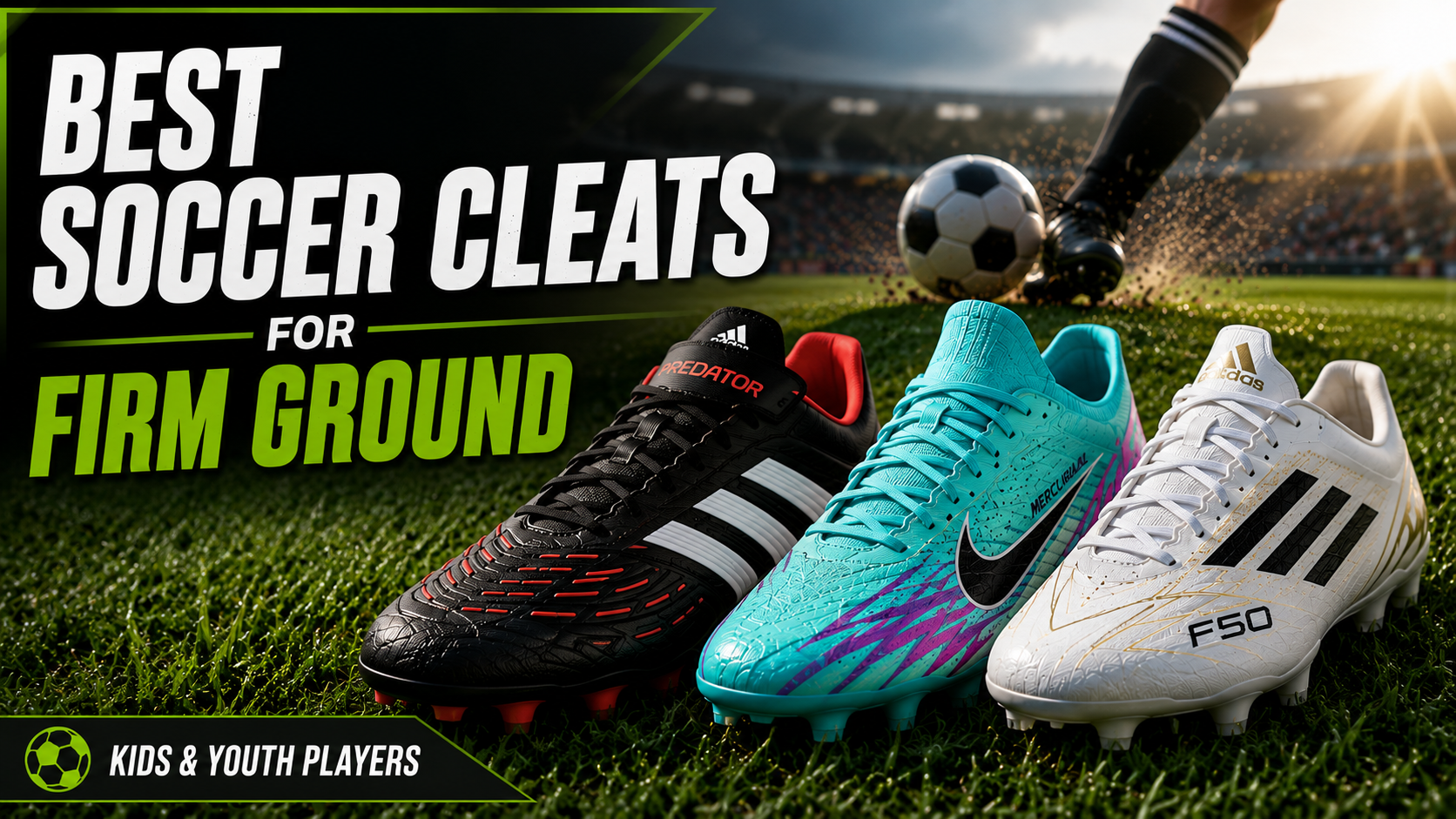
adidas Predator SG
Predator soft-ground versions combine the line’s control-focused upper with a wet-grass plate. Verify current sizing, outsole label, and availability before ordering.
adidas F50 SG
A speed-focused alternative for players who want a lighter upper on soft natural grass. Verify current sizing, outsole label, and availability before ordering.
Decision table
Compare the details that change the choice
| Factor | Primary direction | What to look for |
|---|---|---|
| Surface | Wet, yielding natural grass | Studs must penetrate safely |
| Stud rule | Confirm league permits the design | Metal-tipped rules vary |
| Comfort | No isolated painful pressure | Test on suitable ground |
| Maintenance | Clean and dry after play | Check removable studs |
Choose by surface
The outsole decision comes before the model
The same shoe family may be sold with indoor, turf, artificial-grass, firm-ground, multi-ground, or soft-ground outsoles. Those versions are not interchangeable. Read the full product name and inspect the outsole instead of relying on the colorway or upper.
Start with the field you actually use
Ask the coach or facility whether the surface is a hard court, short-pile turf, modern artificial grass, or natural grass. “Indoor” can describe the building while the field itself is turf. Likewise, “artificial” can refer to surfaces with very different pile and infill.
Fit is a separate decision
Once the outsole is correct, evaluate length, width, heel hold, and internal volume. A secure performance fit should not require painful pressure. Wear normal soccer socks, test both feet, and make controlled stops and lateral movements before keeping a pair.
Do not buy around marketing alone
Speed, control, and touch labels help organize product families, but they do not override foot shape. A comfortable shoe with the correct outsole will normally be more useful than an elite model that pinches, slips, or mismatches the surface.
Practical safety note
Surface compatibility affects traction and how easily the foot releases during turns. Facility rules, league rules, weather, field condition, and manufacturer guidance should control the final choice. Replace footwear when studs or rubber traction elements are worn unevenly or the sole begins separating.
Buying process
A four-step way to choose
Confirm the surface
Get the field or court type from the league, coach, or facility. Never infer it only from the word indoor.
Filter by outsole
Look for the exact IC, TF, AG, FG, MG, FG/MG, or SG designation and read the brand’s intended-use language.
Choose the foot shape
Compare natural, contoured, wide, and higher-volume shapes. Do not add unnecessary length merely to solve width pressure.
Test real movement
In clean conditions, walk, stop, rise onto the toes, and shuffle laterally. Reject painful pressure or repeated heel lift.
Questions answered
Best Soft-Ground Soccer Cleats FAQ
When are soft-ground cleats necessary?
They are useful when natural grass is wet and soft enough that normal FG studs cannot provide reliable traction.
Can SG cleats be used on artificial grass?
No. SG outsoles are specialized for soft natural ground and should not be used on artificial surfaces.
Do all SG cleats have removable studs?
No. Some use mixed or fixed configurations. Inspect the exact model rather than relying on the category name.
Are metal studs allowed?
Rules vary by competition and age group. Confirm with the league or referee before use.
Should I own FG and SG pairs?
Players who regularly compete on natural grass in changing weather may benefit from both. Many recreational players only need FG.
Match the shoe to the surface and foot
Confirm the outsole label, test the fit in soccer socks, and choose secure comfort over model hype. Current colors and inventory can change without changing the core buying logic.
Check current options on AmazonExplore this topic