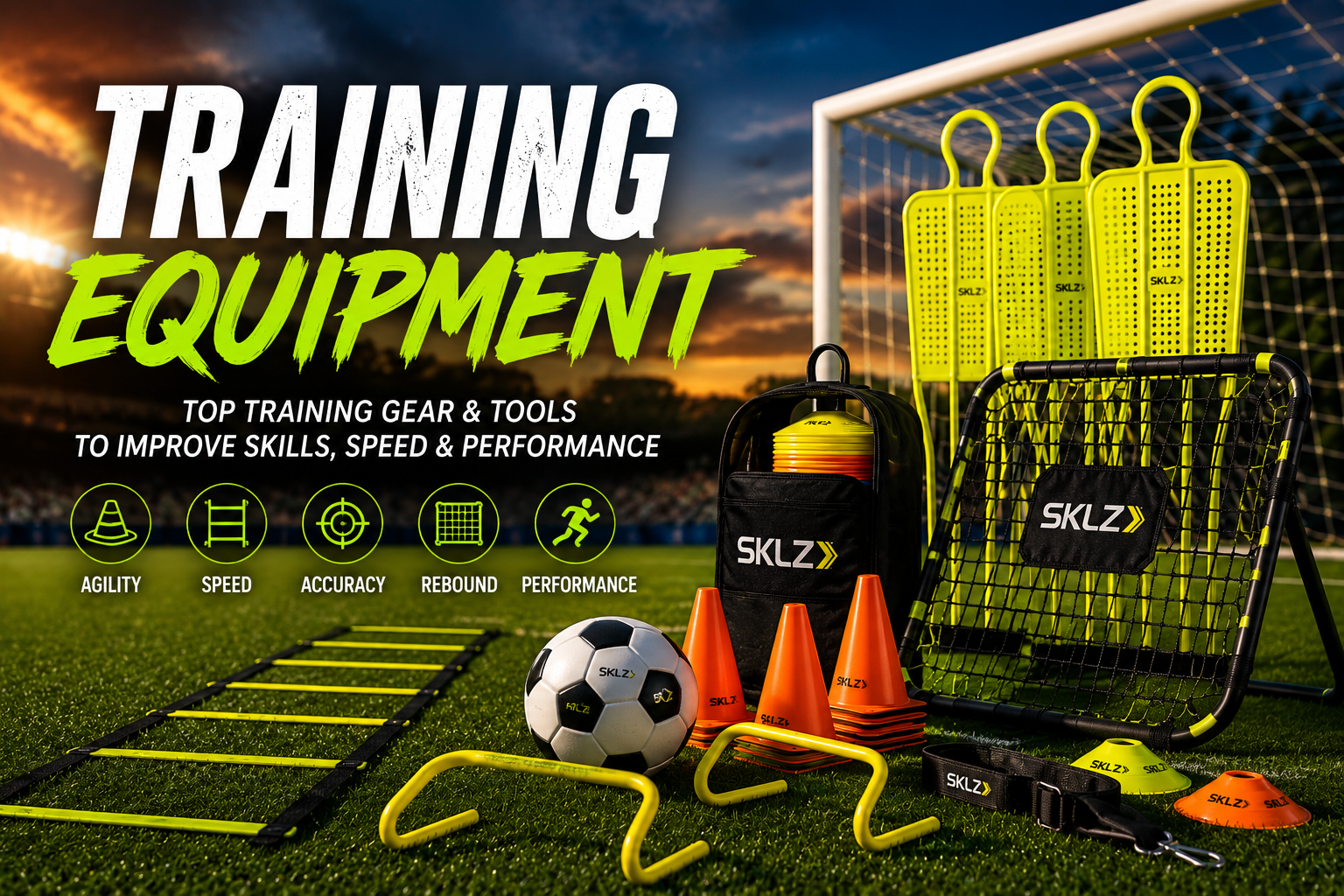
Best Soccer Agility Ladders (Quick Feet & Coordination)
Training Equipment Guide

Best Soccer Agility Ladders

Agility ladders give soccer players a simple way to train quick feet, coordination, rhythm, balance, and movement control. This guide explains which ladder features matter, how to choose the right setup, and how to use one for youth practice, home training, and team sessions.

Best Soccer Agility Ladders
Quick Answer:
The best soccer agility ladder for most players is a 15- to 20-foot adjustable flat-rung ladder with 10 to 12 rungs, a carry bag, and ground anchors. It is long enough for useful drills, safe when stepped on, and flexible for players of different ages.

Best Agility Ladder Features

Choose a ladder based on the player’s age, training space, drill goals, and how often it will be used.

Best Soccer Agility Ladder Types

Different ladder designs work better for different players and training environments.

Quick Comparison

Ladder Type Best For Main Advantage Best Setup
Adjustable flat-rung ladder Most players Flexible spacing and safer foot contact 15–20 feet, 10–12 rungs
Fixed-rung ladder Beginners Fast setup and consistent spacing Flat rungs and durable straps
Dual-lane ladder Teams and coaches Two players can train at once Wide lanes and reinforced connections
Hexagonal agility rings Advanced movement Creates diagonal and multidirectional patterns Strong clips and non-slip rings
Ladder and cone kit Home practice Adds sprint, dribbling, and reaction options Carry bag, cones, stakes, drill cards

What an Agility Ladder Can Improve

Quick Feet

Reinforces fast, controlled foot placement during short movement patterns.

Coordination

Connects rhythm, posture, balance, and directional movement.

Body Control

Helps players stay organized while moving forward, backward, or laterally.

Warmup Quality

Adds structured movement preparation before technical or speed work.

Adjustable Flat-Rung Ladder — Best Overall

An adjustable flat-rung ladder is the best choice for most soccer players because the spacing can be changed for younger children, taller athletes, quick-feet drills, or longer stride patterns.

  • Choose 10 to 12 adjustable rungs.
  • Look for a total length of 15 to 20 feet.
  • Prefer bright colors for visibility.
  • Choose a model with a storage bag and anchors.
  • Use flat rungs instead of raised plastic bars when possible.
Shop Adjustable Agility Ladders

Fixed-Rung Ladder — Best for Beginners

A fixed-rung ladder works well for parents, beginners, and coaches who want consistent spacing without making adjustments before every session.

Fast SetupUnroll it and begin without changing rung spacing.
Easy CoachingConsistent boxes make drill instructions simple.
Good for KidsUseful for basic walking, stepping, and rhythm patterns.
Main LimitationFixed spacing may not fit every player or drill equally well.

Dual-Lane Ladder — Best for Teams

Dual-lane ladders allow two players to train at the same time. They are useful for races, mirrored footwork, partner warmups, and team stations.

  • Keeps more players moving during practice.
  • Works well for competitive partner drills.
  • Useful for coaches running stations.
  • Requires more space than a standard ladder.
  • Best suited to fields and larger training areas.

Hexagonal Agility Rings — Best for Multidirectional Movement

Hexagonal agility rings can be connected into ladders, diamonds, side patterns, and irregular layouts. They provide more variety than a straight ladder.

Lateral MovementCreate side-to-side patterns for defenders and goalkeepers.
Diagonal MovementBuild angles that look more like real soccer movement.
Reactive DrillsChange the route based on a coach’s direction or color cue.
Flexible LayoutsRebuild the pattern for different sessions and age groups.

Ladder and Cone Set — Best for Home Practice

A ladder and cone set gives players more options than a ladder alone. Cones can mark sprint exits, dribbling gates, passing zones, turns, or reaction points.

  • Combines footwork with sprinting and ball work.
  • Useful for backyard, park, and field sessions.
  • Easy to carry in one storage bag.
  • Good value for youth players and families.
  • Creates more drill variety without buying many separate tools.
Shop Ladder and Cone Sets

Buying Tips

1. Choose the Length

Use 15 to 20 feet for versatile drills or a shorter ladder for indoor spaces.

2. Check the Rungs

Flat adjustable rungs are safer and easier to customize.

3. Match the Surface

Use anchors on grass and flat non-slip rungs on turf or indoor floors.

4. Prioritize Portability

A carry bag makes storage, transport, and setup much easier.

Best Setup by Player Type

Player Type Best Setup Why
Young beginner Short fixed or adjustable ladder Simple patterns and manageable spacing.
Competitive youth player 15–20 foot adjustable ladder Supports progression and varied drills.
Team coach Dual-lane ladder or multiple ladders Keeps more players active.
Home trainer Ladder and cone kit Creates more drills in one package.
Goalkeeper Short ladder plus cones Supports quick setup steps and lateral exits.
Advanced athlete Ladder plus agility rings Adds diagonal and reactive movement.

Best Soccer Agility Ladder Drills

Start slowly, keep the ladder flat, and increase speed only when the pattern remains clean.

One Foot in Each BoxSimple forward rhythm drill for beginners and warmups.
Two Feet in Each BoxBuilds faster foot placement and consistent rhythm.
In-In-Out-OutDevelops coordination and lateral body control.
Ickey ShuffleUses a three-step rhythm for more advanced coordination.
Lateral Two-InSupports sideways movement for defenders and goalkeepers.
Ladder to SprintConnects quick footwork with a short acceleration.
Ladder to BallExit into dribbling, passing, receiving, or shooting.
Reaction ExitRespond to a color, number, or directional cue.

Agility Ladder Training for Kids

  • Begin with walking patterns before adding speed.
  • Teach one drill at a time.
  • Keep repetitions short and controlled.
  • Make sure the ladder lies flat.
  • Avoid complicated patterns that cause repeated tripping.
  • Add a ball only after the movement is comfortable.
  • Use games and races without sacrificing technique.

For a complete youth setup, see Best Soccer Training Equipment for Kids.

Home, Backyard, Turf, and Indoor Use

Grass FieldUse anchors and choose a flat, dry area.
Artificial TurfMake sure the straps lie flat and do not slide.
DrivewayUse flat rungs and avoid rough or damaged surfaces.
GarageChoose a shorter ladder and leave clear space around it.

Common Agility Ladder Mistakes

  • Moving too fast before learning the pattern.
  • Looking down at the feet for the entire drill.
  • Using long tiring sessions instead of short precise repetitions.
  • Assuming ladder drills replace sprint training.
  • Using a twisted or sliding ladder.
  • Choosing drills that are too complicated for the player’s age.
  • Never connecting ladder work to a soccer action.
  • Training on wet, uneven, or cluttered surfaces.

How to Care for an Agility Ladder

Shake off dirt and grass after use, allow the ladder to dry before storing it, and straighten the straps before folding or rolling it. Avoid leaving it in direct sun or rain for long periods.

Dry Before StorageMoisture can weaken straps and create odor.
Fold CarefullyStraighten the straps to prevent tangles.
Store Stakes SeparatelyPrevents sharp anchors from damaging the ladder.
Check ConnectionsInspect rungs and straps regularly during team use.

Related Training Guides

Use these guides to build a complete soccer training setup.

Ready to Compare Soccer Agility Ladders?

For most players, start with a 15- to 20-foot adjustable flat-rung ladder with a carry bag and anchors. Add cones if you want to connect footwork with sprinting, dribbling, passing, and reaction drills.

Shop Soccer Agility Ladders

Best Soccer Agility Ladders FAQ

What is the best soccer agility ladder?

The best soccer agility ladder is durable, portable, easy to lay flat, and long enough for several footwork patterns. A 15- to 20-foot ladder with flat adjustable rungs, anchors, and a carry bag works well for most players.

Do agility ladders improve soccer performance?

Agility ladders can improve coordination, rhythm, body control, and foot-placement speed. They work best when combined with sprinting, strength work, ball training, and change-of-direction drills.

Are agility ladders good for kids?

Yes. They are especially useful for young players learning rhythm, balance, coordination, and basic movement patterns.

Do agility ladders make soccer players faster?

Not by themselves. They help with foot speed and movement organization, but true acceleration also requires sprint mechanics, strength, and high-speed running.

What age can kids start using an agility ladder?

Children can begin with simple walking and stepping patterns once they can follow basic instructions safely.

How long should a soccer agility ladder be?

A ladder around 15 to 20 feet is versatile for most players. Shorter models are useful for garages, indoor rooms, or small training areas.

How many rungs should an agility ladder have?

Ten to twelve rungs are enough for most drills. Adjustable spacing gives coaches more flexibility.

Are flat-rung ladders better?

Flat rungs are generally safer and more comfortable if stepped on. They also tend to sit closer to the surface.

Should agility ladder rungs be adjustable?

Adjustable rungs are useful because spacing can be changed for different ages, heights, and drill goals.

Do agility ladders need ground stakes?

Stakes are helpful on grass because they prevent the ladder from sliding. They are usually unnecessary on turf or indoor surfaces.

Can agility ladders be used indoors?

Yes. Use a flat-rung ladder on a dry, non-slip surface with enough clear space around the player.

Can agility ladders be used on artificial turf?

Yes. Artificial turf is an excellent surface as long as the ladder lies flat and does not slide.

Can agility ladders be used on grass?

Yes. Choose a flat area and use anchors when possible.

Can players use an agility ladder with a ball?

Yes. Players can exit the ladder into dribbling, passing, receiving, shooting, or a short sprint.

How often should soccer players use an agility ladder?

Two or three short sessions per week are enough for most players.

How long should ladder training last?

Five to fifteen minutes is usually enough. Quality matters more than long, tiring repetitions.

Should agility ladders be used before or after practice?

They usually work best during the warmup or early movement phase while the player is fresh.

What are the best beginner ladder drills?

One foot in each box, two feet in each box, lateral steps, and in-in-out-out are good starting drills.

What are the best advanced ladder drills?

Advanced players can add crossover patterns, reaction cues, sprint exits, and ball combinations.

Do agility ladders improve balance?

Yes. Controlled patterns can improve balance, posture, and single-leg body control.

Do agility ladders improve coordination?

Yes. Coordination is one of their main benefits because players must organize foot placement, rhythm, and direction.

Do agility ladders help dribbling?

Indirectly. Better foot coordination may support dribbling, but players still need regular ball-specific practice.

Do agility ladders help defenders?

Yes. Lateral patterns and quick exits can reinforce movement useful for jockeying, recovering, and changing direction.

Do agility ladders help goalkeepers?

Yes. Goalkeepers can use ladders for setup steps, lateral movement, balance, and quick footwork.

Are agility ladders safe for kids?

Yes, when the ladder lies flat, the surface is clear, drills are age-appropriate, and speed is added gradually.

What should parents look for when buying one?

Look for flat adjustable rungs, durable straps, a carry bag, high visibility, and anchors for grass.

Are cheap agility ladders worth buying?

Many inexpensive ladders work well for home use. Rung shape, strap quality, and durability matter more than brand name.

What accessories work well with a ladder?

Cones, mini hurdles, resistance bands, a ball, and a rebounder can create more complete training sessions.

How should an agility ladder be stored?

Dry it after wet use, straighten the straps, fold or roll it carefully, and store it in the included bag.

What is the best overall agility ladder setup?

A 15- to 20-foot adjustable flat-rung ladder with anchors, a carry bag, and several cones is the most versatile setup for most soccer players.

As an Amazon Associate, we may earn from qualifying purchases at no extra cost to you.

Scroll to Top