Best <a href="https://soccergearguide.com/soccer-socks/">Soccer Socks</a>
Soccer Socks Guide

Best Soccer Socks

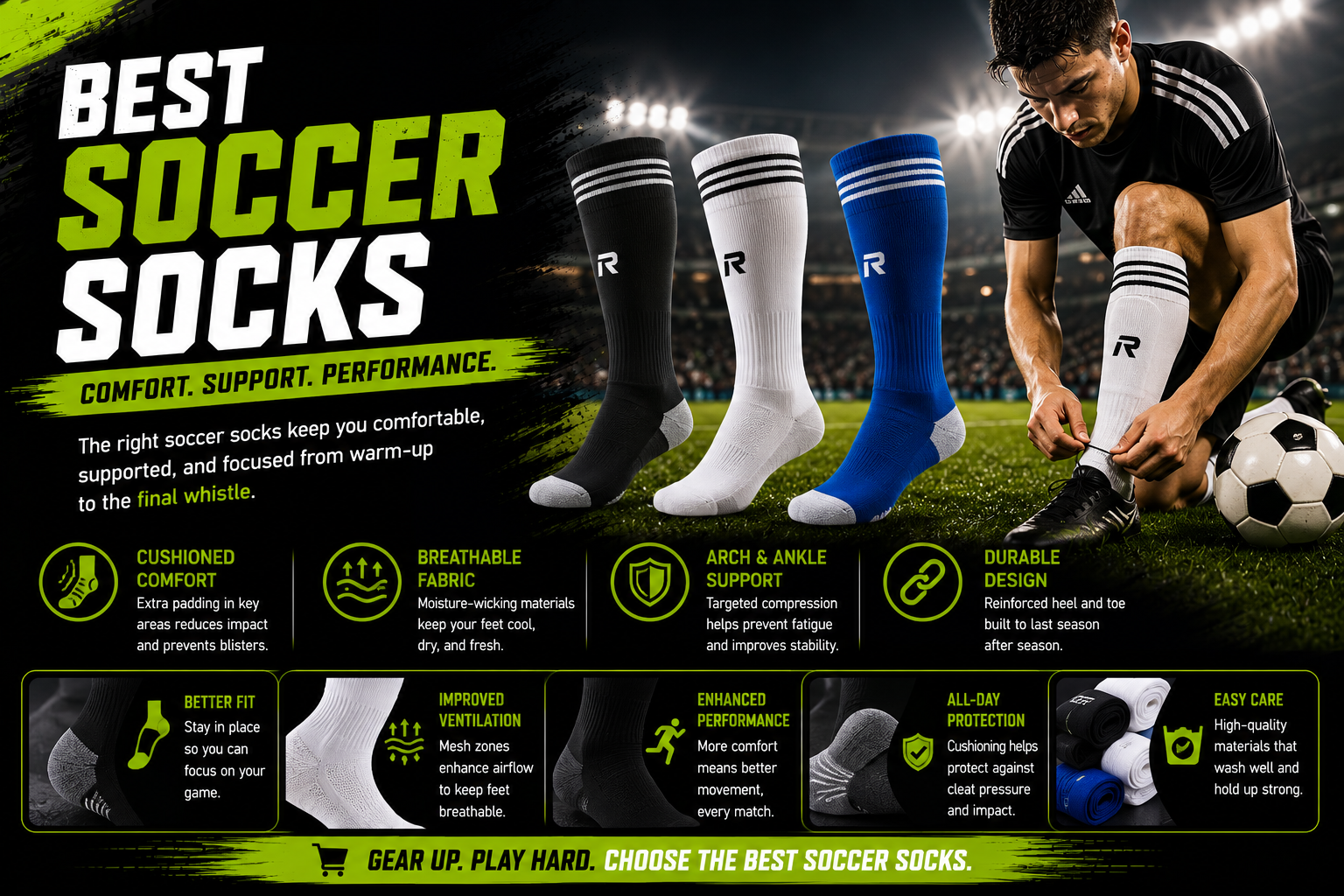
The best soccer socks should feel comfortable, stay up during play, support shin guards, manage sweat, reduce rubbing, and hold up through practices and matches. Whether you are buying socks for kids, competitive players, grip sock setups, compression support, or everyday training, the right soccer socks can make cleats and shin guards feel much better.

Best soccer socks for comfort performance and durability
Quick Answer:
The best soccer socks are comfortable, durable, breathable, and secure enough to hold shin guards in place without sliding down. Kids usually need simple cushioned socks with a comfortable fit, while competitive players may prefer grip socks, sleeve socks, or compression soccer socks depending on their cleats, playing style, and match-day setup.

Why Soccer Socks Matter

Soccer socks are easy to overlook, but they affect comfort every time a player trains or plays. A bad pair can slide down, bunch inside the cleat, trap sweat, rub the skin, or fail to hold shin guards securely. A good pair helps the entire setup feel cleaner and more stable.

Soccer socks also connect several important gear decisions. They work with cleats, shin guards, grip socks, sleeves, compression gear, and uniforms. That means the best sock depends on the player’s age, cleat fit, shin guard style, field conditions, and how serious the match-day setup needs to be.

For the full category overview, visit the Soccer Socks Hub. If you are building a complete kit, also compare Soccer Cleats and Shin Guards.

Best Soccer Sock Types

Classic Soccer SocksBest for regular practices, games, uniforms, and shin guard coverage.
Grip SocksBest for players who want better traction inside their cleats.
Sleeve SocksBest for players who wear grip socks under team sock sleeves.
Compression SocksBest for players who want a tighter supportive feel during or after play.

Best Features to Look For

Good soccer socks should disappear during play. The player should not be thinking about slipping, bunching, rubbing, or adjusting shin guards every few minutes.

Secure fit

The sock should stay up and help keep shin guards stable during running, cutting, and tackles.

Comfortable cushioning

Light cushioning can reduce pressure inside cleats without making the shoe feel too tight.

Breathable fabric

Sweat control helps reduce discomfort, odor, and rubbing during long sessions.

Durable construction

Soccer socks should handle repeated washing, cleat friction, and match-day use.

Shin guard support

Over-the-calf socks should hold guards securely without cutting off circulation.

Right thickness

Thick socks add comfort, but thin socks may work better in tight cleats.

What Soccer Socks Help Improve

The right soccer socks support comfort, stability, and confidence throughout training and match play.

Comfort

Better socks reduce rubbing, bunching, and pressure inside soccer cleats.

Shin Guard Fit

Secure socks help keep shin guards from sliding during games.

Cleat Feel

The right thickness can improve how snug or natural cleats feel.

Performance Setup

Grip socks and sleeves can create a cleaner match-day feel for serious players.

Soccer Socks Compared

Different soccer sock types solve different problems. Some players only need a reliable over-the-calf sock, while others may prefer grip socks or sleeves for a more advanced setup.

Sock Type Best For Main Advantage Buying Tip
Classic Soccer Socks Most players, uniforms, practices Simple shin guard coverage Best first choice for kids and beginners
Grip Socks Competitive players Better traction inside cleats Useful if feet slide inside shoes
Sleeve Socks Grip sock setups Team sock look with grip sock performance Good for players who cut team socks
Compression Soccer Socks Support and recovery feel Tighter supportive fit Choose comfortable compression, not painful tightness
Kids Soccer Socks Youth players Comfort and shin guard support Do not buy socks that are too loose or too tight

How to Choose Soccer Socks

1. Start with fit

The sock should stay up, feel comfortable, and hold shin guards without squeezing too hard.

2. Match the cleats

Thicker socks can make tight cleats uncomfortable, while thin socks may reduce cushioning.

3. Choose by player level

Beginners usually need comfort. Competitive players may want grip socks or sleeves.

4. Think about shin guards

Slip-in guards, sleeves, and ankle guards may work better with different sock styles.

Best Soccer Socks for Kids

Kids need soccer socks that are comfortable, easy to put on, and secure enough to hold shin guards. The sock should not be so tight that the child complains, but it also should not slide down during practice.

For younger players, simple over-the-calf soccer socks are usually best. They provide shin guard coverage, fit team uniforms, and are easy for parents to manage. Grip socks can come later if the player becomes more competitive or complains about sliding inside cleats.

For a youth-focused guide, visit Best Soccer Socks for Kids. You may also want Best Soccer Shin Guards for Kids.

Best Grip Socks for Soccer

Grip socks are popular with serious players because they help reduce foot movement inside the cleat.

Grip socks use textured pads or grip zones under the foot to help the player feel more connected to the shoe. This can help during sprinting, cutting, pressing, and quick changes of direction.

  • Good for players whose feet slide inside cleats.
  • Useful for quick cuts, acceleration, and changes of direction.
  • Often worn under a team sock sleeve.
  • Can make tight cleats feel even tighter.
  • Best for competitive players who notice sock slip.

For a full breakdown, read Best Grip Socks for Soccer and Grip Socks vs Soccer Socks.

Best Soccer Socks for Shin Guards

One of the main jobs of soccer socks is keeping shin guards in place. If the sock is too loose, the shin guard may shift. If it is too tight, the player may feel uncomfortable or distracted.

Players using slip-in shin guards often need socks or sleeves that hold the guard securely. Players using ankle shin guards may need enough sock room to cover the ankle padding without bunching.

For more help, compare Best Soccer Socks for Shin Guards, Best Slip In Shin Guards, and Soccer Shin Guard Size Chart.

Best Soccer Sleeve Socks

Sleeve socks are common for players who want to wear grip socks while still matching a team uniform.

A sleeve sock covers the shin and lower leg but leaves the foot open. Players often wear grip socks on the foot, then pull the team-colored sleeve over the lower leg to cover shin guards.

  • Useful for players who wear grip socks under team colors.
  • Helps keep shin guards covered.
  • Creates a cleaner match-day setup.
  • Works best with secure shin guard sleeves or tape.
  • More common with competitive players than beginners.

For more, see Best Soccer Sleeve Socks.

Best Compression Soccer Socks

Compression soccer socks are designed to feel tighter and more supportive than regular socks. Some players like them during training, while others use compression-style socks after games for a recovery feel.

The key is comfort. Compression should feel supportive, not painful. If the sock leaves deep marks, causes numbness, or distracts the player, it is too tight or not the right fit.

For support-focused options, read Best Compression Soccer Socks and Recovery Gear.

Other Gear to Pair with Soccer Socks

Soccer socks work best when the rest of the gear fits correctly.

Soccer Cleats

The sock thickness can change how tight or comfortable cleats feel.

Shin Guards

Good socks help keep shin guards secure during tackles and sprints.

Goalkeeper Gear

Keepers need socks that work with shin guards, cleats, and padded apparel.

Apparel

Training pants, shorts, and base layers complete the player setup.

Soccer Socks by Brand

Nike, Adidas, Trusox, and other brands make soccer socks for different player needs. Nike and Adidas are common for team uniforms and everyday play, while Trusox is known for grip sock performance.

Common Soccer Sock Mistakes

  • Buying socks that are too loose to hold shin guards.
  • Choosing socks that are too thick for tight cleats.
  • Using worn-out socks that slide or bunch inside the shoe.
  • Ignoring whether the player needs grip socks or regular socks.
  • Buying kids socks too large so they wrinkle inside cleats.
  • Using compression socks that feel painfully tight.
  • Not washing socks properly after sweaty practices.
  • Assuming every soccer sock fits the same.

Are Expensive Soccer Socks Worth It?

Expensive soccer socks can be worth it for players who notice slipping, rubbing, poor cleat fit, or shin guard movement. Grip socks and premium socks are most useful for competitive players who want a more secure feel.

For kids and beginners, simple comfortable soccer socks are usually enough. The best value is the sock that fits well, holds shin guards, feels comfortable in cleats, and lasts through regular washing and play.

Ready to Compare Soccer Socks?

The best soccer socks should match the player’s age, cleat fit, shin guard setup, and level of play. Choose classic soccer socks for everyday use, grip socks for more traction, sleeve socks for advanced match setups, and compression socks for players who like a supportive feel.

Shop Soccer Socks on Amazon

Related Soccer Gear Guides

Soccer Socks FAQ

What are the best soccer socks?

The best soccer socks are comfortable, durable, breathable, and secure enough to hold shin guards in place without sliding down during play.

Do soccer socks go over shin guards?

Yes. Traditional soccer socks go over shin guards to keep them covered and secure during games and practices.

Are grip socks better than regular soccer socks?

Grip socks can be better for players who want more traction inside their cleats, but regular soccer socks are enough for many kids and beginners.

What soccer socks are best for kids?

Kids usually do best with comfortable over-the-calf soccer socks that stay up, hold shin guards, and do not bunch inside cleats.

Should soccer socks be thick or thin?

It depends on cleat fit. Thick socks add cushioning, while thin socks may feel better in tight cleats. The best sock should not create pressure or bunching.

Why do soccer players wear grip socks?

Soccer players wear grip socks to reduce foot sliding inside cleats and create a more locked-in feel during sprints, cuts, and changes of direction.

Are compression soccer socks worth it?

Compression soccer socks can be worth it for players who like a tighter supportive feel, but they should not feel painful or restrict movement.

How many soccer socks does a player need?

Most players should have several pairs so they always have clean socks for practice and games. Competitive players may keep separate match socks, training socks, and grip socks.

We may earn a commission from qualifying purchases at no extra cost to you.

Scroll to Top