Best Soccer Training Pants
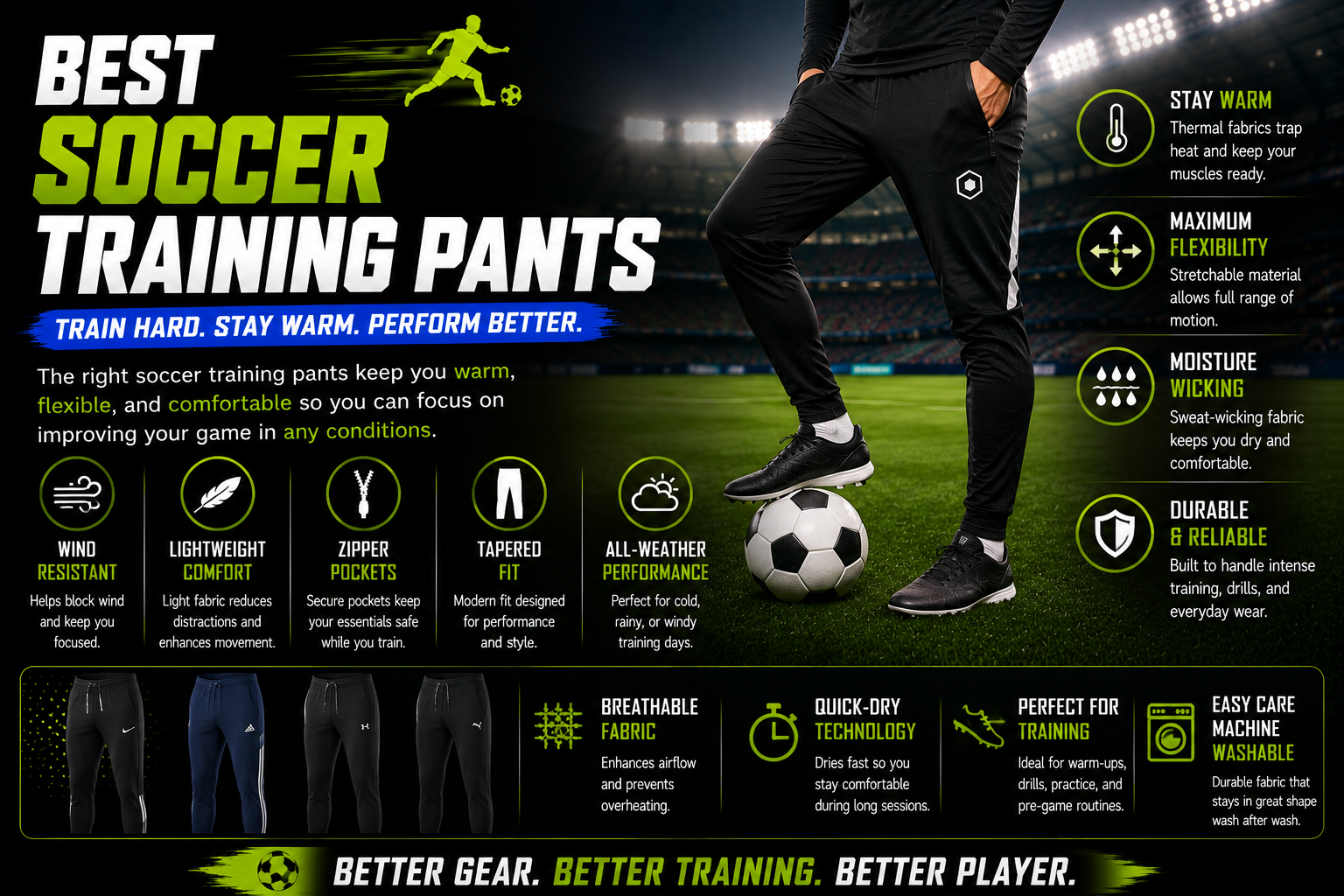
The best soccer training pants should feel comfortable, flexible, lightweight, and easy to move in during warmups, practices, travel, and cold-weather sessions. Soccer players sprint, pass, shoot, stretch, cut, and warm up constantly, so training pants need to support movement without feeling baggy, stiff, or restrictive.
The best soccer training pants are slim but not tight, flexible through the hips and knees, breathable enough for warmups, and tapered enough to avoid interfering with the ball. Most players should choose lightweight athletic training pants with ankle zippers, stretch fabric, and a fit that works over soccer socks, shin guards, and cleats.
Why Soccer Players Wear Training Pants
Soccer training pants are useful for warmups, cool-weather practices, team travel, sideline comfort, and everyday training. They give players more coverage than shorts while still allowing athletic movement.
The best soccer pants are different from regular sweatpants. They are usually lighter, more tapered, easier to move in, and designed to work with cleats, socks, and soccer training routines. A good pair should allow full movement without extra fabric getting in the way.
For more soccer clothing guides, visit the Soccer Apparel Hub. If you are building a complete training outfit, compare this guide with Best Soccer Hoodies and Best Base Layers for Soccer.
Best Soccer Training Pant Types
Best Features to Look For
Soccer training pants should be comfortable off the field and functional on the field. The wrong pair can feel too baggy, too heavy, too hot, or too restrictive during warmups and drills.
A tapered fit helps keep extra fabric away from the ball and cleats.
Players need freedom to sprint, shoot, lunge, stretch, and change direction.
Zippers make it easier to put pants on or take them off over cleats.
Training pants should provide coverage without overheating during movement.
The waistband should stay comfortable during running and warmups.
Soccer pants should handle frequent washing, travel bags, and repeated use.
What Soccer Training Pants Help With
Training pants help players stay warm before practices and games.
A good athletic fit supports sprinting, stretching, passing, and shooting.
Soccer pants work well for team trips, tournaments, school, and everyday wear.
They add coverage when shorts are not enough for cool practices or sidelines.
Soccer Training Pants Compared
| Pant Type | Best For | Main Advantage | Buying Tip |
|---|---|---|---|
| Tapered Training Pants | Warmups and practices | Less fabric near the ball | Best first choice for most players |
| Zip-Ankle Training Pants | Players wearing cleats | Easy on and off over shoes | Very useful for game day warmups |
| Cold-Weather Training Pants | Winter soccer and sidelines | More warmth and coverage | Choose warmth without heavy bulk |
| Travel Soccer Pants | Tournaments and team trips | Comfort and team style | Look for durable fabric and pockets |
| Youth Soccer Pants | Kids and teens | Better sizing for younger players | Avoid oversized adult pants that bunch |
How to Choose Soccer Training Pants
Choose slim or tapered pants that allow movement without extra loose fabric.
Ankle zippers make pants easier to wear with cleats, socks, and shin guards.
Use lightweight pants for training and warmer pants for cold sidelines.
Players should sprint, stretch, pass, shoot, and lunge before using pants in training.
Best Soccer Training Pants for Warmups
Warmup pants should be easy to move in and easy to remove before games. This is where ankle zippers are especially helpful because players can take the pants off without removing cleats.
For warmups, the pants should feel athletic rather than heavy. They should keep the player warm before the game but not cause overheating during movement, passing drills, or dynamic stretching.
Best Soccer Training Pants for Cold Weather
Cold-weather soccer pants should add warmth without making players feel slow or restricted.
For cold practices, players may want slightly warmer pants, especially during winter training or long sideline periods. However, very thick sweatpants can feel heavy and may interfere with movement.
- Choose breathable warmth instead of heavy bulk.
- Use base layers underneath when temperatures are colder.
- Look for tapered legs to avoid extra fabric near cleats.
- Pick pants that allow full sprinting and kicking movement.
- Bring dry layers for long tournament days.
For more cold-weather layering help, read Best Base Layers for Soccer and Best Soccer Compression Shirts.
Best Soccer Training Pants for Travel
Soccer training pants are also useful off the field. Players wear them for tournaments, team buses, school, travel days, and everyday comfort. Travel pants should be durable, comfortable, and easy to pair with hoodies, jackets, or team tops.
Pockets can be helpful for travel, but players should avoid bulky pockets during active training if they get in the way. A clean athletic fit usually works best for both soccer and daily wear.
For travel layering, compare Best Soccer Hoodies.
Best Soccer Training Pants for Youth Players
Youth players need training pants that fit correctly and do not bunch around the ankles.
Kids and teens often wear soccer pants to practice, tournaments, school, and warmups. The most important things are correct length, flexible movement, easy washing, and a fit that works with cleats and soccer socks.
- Choose youth sizing when needed.
- Avoid pants that drag below the cleats.
- Use ankle zippers for easy on and off.
- Pick durable pants that handle frequent washing.
- Make sure the player can sprint and kick comfortably.
For more youth gear, compare Best Soccer Cleats for Kids, Best Soccer Socks for Kids, and Best Soccer Shin Guards for Kids.
Soccer Training Pants vs Sweatpants
Soccer training pants and regular sweatpants are not the same. Sweatpants can be comfortable, but they are often heavier, looser, and less ideal for ball work. Training pants are usually more athletic and soccer-friendly.
| Option | Main Purpose | Best For | Possible Drawback |
|---|---|---|---|
| Soccer Training Pants | Warmups, training, travel | Players who need movement and coverage | Less cozy than thick sweatpants |
| Regular Sweatpants | Casual warmth | Lounging, cold sidelines, after games | Can be too baggy for training |
| Compression Tights | Base layer coverage | Cold-weather games under shorts | Less useful as outerwear |
| Track Pants | Team travel and warmups | Clubs, schools, tournaments | Fit varies by brand and style |
Other Gear to Pair with Training Pants
Hoodies pair well with training pants for travel, warmups, and everyday wear.
Base layers add warmth under soccer pants during colder training sessions.
Good socks help the pants, shin guards, and cleats fit more comfortably together.
Recovery slides, foam rollers, and massage balls help after games and practices.
When Should Soccer Players Wear Training Pants?
- During warmups before games.
- During cool-weather practices.
- On tournament travel days.
- Between games when players need to stay warm.
- At school or everyday wear for soccer lifestyle comfort.
- During technical training if pants do not interfere with ball control.
- Not if they are too baggy around the cleats.
- Not if they overheat the player during intense training.
Common Soccer Training Pant Mistakes
- Buying pants that are too baggy around the ankles.
- Choosing sweatpants instead of athletic training pants for drills.
- Ignoring ankle zippers for game-day warmups.
- Buying adult sizes for youth players without checking length.
- Choosing thick pants that overheat during practice.
- Not testing movement before training.
- Forgetting to check how pants fit over soccer socks and shin guards.
- Only buying style without considering mobility.
Are Soccer Training Pants Worth It?
Soccer training pants are worth it for players who train in cool weather, warm up before games, travel for tournaments, or want comfortable soccer apparel for daily use. They are more soccer-friendly than regular sweatpants because they are usually lighter, tapered, and easier to move in.
The best pair depends on the player’s routine. Tapered pants are best for training, zip-ankle pants are best for warmups, warmer pants are best for cold sidelines, and youth sizing is best for kids.
Ready to Compare Soccer Training Pants?
Choose tapered training pants for most players, zip-ankle pants for warmups, cold-weather pants for winter training, and youth sizing for kids. Prioritize mobility, comfort, ankle fit, breathability, and how the player will actually use them.
Shop Soccer Training PantsRelated Soccer Gear Guides
Soccer Training Pants FAQ
What are the best soccer training pants?
The best soccer training pants are tapered, flexible, breathable, comfortable, and easy to move in during warmups, practices, travel, and cold weather.
Why do soccer players wear training pants?
Soccer players wear training pants for warmups, cool-weather practices, team travel, sidelines, and everyday soccer comfort.
Should soccer training pants be tight?
Soccer training pants should be slim or tapered, but not painfully tight. They should allow sprinting, kicking, stretching, and full movement.
Are ankle zippers important on soccer pants?
Yes. Ankle zippers make it easier to put training pants on or take them off over cleats, which is helpful for game-day warmups.
Can kids wear soccer training pants?
Yes, kids can wear soccer training pants if they fit correctly, do not drag around the cleats, and allow comfortable movement.
Are soccer training pants better than sweatpants?
For training and warmups, soccer training pants are usually better because they are lighter, more tapered, and easier to move in than regular sweatpants.
Can soccer players wear training pants during practice?
Yes, players can wear training pants during practice if the pants are breathable, flexible, and do not interfere with ball control or movement.
What should soccer players wear with training pants?
Soccer players often pair training pants with base layers, compression shirts, hoodies, soccer socks, cleats, and recovery slides after training.
We may earn a commission from qualifying purchases at no extra cost to you.