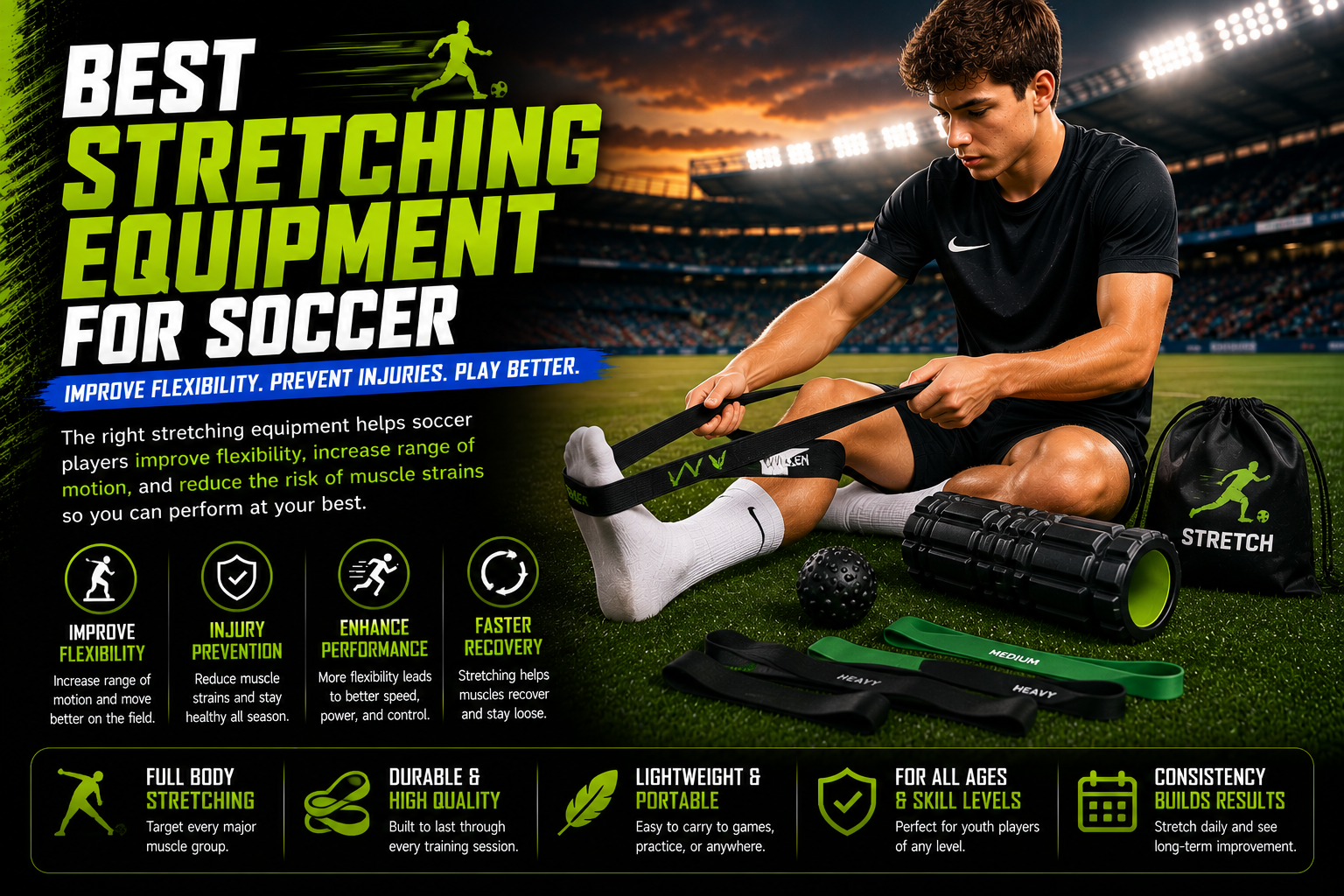
Best Stretching Equipment for Soccer
The best stretching equipment for soccer helps players build better flexibility, mobility, warmup habits, cooldown routines, and lower-body recovery. Soccer players rely heavily on calves, hamstrings, quads, hips, groin, glutes, and ankles, so simple stretching tools can make it easier to stay loose before and after training.
The best stretching equipment for soccer players includes stretching straps, resistance bands, foam rollers, massage balls, yoga mats, balance tools, and mobility bands. Most players should start with a simple stretching strap, light resistance band, foam roller, and massage ball before buying more advanced mobility gear.
Why Stretching Equipment Matters for Soccer Players
Soccer requires sprinting, cutting, kicking, jumping, defending, pressing, and changing direction. Those movements demand mobility through the hips, hamstrings, calves, ankles, quads, and groin. Stretching equipment can help players build a more consistent routine before and after training.
Stretching tools do not replace smart warmups, strength training, sleep, hydration, nutrition, or proper medical care. They simply make mobility and recovery routines easier to repeat. The best tool is the one the player will actually use consistently.
For the full recovery category, visit the Recovery Gear Hub. You can also compare this guide with Best Recovery Gear for Soccer Players and Best Foam Rollers for Soccer.
Best Stretching Equipment Types for Soccer
Best Features to Look For
Stretching equipment should be simple, safe, portable, and easy to use. Soccer players do not need complicated tools to build better flexibility habits.
Stretching straps and bands should help players control range of motion safely.
Compact tools are easier to bring to training, tournaments, and away games.
Gear should support gentle stretching without forcing painful positions.
Soccer players need tools for calves, hamstrings, hips, quads, ankles, and groin.
Bands, straps, and rollers should handle frequent use and travel.
Kids and beginners should start with simple tools, not aggressive mobility devices.
What Stretching Equipment Helps With
Straps and bands help players stretch hamstrings, calves, hips, and quads.
Mobility tools can support better movement through hips, ankles, and legs.
Bands can help with activation before training and games.
Foam rollers and massage balls can support post-session routines.
Stretching Equipment Compared
| Tool | Best For | Main Advantage | Buying Tip |
|---|---|---|---|
| Stretching Strap | Hamstrings, calves, hips | Controlled stretching | Best first tool for most players |
| Resistance Band | Warmups and activation | Flexible training and mobility use | Start with light or medium resistance |
| Foam Roller | Quads, calves, hamstrings, glutes | Post-training recovery routine | Choose medium density first |
| Massage Ball | Feet, arches, small tight areas | Targeted pressure | Great for soccer players after cleats |
| Yoga Mat | Stretching floor work | Comfortable surface | Useful for home routines |
How to Choose Stretching Equipment for Soccer
A stretching strap, light band, foam roller, and massage ball cover most needs.
Use bands for warmups, straps for stretching, and rollers for recovery.
Stretching should feel controlled, not painful or aggressive.
Youth players should use simple, gentle tools and avoid intense stretching devices.
Best Stretching Straps for Soccer
Stretching straps are one of the best tools for soccer players because they help control hamstring, calf, quad, hip, and groin stretches. They are simple, affordable, and easy to use at home or after training.
A good strap should be long enough to use comfortably and strong enough to hold tension without slipping. Players should stretch slowly and avoid pulling into sharp pain.
Best Resistance Bands for Soccer Mobility
Resistance bands are useful for warmups, activation, and mobility work.
Soccer players can use light resistance bands for glute activation, hip mobility, ankle stability drills, and controlled warmup movements. Bands can also support rehab-style movements when guided properly.
- Use light bands for warmups and activation.
- Use medium bands for stronger mobility drills.
- Avoid bands that are too heavy for clean movement.
- Check bands for tears before use.
- Use controlled movements instead of rushing.
For training tools, compare Best Soccer Training Equipment for Kids and Training Equipment Hub.
Best Foam Rollers for Stretching Routines
Foam rollers pair well with stretching because they help players build a post-training routine around the calves, quads, hamstrings, glutes, and hips. A medium-density roller is usually the best first choice.
Players should use foam rolling as part of a routine, not as a painful challenge. Gentle rolling plus controlled stretching is often more useful than aggressive pressure.
For the full guide, read Best Foam Rollers for Soccer.
Best Stretching Equipment for Youth Soccer
Youth soccer players should keep stretching simple and comfortable.
Kids and teens do not need advanced stretching machines or aggressive mobility tools. A simple stretching strap, light resistance band, yoga mat, and soft foam roller are enough for most youth players.
- Use light stretching pressure.
- Do not force flexibility.
- Keep routines short and repeatable.
- Focus on sleep, hydration, and food too.
- Stop if the player feels sharp pain.
For more youth recovery help, read Recovery Tools for Youth Soccer Players.
Stretching Equipment for Soccer Warmups vs Recovery
| Use | Best Tool | Why It Helps |
|---|---|---|
| Before training | Resistance bands | Helps activation and dynamic warmup movements |
| After training | Stretching strap | Helps controlled cooldown stretching |
| Recovery days | Foam roller and massage ball | Supports gentle lower-body recovery routines |
| Home mobility | Yoga mat and strap | Makes stretching more comfortable and consistent |
Other Recovery Gear to Pair with Stretching Equipment
Useful before or after stretching for lower-body recovery routines.
Good for feet, arches, calves, and smaller tight areas.
Helpful for players who like a firmer lower-leg support feel.
Useful for bumps, bruises, swelling support, and recovery kits.
Simple Soccer Stretching Routine
- Warm up with light movement before deep stretching.
- Use a resistance band for glute and hip activation.
- Use a stretching strap for hamstrings and calves.
- Stretch quads, hips, calves, and groin gently.
- Use a foam roller after hard sessions if comfortable.
- Use a massage ball for feet after long time in cleats.
- Keep stretches controlled and pain-free.
- Stop if sharp pain, numbness, or worsening discomfort appears.
Common Stretching Equipment Mistakes
- Forcing stretches too aggressively.
- Using heavy resistance bands before mastering control.
- Skipping warmups before intense stretching.
- Buying advanced tools before building simple habits.
- Using stretching to ignore pain or injury symptoms.
- Not checking resistance bands for damage.
- Doing long routines that players will not repeat.
- Forgetting that sleep, hydration, and nutrition matter too.
Is Stretching Equipment Worth It for Soccer?
Stretching equipment is worth it for many soccer players because it is affordable, portable, and easy to build into warmups or recovery routines. A stretching strap, resistance band, foam roller, and massage ball can support most basic soccer flexibility and mobility needs.
The best equipment is simple enough to use consistently. Players do not need complicated machines to improve their routine. They need safe, repeatable habits.
Ready to Compare Stretching Equipment for Soccer?
Start with a stretching strap, light resistance band, foam roller, massage ball, and yoga mat. Use bands for warmups, straps for controlled stretching, rollers for recovery, and massage balls for feet and small tight areas.
Shop Soccer Stretching GearRelated Soccer Recovery Guides
Stretching Equipment for Soccer FAQ
What is the best stretching equipment for soccer players?
The best stretching equipment for soccer players includes stretching straps, resistance bands, foam rollers, massage balls, and yoga mats.
Are stretching straps good for soccer?
Yes. Stretching straps are useful for controlled hamstring, calf, quad, hip, and groin stretches.
Are resistance bands good for soccer mobility?
Resistance bands are useful for soccer warmups, activation, hip mobility, glute work, and light strength routines.
What stretching equipment is best for youth soccer?
Youth players should use simple tools like light resistance bands, stretching straps, yoga mats, massage balls, and soft foam rollers.
Should soccer players stretch before games?
Players should warm up with movement before games and use dynamic mobility. Deep static stretching is usually better after training or during cooldowns.
Can stretching equipment prevent soccer injuries?
Stretching equipment can support mobility habits, but it does not guarantee injury prevention and should not replace warmups, strength work, rest, or medical care.
Is a foam roller stretching equipment?
A foam roller is more of a recovery and mobility tool, but it pairs well with stretching routines for soccer players.
Should stretching hurt?
No. Stretching may feel firm, but it should not cause sharp pain, numbness, or worsening discomfort.
We may earn a commission from qualifying purchases at no extra cost to you.