
Nike Phantom for Wide Feet
Are Nike Phantom cleats good for wide feet? Learn about Phantom fit, comfort, sizing, and the best options for players who need extra room without sacrificing performance.
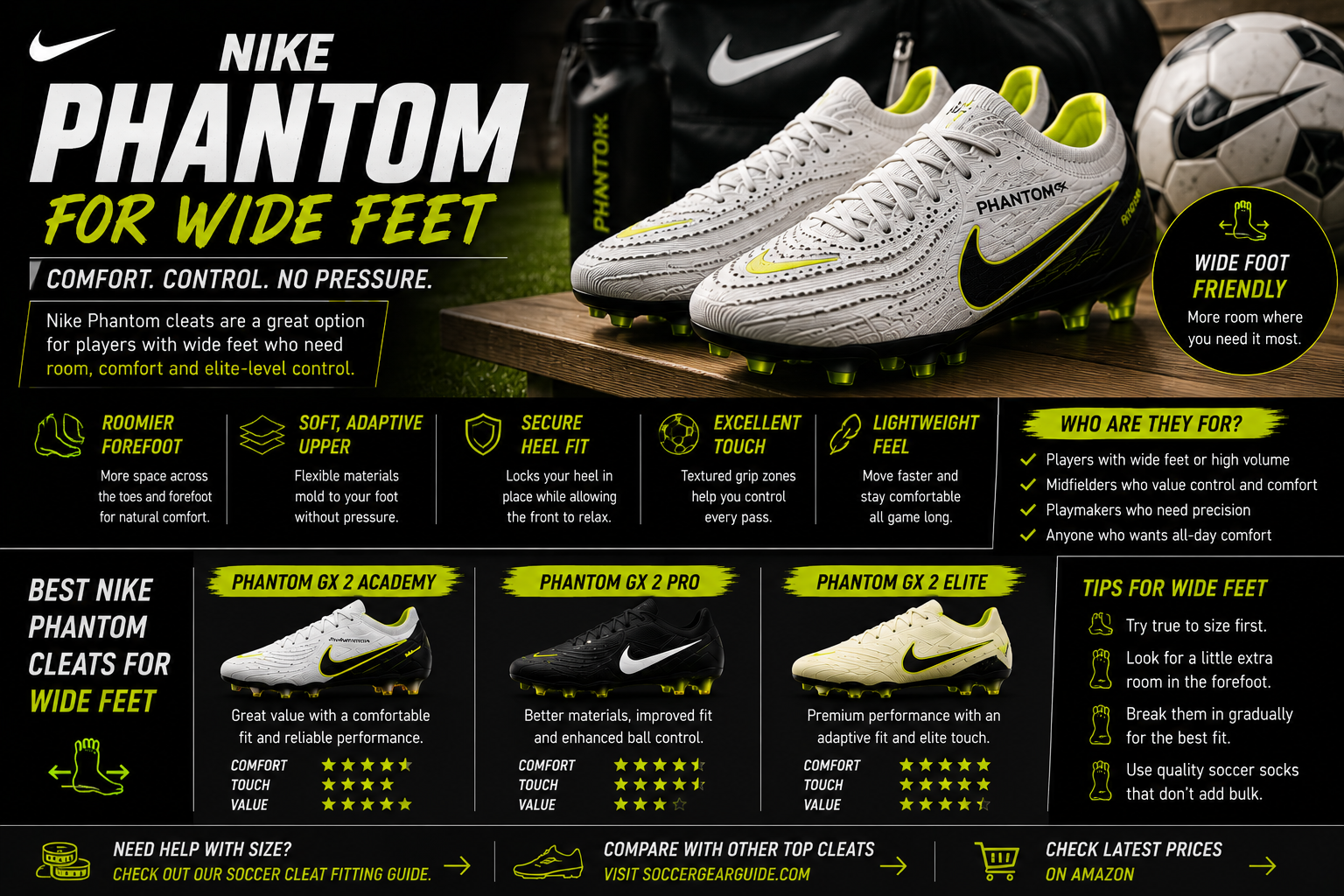
Quick answer
Some wide-footed players find Phantom more accommodating than Mercurial, but width tolerance varies by generation, tier, and foot volume. Do not size longer to escape pressure; test the correct length and compare a roomier family when needed.
The guide
Five points that matter
Use these checkpoints to understand the exact model and make a decision based on the player, field, and intended use.
Measure length and forefoot width
Measurements are the starting point, but foot shape decides whether the labeled size actually works. Two players with the same length can need different models because forefoot width, instep height, and heel volume differ.
Loosen laces before judging volume
A close performance fit should hold the foot without sharp side pressure, numbness, curled toes, or heel lift. Do not rely on a long break-in period to solve structural mismatch.
Check the widest forefoot point
Try both boots with normal soccer socks, lace them fully, and test stops, pivots, and short accelerations indoors. Keep the pair only if the foot stays centered over the sole.
Test heel hold during cuts
Outsole selection is separate from sizing. FG, AG/MG, turf, and indoor versions can feel different, and the correct traction pattern should match the player’s regular field.
Compare Tiempo, Copa, or Future
When correct length still hurts across the forefoot or instep, change models. Buying extra length often creates sliding and unstable cuts instead of usable width.
Decision table
What to check
| Checkpoint | Good sign | Warning sign | Action |
|---|---|---|---|
| Length | Toes natural and secure | Sliding or toe impact | Retest size |
| Width | Close without pain | Pinching or numbness | Change model |
| Surface | Correct outsole | Wrong traction pattern | Change outsole |
| Movement | Stable stops and cuts | Heel lift or instability | Reject fit |
Use good judgment
Do not let the family name make the decision
A famous boot line can narrow the shortlist, but the exact pair still has to suit the foot, field, level of use, and budget.
Reject the fit when
- Pressure becomes painful or numb
- The heel lifts during acceleration
- Toes hit the front
- The foot slides during stops
- The platform feels unstable
Reject the product when
- The outsole does not match the field
- Studs or bonding are damaged
- The upper cannot secure the foot
- Extra length is needed to tolerate width
- The price is driven only by tier prestige
Common questions
Nike Phantom for Wide Feet FAQ
Is Nike Phantom for Wide Feet right for every player?
No. Foot shape, current fit, surface, budget, and comfort matter more than the family or position label.
Should players size up for more width?
Usually not. Extra length can cause sliding; a different shape is safer when correct length creates painful width pressure.
How should the outsole be selected?
Match FG, AG/MG, turf, or indoor construction to the regular field and applicable league rules.
Do premium tiers always make sense?
No. They refine materials and feel, but lower tiers can offer better value for growth, practice, or limited use.
How much break-in is acceptable?
Minor softening is normal, but break-in should not be expected to fix pain, numbness, wrong length, or heel lift.
What should be tested indoors?
Use soccer socks and test toe space, forefoot pressure, heel hold, stops, turns, and natural ball-contact motion.
When is another cleat family better?
Choose another model when the right length still causes pressure, instability, or discomfort, or when the available outsole does not suit the field.
Choose fit and surface before reputation
Measure carefully, confirm the exact outsole, and test realistic movement while returns remain possible.
Check current optionsExplore this topic