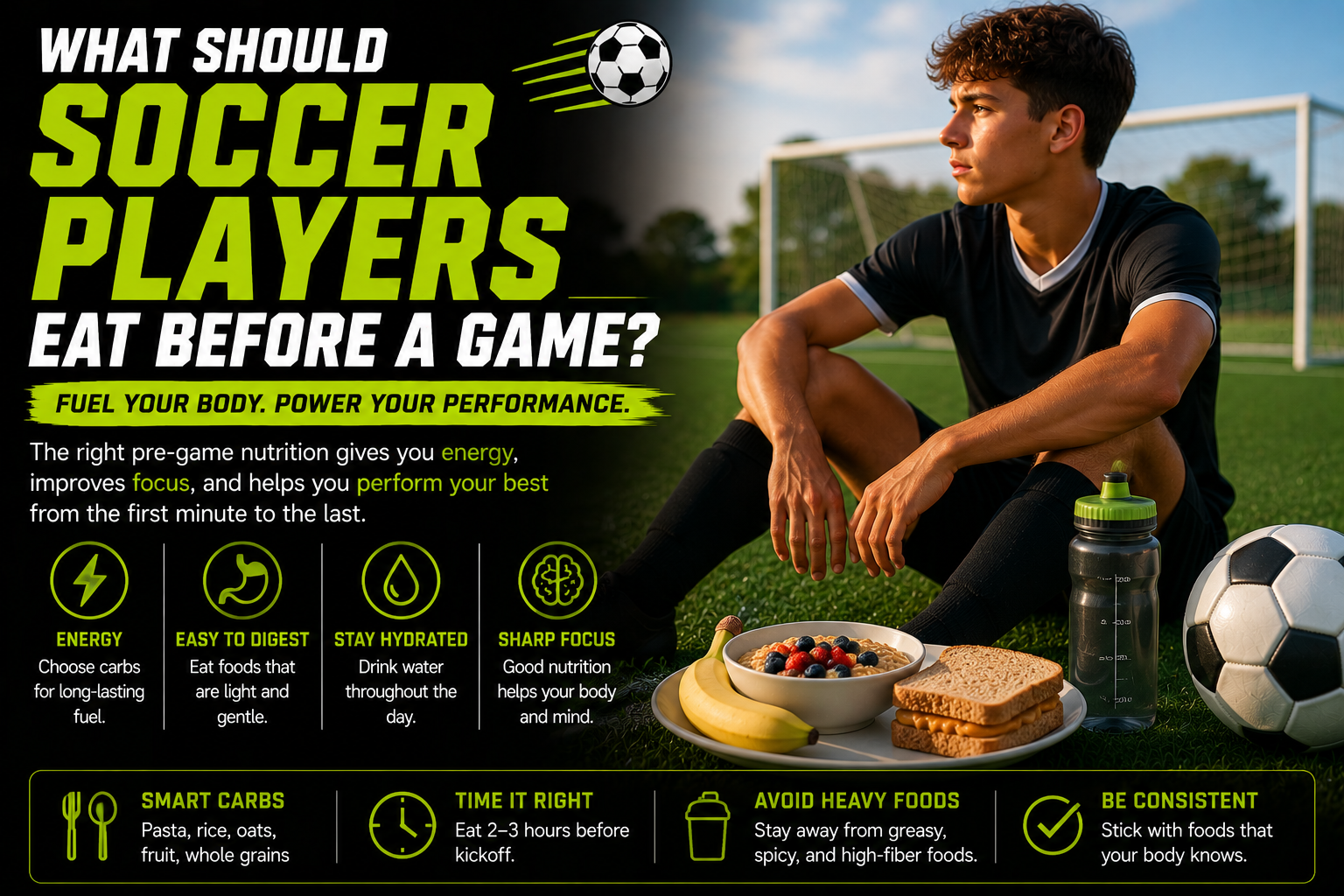
What Should Soccer Players Eat Before a Game? (Pre-Match Nutrition Guide)
Pre-Match Soccer Nutrition

What Should Soccer Players Eat Before a Game?

Soccer players should eat familiar, carbohydrate-focused meals before a game so they have enough energy to run, sprint, press, defend, and stay sharp through the second half. The best pre-match meals include easy-to-digest carbs, moderate protein, steady hydration, and foods the player already knows sit well.

What should soccer players eat before a game pre-match nutrition guide
Quick Answer:
Before a soccer game, players should usually eat a balanced meal 2–4 hours before kickoff with carbohydrates like rice, pasta, potatoes, oats, bread, or fruit, plus moderate protein like eggs, chicken, yogurt, turkey, beans, or tofu. A light carb snack 30–90 minutes before warmups can help top off energy without feeling heavy.

Pre-Match Soccer Nutrition Plan at a Glance

3–4 Hours BeforeMain meal with carbs, moderate protein, and fluids.
60–90 Minutes BeforeLight snack like banana, toast, cereal, or applesauce.
During WarmupsSmall sips of water or electrolytes if needed.
AvoidNew foods, greasy meals, heavy fiber, and too much caffeine.

Best Foods Before a Soccer Game

Food Type Best Options Why It Helps Best Timing
Carbohydrates Rice, pasta, potatoes, oats, bread, cereal, fruit Main fuel source for running, sprinting, and repeated effort 2–4 hours before
Moderate Protein Eggs, chicken, turkey, yogurt, beans, tofu, fish Helps the meal feel balanced without being too heavy 2–4 hours before
Light Snacks Banana, toast, applesauce, granola bar, crackers Quick energy without a large meal 30–90 minutes before
Fluids Water, electrolyte drink when needed Supports hydration before warmups and kickoff All day
Recovery Backup Milk, smoothie, yogurt, sandwich, recovery drink Ready for after the final whistle After game

Why Pre-Match Food Matters for Soccer Players

Soccer is not a slow sport. Players jog, sprint, cut, jump, challenge, recover, and repeat those efforts over and over. A good pre-game meal gives the body usable energy before the match starts.

The goal is not to feel completely full. The goal is to feel fueled, hydrated, light, and comfortable. A player who skips food may feel tired or flat. A player who eats the wrong meal too close to kickoff may feel heavy, bloated, or uncomfortable during warmups.

For a complete overview of meals, hydration, protein, recovery, and tournament planning, start with the Soccer Player Nutrition Guide and the main Soccer Nutrition Hub.

Pre-Match Nutrition Priorities

Fuel with carbs

Carbohydrates help players maintain energy for running, pressing, sprinting, and second-half effort.

Keep protein moderate

Protein can be part of the meal, but too much right before kickoff may feel heavy for some players.

Hydrate early

Players should drink steadily before arriving instead of waiting until warmups to start hydrating.

Stay familiar

Game day is not the time to test a new meal, new shake, new bar, or new supplement.

What Should Soccer Players Eat 3–4 Hours Before a Game?

The main pre-game meal usually works best 3–4 hours before kickoff. This gives the body time to digest while still providing fuel for the match. The meal should include carbohydrates, moderate protein, fluids, and foods the player has eaten successfully before.

  • Rice bowl with chicken, vegetables, and water.
  • Pasta with lean protein and a simple sauce.
  • Eggs, toast, fruit, and yogurt for morning games.
  • Turkey sandwich with fruit and water.
  • Oatmeal with banana and milk or yogurt.
  • Potatoes or sweet potatoes with lean protein.
  • Bean and rice bowl for players who tolerate it well.

Players should keep the meal simple. Heavy sauces, fried foods, very spicy meals, and oversized portions can create problems if eaten too close to kickoff.

Pre-Game Meal Timing Guide

Timing Before Kickoff Goal Meal or Snack Ideas
Night Before Build a strong fuel base Rice, pasta, potatoes, lean protein, vegetables, fruit, water
3–4 Hours Before Main pre-game meal Chicken and rice, turkey sandwich, eggs and toast, pasta, oatmeal
1–2 Hours Before Top off energy Banana, cereal, toast, applesauce, granola bar, crackers
30 Minutes Before Small comfort snack if needed Small bites of banana, sports drink, applesauce pouch, water
After Game Recover and refuel Yogurt, milk, smoothie, sandwich, rice bowl, balanced meal

Best Carbs Before a Soccer Game

Carbohydrates are important before soccer because the sport demands repeated bursts of energy. Players need fuel for running, sprinting, cutting, pressing, tracking back, and staying sharp mentally.

Good pre-match carb options include rice, pasta, potatoes, oats, bread, tortillas, cereal, fruit, applesauce, crackers, and granola bars. The best choice depends on the player’s age, game time, appetite, and digestion.

  • Rice and pasta work well for meals 3–4 hours before kickoff.
  • Oats, toast, cereal, and fruit work well for morning games.
  • Bananas, applesauce, crackers, and granola bars work well closer to warmups.
  • Potatoes and sweet potatoes can be good the night before or at the main meal.
  • Simple carbs are usually better than heavy meals between tournament games.

For a full match-day schedule, read the Soccer Game Day Meal Plan.

How to Build a Pre-Match Soccer Meal

1. Start with carbs

Choose rice, pasta, oats, potatoes, bread, fruit, or cereal as the main energy source.

2. Add moderate protein

Use eggs, chicken, turkey, yogurt, beans, tofu, or fish without making the meal too heavy.

3. Keep fats lower

Too much fried food, greasy food, or heavy sauce close to kickoff can slow digestion.

4. Drink steadily

Hydration should start early in the day, not when the player reaches the field.

Should Soccer Players Eat Protein Before a Game?

Protein can be part of a pre-game meal, but it should usually be moderate. The main job before kickoff is fueling the player with carbohydrates. Protein helps make the meal balanced, but a very high-protein meal right before playing may feel too heavy for some athletes.

Good pre-game protein options include eggs, Greek yogurt, milk, chicken, turkey, beans, tofu, fish, or lean meat. Protein shakes can be useful for convenience, but whole foods are usually the first choice when time allows.

  • Use protein in the main meal 2–4 hours before the game.
  • Pair protein with carbs instead of eating protein alone.
  • Keep portions moderate before kickoff.
  • Use shakes only if they digest well and the player has tested them before.
  • Avoid trying a new protein powder or bar right before an important match.

Helpful guides: Best Protein for Soccer Players and Protein Shake Before or After Soccer?

Best Pre-Game Meals by Game Time

Game Time Pre-Game Meal Ideas Notes
Morning Game Toast, eggs, banana, yogurt, oatmeal, cereal, water Keep breakfast simple and easy to digest.
Afternoon Game Rice bowl, pasta, sandwich, potatoes, lean protein Eat the main meal 3–4 hours before kickoff.
Evening Game Balanced lunch, light snack before warmups, recovery dinner after Hydrate all day and avoid skipping lunch.
Early Tournament Game Oatmeal, toast, banana, yogurt, water Pack snacks and recovery food for later matches.
Second Game Same Day Fruit, crackers, half sandwich, applesauce, bar, fluids Go lighter between games to avoid feeling heavy.

What Should Soccer Players Eat 60–90 Minutes Before a Game?

If the main meal was several hours earlier, a light snack 60–90 minutes before kickoff can help top off energy. This snack should be mostly carbohydrates and easy to digest.

  • Banana or other familiar fruit.
  • Toast with a small amount of spread.
  • Applesauce pouch.
  • Low-fiber cereal.
  • Simple granola bar.
  • Crackers or pretzels.
  • Small smoothie if tested before.
  • Water or electrolyte drink when needed.

This is not the time for a heavy meal. Players who eat too much right before warmups may feel sluggish, cramped, or uncomfortable.

Pre-Match Nutrition by Player Type

Youth Players

Keep meals simple, familiar, and food-first. Avoid high-caffeine and extreme supplement products.

Teen Players

Fuel long practices and games with carbs, protein, fluids, and enough total food during the day.

Tournament Players

Pack portable meals, light snacks, water, electrolytes, and post-game recovery options.

Players With Low Appetite

Use smaller meals, smoothies, yogurt, fruit, toast, or simple snacks that feel easier to tolerate.

What Should Youth Soccer Players Eat Before a Game?

Youth soccer players should focus on familiar foods, balanced meals, and steady hydration. Parents do not need complicated supplement routines. The most important things are enough food, enough fluids, and a meal that does not upset the player’s stomach.

Good youth soccer pre-game meals include eggs and toast, oatmeal with fruit, chicken and rice, turkey sandwiches, pasta, yogurt with granola, rice bowls, or simple breakfast foods for early games.

  • Use food-first meals whenever possible.
  • Include carbohydrates before soccer for energy.
  • Add moderate protein in the main meal.
  • Pack familiar snacks for the ride or field.
  • Avoid high-caffeine drinks and stimulant-style products.
  • Do not force a huge meal if the player is nervous.
  • Ask a qualified professional if the player has medical or dietary concerns.

For younger players, read Nutrition for Youth Soccer Players and Best Protein for Young Athletes.

Best Pre-Match Snack Ideas

Snack Best Timing Why It Works
Banana 30–90 minutes before Easy carbohydrate source and simple to pack.
Toast 60–120 minutes before Simple, familiar, and easy for many players to digest.
Applesauce 30–60 minutes before Quick light snack when appetite is low.
Granola Bar 60–90 minutes before Portable option for travel and tournament days.
Cereal 60–120 minutes before Useful for morning games when a full meal is hard.
Crackers or Pretzels 30–90 minutes before Light carbohydrate snack that is easy to carry.

Hydration Before a Soccer Game

Hydration should start before players arrive at the field. Waiting until warmups to drink water is usually too late. Players should drink steadily throughout the day, then use small sips before kickoff.

Water is enough for many games and practices, but hot weather, heavy sweating, long tournaments, and back-to-back games may require electrolytes. Players should test any electrolyte drink during training first.

  • Drink water throughout the day before the game.
  • Bring a bottle to every match and warmup.
  • Use electrolytes during hot weather or heavy sweating.
  • Avoid chugging a large amount right before kickoff.
  • Use small sips during warmups if needed.
  • Pack extra fluids for tournaments and long travel days.

Helpful guide: Best Soccer Water Bottles.

Foods Soccer Players Should Avoid Before a Game

Food or Habit Why It Can Be a Problem Better Option
Greasy fast food Can feel heavy and slow digestion close to kickoff Rice bowl, sandwich, pasta, potatoes
Very spicy meals May cause stomach discomfort for some players Simple familiar meal
New foods Unknown digestion risk on game day Foods tested during normal training days
Too much fiber right before Can cause bloating or stomach issues for some athletes Lower-fiber carbs close to warmups
Huge protein meal May feel too heavy if eaten close to the game Moderate protein with carbs
Skipping meals Can leave the player low on energy Balanced meal plus light snack

Pre-Game Nutrition for Tournament Days

Tournament days are harder than single-game days because players may have multiple matches, travel time, heat, and limited access to good food. The best plan is to pack before leaving home.

  • Pack a cooler with water, yogurt, milk, smoothies, sandwiches, and fruit.
  • Bring light snacks like crackers, pretzels, applesauce, bananas, and bars.
  • Eat the bigger meal before the first game or after the final game.
  • Use lighter snacks between games to avoid feeling heavy.
  • Keep recovery food ready for after each match.
  • Avoid relying only on concession stand food.

Full guide: Soccer Tournament Nutrition Guide.

Pre-Match Nutrition Checklist

Carb meal

Plan rice, pasta, oats, potatoes, bread, cereal, or fruit before the match.

Protein support

Add eggs, yogurt, chicken, turkey, beans, tofu, fish, or milk in moderate amounts.

Hydration

Drink water before arriving and bring a bottle for warmups and halftime.

Backup snack

Pack banana, applesauce, crackers, toast, or a simple bar in case the player needs more fuel.

Sample Pre-Match Meal Plans

Scenario Meal Plan Simple Snack
8 AM Game Toast, eggs, banana, yogurt, water Applesauce or half banana
12 PM Game Oatmeal with fruit, yogurt, water Granola bar or crackers
3 PM Game Chicken and rice or turkey sandwich 3–4 hours before Banana or toast
7 PM Game Balanced lunch, light afternoon snack, water Cereal, crackers, or applesauce
Tournament Day Breakfast meal, packed snacks, hydration, recovery food Fruit, pretzels, half sandwich, bar

Common Pre-Game Nutrition Mistakes

  • Skipping breakfast before early games.
  • Eating a huge meal too close to kickoff.
  • Relying only on protein without enough carbohydrates.
  • Testing a new shake, bar, or supplement on game day.
  • Waiting until warmups to drink water.
  • Eating greasy or fried food before playing.
  • Not packing snacks for tournaments or travel games.
  • Assuming every player digests food the same way.

The best pre-match routine is built during practice weeks. Players should test meals and snacks on normal training days so they know what works before important games.

Final Verdict: What Should Soccer Players Eat Before a Game?

Soccer players should eat familiar, carbohydrate-focused meals before a game, with moderate protein and steady hydration. Rice, pasta, potatoes, oats, toast, cereal, fruit, yogurt, eggs, chicken, turkey, beans, and simple snacks can all work when timed correctly.

The best pre-match nutrition plan is not complicated. Eat enough, keep foods familiar, avoid heavy meals close to kickoff, drink throughout the day, and pack backup snacks for travel or tournaments.

Shop Soccer Nutrition Gear

Related Soccer Nutrition Guides

What Should Soccer Players Eat Before a Game FAQ

What is the best meal before a soccer game?

The best meal before a soccer game usually includes carbohydrates like rice, pasta, potatoes, oats, bread, or fruit with moderate protein like eggs, chicken, turkey, yogurt, beans, or tofu.

How long before a soccer game should players eat?

Most players do best with a main meal 2–4 hours before kickoff and a light carbohydrate snack 30–90 minutes before warmups if needed.

Should soccer players eat carbs before a game?

Yes. Carbohydrates are important before soccer because they help fuel running, sprinting, cutting, and repeated high-intensity effort.

Should soccer players eat protein before a game?

Protein can be included in the main pre-game meal, but it should usually be moderate and paired with carbohydrates so the meal does not feel too heavy.

What should youth soccer players eat before a game?

Youth soccer players should eat familiar, food-first meals with carbs, moderate protein, and fluids, such as eggs and toast, oatmeal with fruit, chicken and rice, yogurt, or a sandwich.

What should soccer players avoid before a game?

Players should avoid new foods, greasy meals, very spicy foods, too much fiber close to kickoff, huge protein meals, skipping meals, and excessive caffeine.

Is a banana good before a soccer game?

Yes. A banana can be a useful light carbohydrate snack before a soccer game, especially 30–90 minutes before kickoff if the player tolerates it well.

What should soccer players drink before a game?

Soccer players should drink water steadily throughout the day. Electrolytes can help during hot weather, heavy sweating, long games, or tournaments when tested beforehand.

We may earn a commission from qualifying purchases at no extra cost to you. This article is for general informational purposes only and is not medical advice.

Scroll to Top