Best Training Soccer Balls for Practice & Development
Training soccer balls are built for repetition. Whether you are working on passing, shooting, first touch, dribbling, goalkeeper practice, or team drills, the right training ball should be durable, consistent, properly sized, and reliable enough for everyday use.
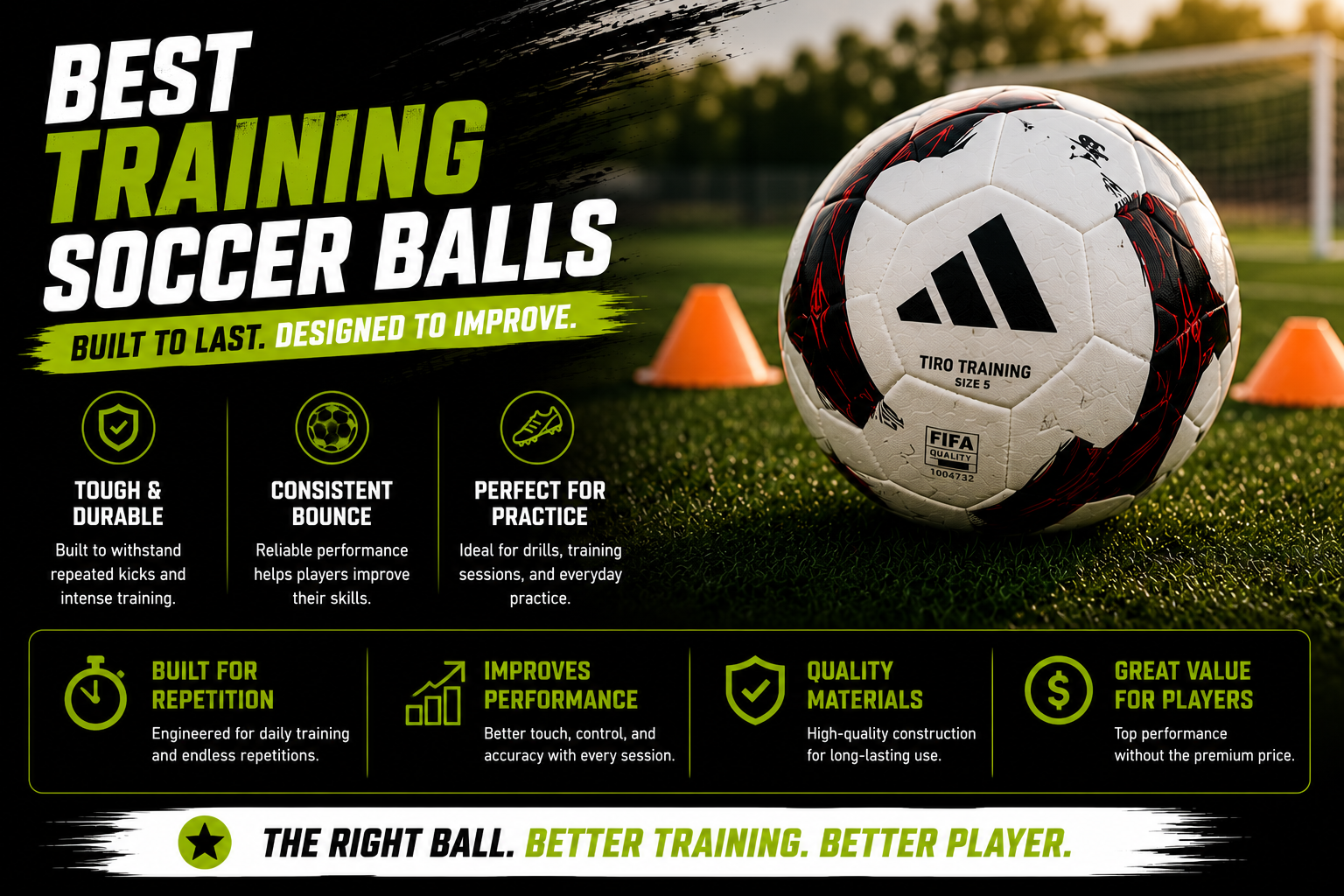
The best training soccer balls are durable, properly sized, consistent in bounce, and able to handle repeated drills. For most players, a quality training ball is a better everyday choice than an expensive match ball because it is designed for regular practice and development.
What Is a Training Soccer Ball?
A training soccer ball is designed for frequent use in practices, drills, backyard sessions, team training, and skill development. Unlike match balls, which focus more on premium touch and game performance, training balls prioritize durability and consistency over long-term repeated use.
Players use training balls for passing drills, shooting sessions, first-touch work, rondos, juggling, crossing, goalkeeper practice, and small-sided games. Because training balls get kicked hundreds or thousands of times, they need to hold their shape, retain air, and survive regular field use.
For a broader overview of ball types, visit the main Soccer Balls Hub.
Best Training Soccer Ball Types
The best training soccer ball depends on the player’s age, practice surface, training frequency, and level of play.
Best Features to Look For in a Training Soccer Ball
Training balls should be judged by durability, feel, size, air retention, and how well they handle repeated use. A good training ball does not need to be the most expensive ball available, but it should be reliable enough for regular practice.
A strong outer cover helps the ball handle repeated kicking, passing, shooting, and field contact.
Younger players need size 3 or size 4, while older players and adults usually use size 5.
A quality bladder helps the ball hold air longer between practices.
A training ball should bounce and roll predictably during drills and games.
Even a durable training ball should feel controlled when passing, receiving, and shooting.
Grass, turf, and rough practice areas can wear down weaker balls quickly.
Training Soccer Ball Quick Picks
Use this guide to choose the right training ball based on how and where it will be used.
Choose a size 3 or size 4 training ball that is easier to control and kick properly.
Choose durable training balls that can survive repeated drills, group sessions, and ball bags.
Choose a ball with good shape retention and a durable cover for repeated strikes.
Choose an affordable, durable training ball that can handle parks, backyards, and casual practice.
Best Training Soccer Balls for Kids
Kids need training balls that are the correct size for their age and league. A ball that is too large or too heavy can make passing, dribbling, and shooting harder than necessary. The right size helps younger players learn technique with better confidence.
Most young children use size 3, many youth players use size 4, and older players eventually move to size 5. Parents should check league rules before buying because some youth leagues require a specific size.
Training Balls vs Match Balls
Training balls and match balls serve different purposes. Most players should practice with training balls and save match balls for games or higher-quality sessions.
| Ball Type | Best For | Main Advantage | Main Tradeoff |
|---|---|---|---|
| Training Soccer Ball | Practice, drills, teams, backyard use | Durability and everyday value | May not feel as premium as match balls |
| Match Soccer Ball | Games, advanced players, official match feel | Better touch, flight, and performance | Usually more expensive and less ideal for rough daily use |
| Youth Training Ball | Kids and youth leagues | Correct size for development | Players may need to size up as they grow |
| Everyday Practice Ball | Casual players and families | Affordable and durable for regular play | Not always ideal for competitive matches |
For most families and players, a durable training ball is the best first soccer ball to buy. Competitive players may want both a training ball and a separate match ball.
Best Training Soccer Balls for Teams
Coaches and teams usually need multiple training balls. Team balls should be durable, easy to pump, consistent in feel, and affordable enough to buy in larger quantities.
When buying for a team, consistency matters. If every ball feels completely different, passing drills, shooting reps, and first-touch exercises become less predictable. A set of similar training balls can make practice smoother and more organized.
Coaches may also want to pair training balls with soccer training equipment like cones, rebounders, agility ladders, goals, and ball bags.
Best Training Soccer Balls by Drill Type
Different drills place different demands on a training ball.
- Passing drills: Choose a ball with consistent roll and touch.
- Shooting drills: Choose a durable ball with good shape retention.
- First touch: Choose a ball that feels controlled and predictable.
- Goalkeeper training: Choose balls that hold air and can handle repeated strikes.
- Backyard practice: Choose durability and value over premium match feel.
- Team sessions: Choose multiple balls with similar size and feel.
How Long Should a Training Soccer Ball Last?
A training soccer ball can last a long time if it is used on appropriate surfaces, inflated correctly, and stored properly. Rough pavement, sharp surfaces, overinflation, and leaving balls outside in bad weather can shorten the lifespan.
Players who train several times per week may wear out balls faster than casual players. If the ball loses air quickly, becomes misshapen, cracks, or feels dead when kicked, it may be time to replace it.
Common Mistakes When Buying Training Soccer Balls
- Buying the wrong size for a youth player.
- Choosing a match ball for rough everyday training.
- Buying the cheapest ball possible and replacing it quickly.
- Ignoring the surface where the ball will be used.
- Letting the ball stay underinflated or overinflated.
- Buying only one ball for team practice when multiple balls are needed.
Ready to Compare Training Soccer Balls?
The best training soccer balls are durable, properly sized, and consistent enough for regular practice. Choose the right ball for the player’s age, surface, training frequency, and development goals.
Shop Soccer Balls on AmazonRelated Soccer Ball Guides
Continue comparing soccer balls, sizes, match balls, and related training gear with these guides.
Training Soccer Balls FAQ
What is the best soccer ball for training?
The best soccer ball for training is durable, properly sized, consistent in bounce, and able to handle repeated drills, passing, shooting, and daily practice.
Are training soccer balls different from match balls?
Yes. Training balls are built for durability and repeated use, while match balls are designed for better touch, flight, and game performance.
What size training soccer ball should kids use?
Young kids usually use size 3, many youth players use size 4, and older players usually use size 5. Always check league rules.
Can you use a training ball in a match?
A training ball can be used for casual games, but official matches may require a specific match ball or league-approved ball.
How many training balls does a team need?
Teams usually benefit from multiple training balls so players get more touches during drills and practice does not stop when balls go out of play.
Are expensive training balls worth it?
They can be worth it for serious players or teams if they offer better durability, touch, and air retention, but beginners usually just need a reliable ball in the correct size.
We may earn a commission from qualifying purchases at no extra cost to you.