Best Size 3 Soccer Balls for Young Players
Size 3 soccer balls are made for young players who are learning how to dribble, pass, shoot, and control the ball with confidence. This guide explains when to choose a size 3 ball, what features matter most, and how to pick the right ball for kids, beginners, training, and everyday play.
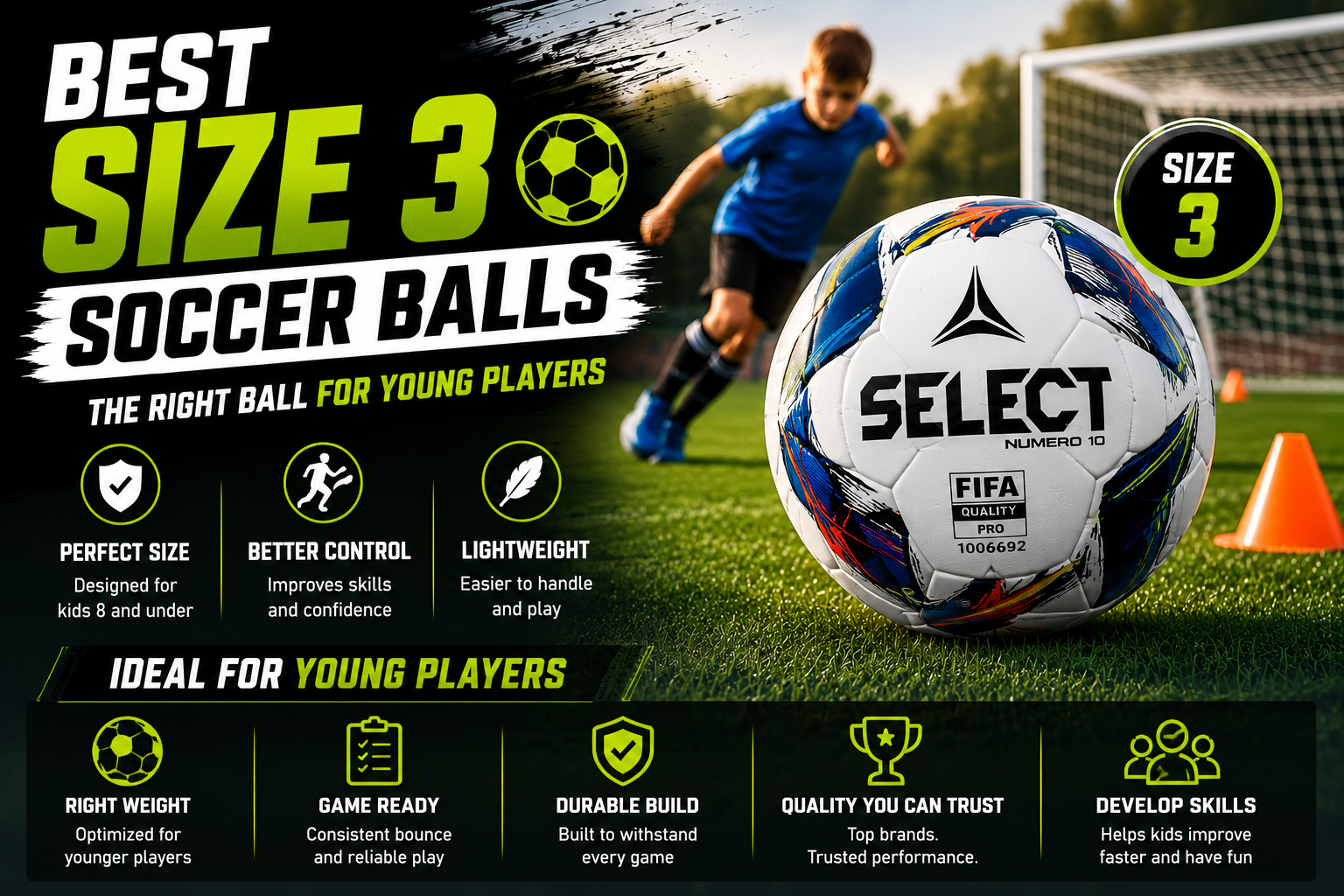
The best size 3 soccer balls are lightweight, durable, easy for young kids to control, and properly sized for early development. They are usually best for younger players, beginners, backyard play, early training, and small-sided youth soccer.
What Is a Size 3 Soccer Ball?
A size 3 soccer ball is a smaller youth soccer ball designed for younger players. It is easier for kids to kick, control, dribble, and pass than a full-size ball. Because young players are still developing strength, coordination, and technique, the correct ball size can make a big difference.
Size 3 balls are commonly used by young children, beginner players, and early youth soccer programs. They are also useful for backyard practice, first-touch development, and players who are not ready for a larger size 4 or size 5 ball.
For a full soccer ball category overview, visit the main Soccer Balls Hub.
Best Size 3 Soccer Ball Types
The best size 3 soccer ball depends on whether the child needs a ball for training, games, backyard play, or first-time practice.
Best Features to Look For in a Size 3 Soccer Ball
Young players need a soccer ball that feels manageable. A good size 3 ball should be easy to control, durable enough for regular use, and comfortable for repeated kicking.
Size 3 is easier for young players to kick and control than larger soccer balls.
A strong outer cover helps the ball handle backyard, park, school, and practice use.
The ball should not feel too hard or painful when young players kick it repeatedly.
A reliable bladder helps the ball hold air between practices and games.
Bright or clear patterns can help kids track the ball during play.
Kids often use balls on different surfaces, so durability matters for everyday play.
Size 3 Soccer Ball Quick Picks
Use this quick guide to choose the right size 3 soccer ball based on how the child will use it.
Choose a soft-feeling, durable size 3 ball that helps kids learn to kick and control comfortably.
Choose a size 3 training ball that can handle repeated dribbling, passing, shooting, and drills.
Choose a durable everyday ball that can handle casual use at home, school, or the park.
Choose a size 3 ball if the child’s league or age group requires it for official small-sided play.
Who Should Use a Size 3 Soccer Ball?
Size 3 soccer balls are best for young children and early soccer players who are still developing coordination, kicking strength, and ball control. A smaller ball helps kids learn technique without struggling against a ball that is too big.
Parents should check league rules because some age groups may use size 3 while others move to size 4. If the child is practicing at home, size 3 is often a good starting point for younger players.
Size 3 vs Size 4 vs Size 5 Soccer Balls
Choosing the correct soccer ball size helps players develop better control and confidence.
| Ball Size | Best For | Common Use | Buying Tip |
|---|---|---|---|
| Size 3 | Young kids and beginners | Early skill development, small-sided play, backyard practice | Best for younger players who need a manageable ball |
| Size 4 | Youth players | Youth leagues, training, developing technique | Good next step after size 3 as kids grow |
| Size 5 | Older players and adults | Official matches, adult play, high school, club, training | Standard full-size soccer ball for older players |
| Futsal Ball | Indoor/futsal players | Hard court play, tight control, futsal matches | Lower bounce and different feel than outdoor balls |
If the child is struggling to kick or control a larger ball, a size 3 may be the better choice. If they are older or playing in a league that requires size 4, move up based on league rules and comfort.
Best Size 3 Soccer Balls for Training
A size 3 training ball is ideal for young players who are building basic skills. Training balls are designed for repetition, so they are a smart choice for kids who practice often at home, school, or team sessions.
Look for a ball that holds air well, feels comfortable, and can handle repeated dribbling, passing, and shooting. For most young players, a durable size 3 training ball is better than an expensive match-style ball.
For more practice-focused advice, read our Best Training Soccer Balls guide.
Best Size 3 Soccer Balls for Backyard Play
Backyard and park soccer can be rough on balls, so durability matters.
Kids often use soccer balls on grass, turf, dirt, playgrounds, driveways, and school fields. A good everyday size 3 ball should be tough enough for casual play without feeling too hard or heavy.
- Choose a durable cover for regular use.
- Keep the ball properly inflated.
- Avoid leaving the ball outside in bad weather.
- Use smoother surfaces when possible to reduce wear.
- Replace the ball if it becomes misshapen or loses air quickly.
Are Size 3 Soccer Balls Good for Skill Development?
Yes. Size 3 soccer balls can be excellent for early skill development because they are easier for young players to control. A smaller ball helps kids practice touches, dribbling, passing, shooting, and coordination with less frustration.
The goal is to let the child build confidence. If the ball is too big, too heavy, or uncomfortable to kick, the player may struggle to learn proper technique.
Common Mistakes When Buying Size 3 Soccer Balls
- Buying a full-size ball too early for a young player.
- Choosing a ball that feels too hard for kids.
- Ignoring league rules for official games.
- Buying a cheap ball that loses air quickly.
- Using the ball mainly on rough pavement or sharp surfaces.
- Keeping the same ball after it becomes flat, warped, or damaged.
Ready to Compare Size 3 Soccer Balls?
The best size 3 soccer balls help young players build confidence, control, and early soccer skills. Choose a ball that is durable, comfortable, properly inflated, and appropriate for the player’s age, league, and practice routine.
Shop Soccer Balls on AmazonRelated Soccer Ball Guides
Continue comparing soccer balls, youth sizes, training balls, and related equipment with these guides.
Size 3 Soccer Balls FAQ
What age is a size 3 soccer ball for?
Size 3 soccer balls are usually used by younger kids and early beginner players, but exact age rules can vary by league.
Is a size 3 soccer ball good for beginners?
Yes. A size 3 soccer ball is often a good choice for young beginners because it is easier to kick, control, and dribble than larger balls.
Should kids use size 3 or size 4 soccer balls?
Younger players usually start with size 3, while older youth players often move to size 4. Check league requirements before buying for official games.
Can a size 3 soccer ball be used for training?
Yes. Size 3 soccer balls are useful for youth training, backyard practice, first touch, dribbling, passing, and early shooting skills.
Is size 3 too small for older kids?
It can be too small for older youth players if their league uses size 4 or size 5. Size 3 is best for younger players and early development.
What is the best size 3 soccer ball for kids?
The best size 3 soccer ball for kids is durable, comfortable to kick, easy to control, and appropriate for the child’s age, league, and practice surface.
We may earn a commission from qualifying purchases at no extra cost to you.