
Best Grip Socks for Soccer
The best grip socks for soccer help reduce foot sliding inside cleats, improve traction, create a more locked-in feel, and support sharper cuts, sprints, and changes of direction. Grip socks are especially useful for competitive players who feel their feet moving inside their cleats or want a more secure match-day setup.
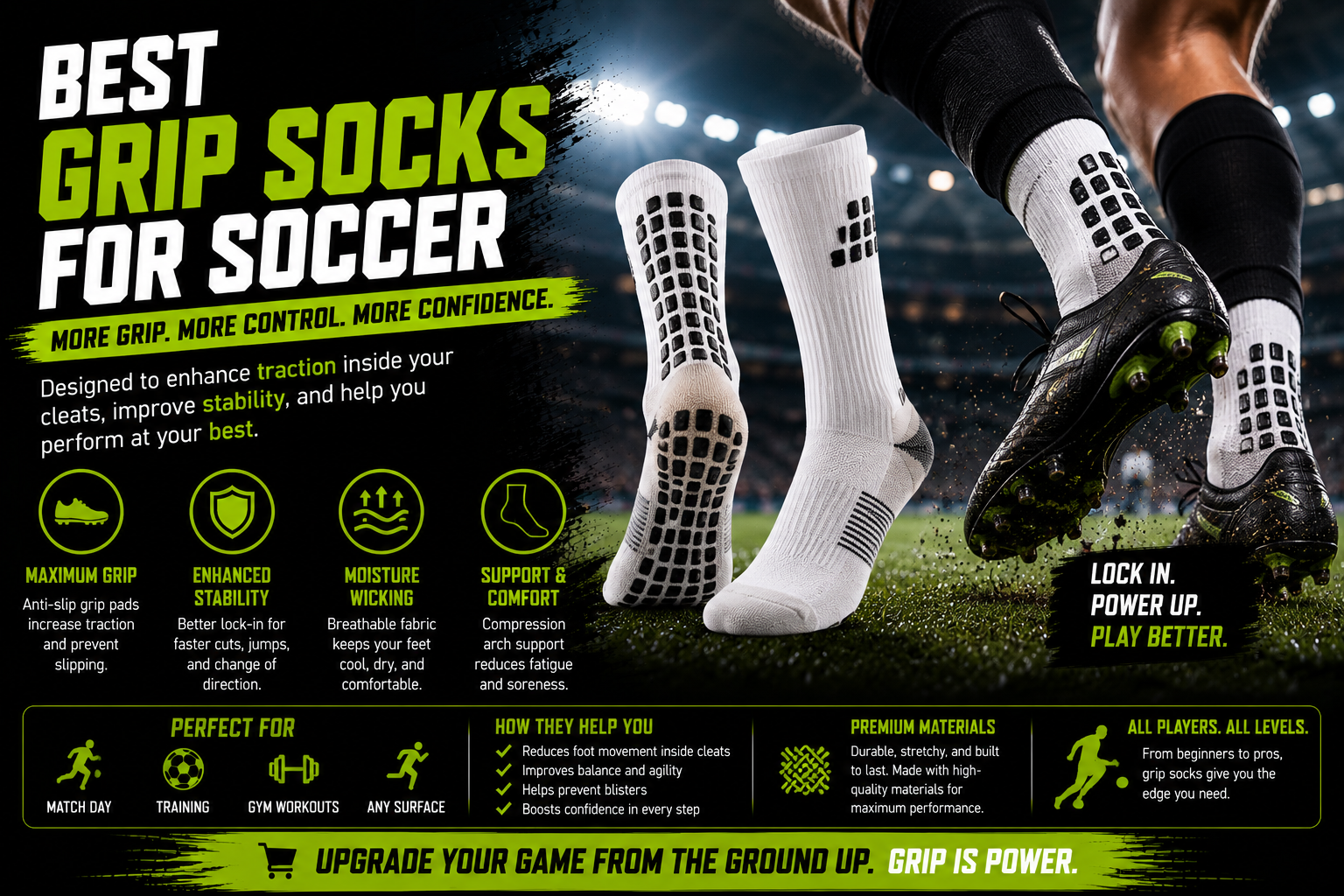
The best grip socks for soccer are comfortable, breathable, durable, and have strong grip zones that help reduce slipping inside cleats. Competitive players usually benefit most from grip socks, especially if they sprint, cut, press, or change direction often. Kids and beginners may not need grip socks immediately, but they can help if regular socks feel slippery inside cleats.
Why Grip Socks Matter in Soccer
Grip socks are designed to solve one of the most annoying problems in soccer: foot movement inside the cleat. Even when cleats fit well, regular socks can slide against the insole during quick turns, acceleration, stops, and direction changes.
When the foot slides inside the shoe, the player may feel less connected to the cleat. This can affect confidence, comfort, and how sharp the player feels when cutting or sprinting. Grip socks add textured grip zones under the foot to help create a more stable connection.
For the full sock category, visit the Soccer Socks Hub. If you are deciding between regular socks and grip socks, also read Grip Socks vs Soccer Socks.
Best Grip Sock Types for Soccer
Best Features to Look For
Not all grip socks feel the same. Some are thin and close-fitting, while others are thicker and more cushioned. The right choice depends on cleat fit, playing level, comfort preference, and how much grip the player wants.
Grip zones should help reduce slipping inside cleats without feeling uncomfortable.
Choose thin socks for tight cleats and cushioned socks for more comfort.
Good ventilation helps manage sweat during long practices and matches.
The sock should stay in place without bunching, twisting, or sliding down.
Grip socks should handle repeated washing, cleat friction, and hard training.
The sock should work with your cleat fit instead of making the shoe too tight.
What Grip Socks Help Improve
Grip socks are not magic, but they can make the player feel more connected to the cleat during high-speed actions.
Grip pads help reduce foot movement inside the shoe during quick actions.
A more stable sock can make the cleat feel more secure and responsive.
Good grip socks can reduce rubbing and sliding that may cause irritation.
Players may feel sharper when their feet stay more stable inside the cleats.
Grip Socks Compared
Different grip socks work better for different players. A winger may want thin socks for speed boots, while a midfielder may prefer more cushioning for long matches.
| Grip Sock Type | Best For | Main Advantage | Buying Tip |
|---|---|---|---|
| Thin Grip Socks | Tight cleats and speed boots | Grip without too much bulk | Best if your cleats already fit snugly |
| Cushioned Grip Socks | Comfort-focused players | More padding and softness | Check that cleats do not become too tight |
| Pro-Style Grip Socks | Competitive match play | Strong locked-in feel | Best for serious players who notice slipping |
| Budget Grip Socks | Testing grip socks for the first time | Lower cost | Good starting point before buying premium socks |
| Youth Grip Socks | Kids and smaller feet | Better fit for young players | Avoid socks that bunch inside cleats |
Best Grip Socks for Competitive Players
Competitive players usually get the most value from grip socks because every sprint, cut, and change of direction matters. If a player feels their foot sliding inside the cleat, grip socks can create a more stable base.
Wingers, fullbacks, midfielders, and forwards often like grip socks because they make explosive movement feel cleaner. Goalkeepers may also benefit because they need quick push-offs, short steps, and secure footing when reacting inside the box.
If you are building a full performance setup, compare grip socks with Best Soccer Cleats for Speed, Best Soccer Cleats for Agility, and Best Soccer Cleats for Goalkeepers.
Best Grip Socks for Kids
Kids do not always need grip socks, but they can help if the child complains about sliding inside cleats.
For younger players, comfort still matters most. If grip socks are too thick, they can make cleats feel tight and uncomfortable. If they are too loose, they can bunch or wrinkle inside the shoe.
- Choose youth sizing when possible.
- Make sure the sock does not bunch inside the cleat.
- Use thinner grip socks if cleats already fit snugly.
- Do not buy grip socks to fix cleats that are the wrong size.
- Start with regular soccer socks if the child has no slipping issues.
For more youth sock advice, visit Best Soccer Socks for Kids and Best Soccer Cleats for Kids.
Grip Socks vs Regular Soccer Socks
Regular soccer socks are designed to cover shin guards, match team uniforms, and provide general comfort. Grip socks are designed to improve traction between the foot and the inside of the cleat.
Many players use both. A common match-day setup is wearing grip socks on the foot, then wearing a team sock sleeve over the lower leg to cover shin guards and match the uniform.
| Sock Type | Main Benefit | Possible Drawback | Best For |
|---|---|---|---|
| Regular Soccer Socks | Simple shin guard coverage | May slide inside cleats | Kids, beginners, team uniforms |
| Grip Socks | Better traction inside cleats | Can feel tight in snug cleats | Competitive players and match setups |
| Sleeve Socks | Works with grip socks and shin guards | Needs a secure setup | Players who wear grip socks under team colors |
| Compression Socks | Supportive feel | Can feel too tight for some players | Players who prefer a firm sock feel |
For a full comparison, read Grip Socks vs Soccer Socks.
Best Grip Socks for Tight Cleats
If your cleats already fit tight, sock thickness becomes very important.
A thick grip sock can make a snug cleat feel too tight. This can create pressure on the toes, sides of the foot, or top of the foot. In tight cleats, thinner grip socks are usually better.
- Use thin grip socks with speed cleats or narrow boots.
- Avoid thick grip socks if your toes already feel compressed.
- Check cleat fit with the socks you actually plan to wear.
- Do not use grip socks to compensate for cleats that are too large.
- If cleats hurt with grip socks, try thinner socks or reassess sizing.
For fit help, see How to Fit Soccer Shoes and Should Soccer Cleats Be a Size Bigger?.
Best Grip Socks for Match Day
On match day, players want a sock setup that feels secure from warmup to final whistle. Grip socks can help the cleat feel more connected to the foot, especially during sprinting and sharp changes of direction.
Many competitive players pair grip socks with soccer sleeve socks. This lets them use the grip sock on the foot while still matching the team color on the calf and covering the shin guard.
For that setup, read Best Soccer Sleeve Socks and Best Soccer Socks for Shin Guards.
Other Gear to Pair with Grip Socks
Grip socks work best when the rest of the player’s gear fits correctly.
Cleat fit determines whether grip socks feel secure or too tight.
Sleeves help players wear grip socks while keeping a team uniform look.
Grip socks do not replace shin guard sleeves or secure sock coverage.
Players who like a tight feel may also compare compression socks or sleeves.
Best Grip Sock Brands to Know
Several brands make grip socks for soccer. Some focus on premium grip and performance, while others offer more affordable entry-level options. Trusox is one of the best-known grip sock names, while Nike and Adidas socks are more common for traditional soccer sock and teamwear setups.
Common Grip Sock Mistakes
- Buying grip socks that are too thick for tight cleats.
- Using grip socks to fix cleats that are the wrong size.
- Choosing the strongest grip but ignoring comfort.
- Buying adult grip socks that bunch on kids.
- Not testing the sock-cleat fit before match day.
- Assuming every player needs grip socks.
- Wearing grip socks without securing shin guards properly.
- Drying grip socks in a way that damages the grip pads.
Are Grip Socks Worth It for Soccer?
Grip socks are worth it for many competitive soccer players, especially if the player feels foot movement inside the cleat. They can improve the locked-in feel and make sharp movements feel more secure.
For casual players, young beginners, or kids who are comfortable in regular soccer socks, grip socks are optional. They are most useful when there is a real slipping problem or the player wants a more advanced match-day setup.
Ready to Compare Grip Socks?
The best grip socks for soccer should give the player better traction inside the cleat without creating pressure, bunching, or discomfort. Choose thin grip socks for tight cleats, cushioned grip socks for comfort, and sleeve sock setups for competitive match play.
Shop Grip Socks on AmazonRelated Soccer Gear Guides
Grip Socks for Soccer FAQ
What are the best grip socks for soccer?
The best grip socks for soccer are comfortable, breathable, durable, and have strong grip zones that help reduce foot slipping inside cleats.
Do grip socks actually help in soccer?
Yes, grip socks can help reduce sliding inside cleats and create a more locked-in feel during sprints, cuts, and changes of direction.
Are grip socks worth it for soccer players?
Grip socks are worth it for many competitive players or anyone who feels their feet sliding inside their cleats. Casual players may not need them.
Can kids wear grip socks for soccer?
Yes, kids can wear grip socks, but the socks must fit correctly and should not bunch inside the cleats or make the shoes too tight.
Do grip socks replace soccer socks?
Grip socks can replace the foot part of regular socks, but many players wear grip socks with soccer sock sleeves to cover shin guards and match team colors.
Should grip socks be thick or thin?
It depends on cleat fit. Thin grip socks are better for tight cleats, while cushioned grip socks may be better for players who want more comfort.
Can grip socks fix loose cleats?
Grip socks may reduce slipping, but they should not be used to fix cleats that are clearly too large or poorly fitted.
How do soccer players wear grip socks with shin guards?
Many players wear grip socks on the foot, use a shin guard sleeve or tape, and then wear a team sock sleeve over the shin guard.
We may earn a commission from qualifying purchases at no extra cost to you.