
Best Soccer Socks for Kids
The best soccer socks for kids should feel comfortable, stay up during play, hold shin guards securely, fit well inside cleats, and survive regular practices, games, and washing. Youth soccer socks do not need to be complicated, but they do need the right size, softness, stretch, and durability so kids can play without constantly adjusting their gear.
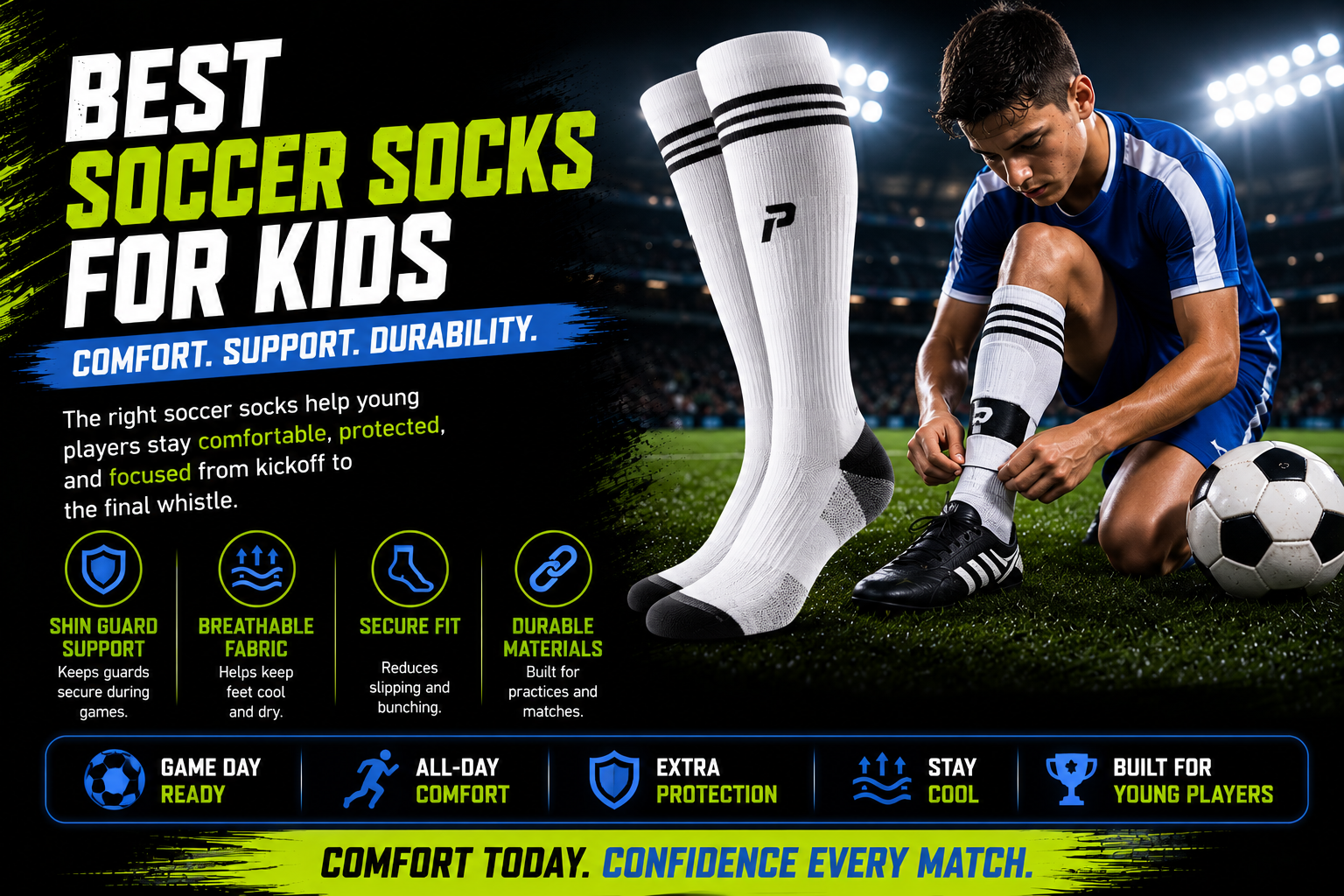
The best soccer socks for kids are over-the-calf socks that fit snugly without squeezing, stay up during running, hold shin guards securely, and feel comfortable inside cleats. Younger kids usually need soft, simple soccer socks, while older or more competitive players may prefer grip socks, sleeve socks, or thinner socks depending on cleat fit.
Why Kids Need the Right Soccer Socks
Soccer socks are not just part of the uniform. For kids, socks affect comfort, shin guard fit, cleat feel, and how often they stop during practice to adjust their gear. A sock that slides down, bunches up, or feels too tight can distract a young player the entire game.
Good youth soccer socks help keep shin guards in place, protect the lower leg from rubbing, and create a smoother fit inside soccer cleats. They should be easy enough for kids to pull on, secure enough for games, and durable enough for weekly washing.
For the full sock category, visit the Soccer Socks Hub. You can also compare this guide with our main Best Soccer Socks article.
Best Kids Soccer Sock Types
Best Features to Look For
When buying soccer socks for kids, focus on fit and comfort first. The sock should support shin guards without feeling painful, and it should not wrinkle inside the cleat.
The sock should feel snug but not tight, especially around the calf and ankle.
Good youth socks help keep shin guards covered and stable during running.
Comfortable material helps reduce rubbing, irritation, and complaints from younger players.
Thick socks add cushioning, while thin socks work better in tighter cleats.
Kids soccer socks should handle practice, games, washing, and cleat friction.
Younger kids need socks they can put on without a struggle before practice or games.
What Kids Soccer Socks Help With
The right socks make the rest of a child’s soccer gear work better together.
Soft socks reduce rubbing and help cleats feel better during long practices.
Over-the-calf socks help keep shin guards covered and secure.
The right sock thickness can improve how soccer cleats fit.
Kids play better when they are not distracted by sliding socks or uncomfortable gear.
Kids Soccer Socks Compared
Different youth soccer socks work better for different ages, cleat fits, and playing levels. Most kids should start with classic over-the-calf socks, then adjust if they need more grip or a different thickness.
| Sock Type | Best For | Main Advantage | Parent Buying Tip |
|---|---|---|---|
| Classic Youth Soccer Socks | Most kids and beginners | Simple shin guard coverage | Best first choice for most players |
| Thin Soccer Socks | Tight cleats | Less bulk inside the shoe | Useful if cleats feel too tight with thick socks |
| Cushioned Soccer Socks | Comfort-focused kids | More softness underfoot | Check that cleats still fit comfortably |
| Youth Grip Socks | Older competitive kids | Reduces sliding inside cleats | Best if the child already notices foot movement |
| Team Soccer Socks | Uniforms and games | Matches team colors | Keep extra pairs for tournaments |
Best Soccer Socks for Young Kids
Young kids usually need simple, soft, over-the-calf soccer socks. At this age, the goal is comfort and easy gear management. If the sock is too tight, too long, or too slippery, the child may complain before the game even starts.
Parents should look for socks that cover shin guards fully and stay up without needing constant tape. The socks should also be easy enough for the child to put on with minimal help.
For a full youth setup, compare this guide with Best Soccer Cleats for Kids and Best Soccer Shin Guards for Kids.
Best Soccer Socks for Shin Guards
One of the most important jobs of kids soccer socks is keeping shin guards secure.
If socks are too loose, shin guards can slide around. If socks are too tight, kids may feel uncomfortable or restricted. The right sock should hold the guard in place without making the lower leg feel squeezed.
- Choose over-the-calf socks for full shin guard coverage.
- Make sure the sock holds the guard without slipping.
- Check that the child can still move comfortably.
- Use sleeves if slip-in shin guards need extra support.
- Avoid socks that wrinkle behind the ankle or inside the cleat.
For more help, read Best Soccer Socks for Shin Guards and Soccer Shin Guard Size Chart.
Best Grip Socks for Kids
Grip socks can help older or more competitive kids if their feet slide inside cleats. But younger players do not always need them. If the child is comfortable in regular soccer socks and the cleats fit well, basic socks may be enough.
Grip socks are most useful for kids who sprint, cut, and change direction aggressively. They can create a more locked-in feel, but they also add thickness. If cleats already fit tight, grip socks may make the shoe uncomfortable.
For more detail, compare Best Grip Socks for Soccer and Grip Socks vs Soccer Socks.
Best Soccer Socks for Tight Cleats
Sock thickness can completely change how kids soccer cleats feel.
If a child’s cleats already fit snugly, thick socks may create pressure on the toes or sides of the foot. In that case, thinner soccer socks may be better. If the cleats feel slightly roomy, cushioned socks may improve comfort.
- Use thinner socks if cleats feel too tight.
- Use cushioned socks if cleats feel slightly firm but not small.
- Do not use thick socks to fix cleats that are too big.
- Test cleats with the socks the child will actually wear.
- Replace socks that bunch, stretch out, or slide inside shoes.
For fit guidance, read How to Fit Soccer Shoes and How to Measure Kids Soccer Cleats.
Best Soccer Socks for Practice vs Games
Practice socks and game socks can be the same, but many families prefer to separate them. Practice socks get dirty, stretched, and worn faster. Game socks should stay clean, match the uniform, and fit comfortably under shin guards.
For kids who play multiple times per week, it helps to keep several pairs in rotation. This prevents last-minute problems when one pair is dirty, missing, or still wet from washing.
| Use | Best Sock Type | Why It Helps |
|---|---|---|
| Weekly Practice | Durable classic socks | Handles repeated use and washing |
| Game Day | Team-colored soccer socks | Matches uniform and covers shin guards |
| Tournaments | Extra backup pairs | Useful for rain, sweat, and multiple games |
| Competitive Play | Grip socks or sleeve setup | Can improve cleat lockdown and match feel |
Other Gear to Pair with Kids Soccer Socks
Kids soccer socks work best when cleats and shin guards fit correctly too.
Cleat fit determines whether socks feel comfortable or too tight.
Socks should cover and support the shin guards during play.
Using the right ball size helps kids train properly by age.
Cones, rebounders, and goals help kids practice at home or with teams.
How Many Soccer Socks Do Kids Need?
Most kids should have more than one pair of soccer socks. One pair is rarely enough once practices, games, tournaments, rain, and laundry schedules begin.
A simple setup for many families is two or three practice pairs and one or two clean game pairs. Competitive players may need more, especially if they wear grip socks or play in weekend tournaments.
- Keep at least two practice pairs.
- Keep one or two clean game-day pairs.
- Pack an extra pair for tournaments.
- Replace socks that slide down or lose stretch.
- Label socks if the child plays on a team with similar uniforms.
Common Mistakes Parents Make
- Buying kids soccer socks that are too large.
- Choosing socks that bunch inside cleats.
- Using socks that are too tight around the calf.
- Buying thick socks without checking cleat fit.
- Not having extra socks for practice and tournaments.
- Using worn-out socks that no longer stay up.
- Assuming grip socks are necessary for every child.
- Ignoring whether socks hold shin guards securely.
Are Expensive Soccer Socks Worth It for Kids?
Expensive soccer socks can be worth it for older competitive kids who need grip, better durability, or a more secure match-day feel. But most younger players do not need premium socks right away.
For most kids, the best value is a comfortable sock that fits correctly, stays up, holds shin guards, and lasts through regular washing. Once a player becomes more serious, grip socks or sleeve socks may be worth comparing.
Ready to Compare Kids Soccer Socks?
The best soccer socks for kids should fit well, feel comfortable, stay up, hold shin guards securely, and work with the child’s cleats. Start with classic youth soccer socks, then consider grip socks or thinner socks if your child needs better cleat feel or traction.
Shop Kids Soccer Socks on AmazonRelated Soccer Gear Guides
Kids Soccer Socks FAQ
What are the best soccer socks for kids?
The best soccer socks for kids are comfortable over-the-calf socks that stay up, hold shin guards securely, fit well inside cleats, and last through regular washing.
Do kids soccer socks go over shin guards?
Yes. Traditional kids soccer socks go over shin guards to keep them covered and secure during practices and games.
Should kids wear grip socks for soccer?
Most younger kids do not need grip socks right away, but older or competitive kids may benefit if their feet slide inside cleats.
Should kids soccer socks be thick or thin?
It depends on cleat fit. Thick socks add cushioning, while thin socks are better if cleats already feel tight.
How many soccer socks should a child have?
Most kids should have several pairs, including practice socks, game socks, and at least one backup pair for tournaments or rainy days.
Why do my child’s soccer socks slide down?
Socks may slide down if they are too large, stretched out, too loose around the calf, or not designed to hold shin guards securely.
Can soccer socks make cleats too tight?
Yes. Thick soccer socks can make snug cleats feel too tight. If this happens, try thinner socks or reassess the cleat fit.
Are expensive soccer socks worth it for kids?
Expensive socks can be worth it for competitive kids, but most younger players only need comfortable, durable socks that fit correctly and hold shin guards.
We may earn a commission from qualifying purchases at no extra cost to you.