
Best Cold Weather Soccer Gear
The best cold weather soccer gear helps players stay warm, mobile, comfortable, and ready to train or compete when temperatures drop. Winter soccer requires smart layering: base layers for warmth, training pants for coverage, hoodies and jackets for sidelines, gloves and hats for comfort, and socks that keep cleats feeling secure without overheating.
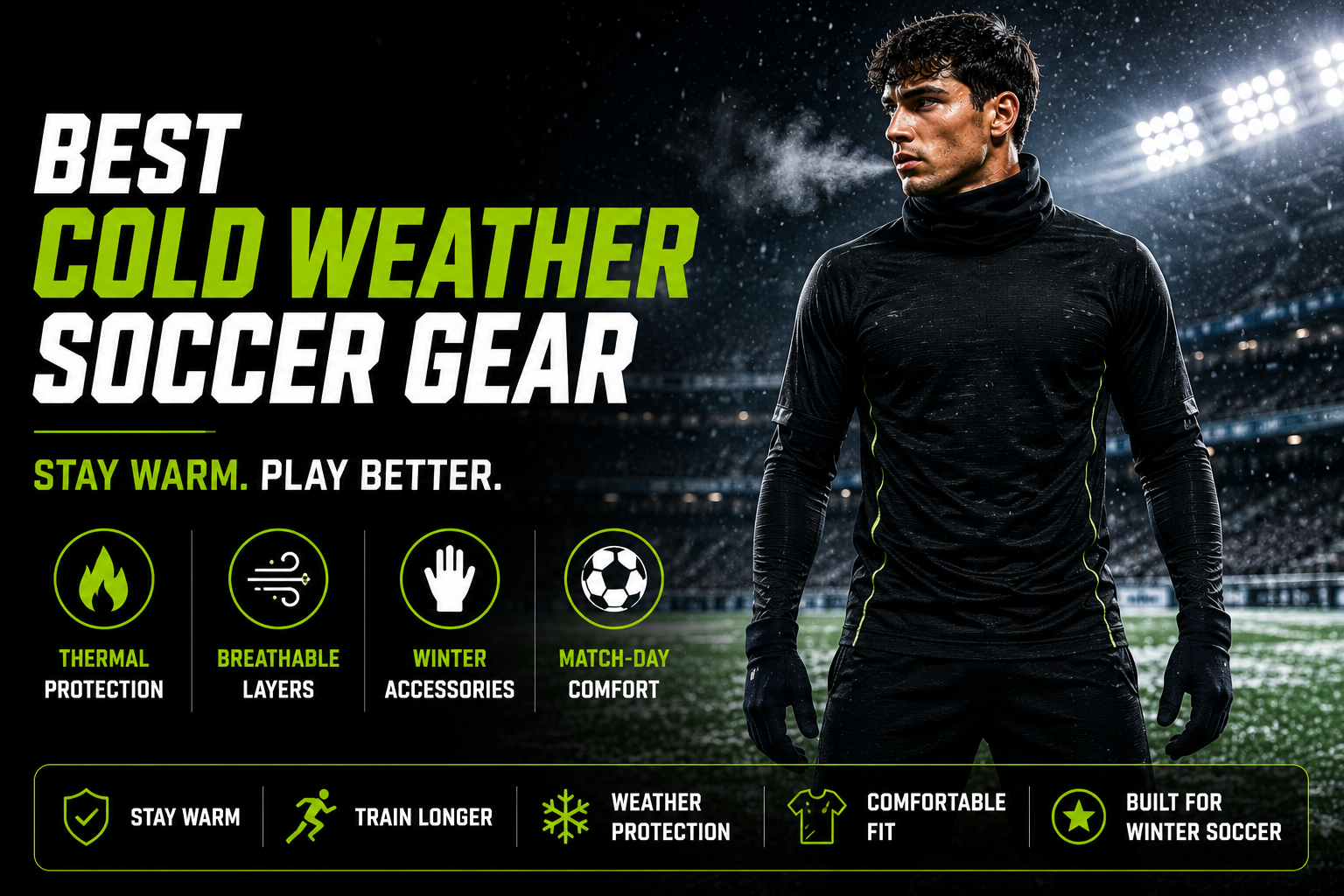
The best cold weather soccer setup starts with breathable base layers, a warm but flexible top layer, tapered training pants, soccer socks that still fit inside cleats, lightweight gloves, a beanie or headband for warmups, and a rain or wind jacket for sidelines. Players should layer for movement, not just warmth, because bulky winter clothing can restrict sprinting, passing, shooting, and ball control.
Why Cold Weather Soccer Gear Matters
Cold weather can make soccer training harder because players need warmth without losing mobility. A jacket that feels comfortable standing still may feel too heavy during drills. Pants that are warm on the sideline may bunch around cleats during ball work. Gloves that are too thick can bother goalkeepers or make throw-ins awkward.
The key is layering. Soccer players should use thin, athletic layers that trap warmth, manage sweat, and allow natural movement. The best winter soccer gear should help players warm up properly, stay comfortable between sessions, and avoid feeling stiff or distracted by bulky clothing.
For the full clothing category, visit the Soccer Apparel Hub. If you are building a winter outfit, compare this guide with Best Base Layers for Soccer, Best Soccer Training Pants, and Best Soccer Rain Jackets.
Best Cold Weather Soccer Gear Types
Best Features to Look For
Cold weather soccer gear should protect against cold, wind, and light rain while still allowing fast soccer movement. The wrong gear can overheat, restrict movement, or interfere with cleats and ball touch.
Warm gear should still manage sweat during high-intensity training.
Players need full range for sprinting, shooting, passing, and stretching.
Base layers, hoodies, jackets, and pants should work together without bulk.
Windbreakers and rain jackets help on wet, cold, or exposed fields.
Socks, pants, and base layers should not make cleats feel too tight.
Kids need gear that fits correctly instead of oversized adult winter layers.
What Cold Weather Soccer Gear Helps With
Layers help players stay warm before games and practices begin.
Good winter gear keeps players comfortable without restricting drills.
Jackets, hoodies, pants, hats, and gloves help players stay warm while waiting.
Cold weather gear is useful for tournaments, team buses, and long game days.
Cold Weather Soccer Gear Compared
| Gear Type | Best For | Main Advantage | Buying Tip |
|---|---|---|---|
| Base Layers | Cold-weather games and training | Warmth without bulky outerwear | Choose breathable thermal fabric |
| Compression Shirts | Upper-body layering | Snug fit under jerseys | Check visible sleeve color rules |
| Training Pants | Warmups and winter practices | Leg coverage and mobility | Choose tapered legs and ankle zippers |
| Rain Jackets | Cold rain and wind | Weather protection | Choose breathable water resistance |
| Soccer Hoodies | Travel and sidelines | Comfort and warmth | Better for downtime than intense play |
| Gloves and Hats | Cold hands, ears, and head | Extra comfort in low temperatures | Choose lightweight athletic options |
Best Base Layers for Cold Weather Soccer
Base layers are the foundation of cold weather soccer gear. A good base layer keeps warmth close to the body while managing sweat. This is important because players can feel cold before training, then heat up quickly once drills or games begin.
Long sleeve base layers are especially useful under jerseys during winter games. Compression shirts can also work well for players who prefer a snug athletic feel.
For the full guide, read Best Base Layers for Soccer and Best Soccer Compression Shirts.
Best Soccer Training Pants for Winter
Cold weather training pants should keep legs warmer without interfering with cleats or ball control.
Soccer training pants should be tapered, flexible, and easy to move in. In cold weather, players may wear them during warmups, practices, travel, or between tournament games.
- Choose tapered pants instead of baggy sweatpants.
- Look for ankle zippers if worn over cleats.
- Use warmer pants for cold sidelines.
- Use lighter pants for active training.
- Avoid pants that bunch around the ball or cleats.
For more detail, read Best Soccer Training Pants.
Best Soccer Jackets for Cold Weather
Cold weather soccer jackets should protect players from wind, light rain, and sideline chill. Rain jackets and windbreakers are useful because many cold soccer days also include wet grass, mist, drizzle, or windy fields.
For active warmups, choose a lightweight jacket that allows movement. For sidelines, a warmer jacket or hoodie may be more comfortable.
Compare Best Soccer Rain Jackets and Best Soccer Hoodies.
Best Cold Weather Soccer Gear for Youth Players
Kids and teens need winter soccer gear that keeps them warm without making movement awkward.
Youth players often get cold quickly on sidelines, but oversized jackets and pants can make warmups difficult. Parents should focus on proper sizing, breathable warmth, and easy layers that can be removed as the player warms up.
- Choose youth sizing when needed.
- Use thin base layers under jerseys.
- Pack gloves, hats, and extra socks.
- Bring a hoodie or jacket for sidelines.
- Keep dry clothes ready after wet games.
For more youth gear, compare Best Soccer Cleats for Kids, Best Soccer Socks for Kids, and Recovery Tools for Youth Soccer Players.
Cold Weather Soccer Gear for Games vs Training
Game-day gear and training gear are not always the same. During games, players may have uniform rules for visible base layers, sleeves, shorts, socks, and accessories. During training, players usually have more freedom to wear hoodies, jackets, gloves, and pants.
| Situation | Best Gear | Main Tip |
|---|---|---|
| Official games | Base layer, compression shorts, gloves if allowed | Check team and league color rules |
| Training sessions | Base layers, pants, hoodies, jackets | Choose movement and breathability |
| Sidelines | Hoodie, rain jacket, warm pants, hat, gloves | Keep players warm while waiting |
| Tournaments | Layers, extra socks, dry clothes, recovery gear | Prepare for long days and weather changes |
Other Gear to Pair with Winter Soccer Apparel
Good socks help keep cleats secure while adding comfort in colder conditions.
Compression shorts add lower-body support and coverage under soccer shorts.
Foam rollers, massage balls, and recovery slides help after cold sessions.
Cones, ladders, and rebounders help players stay sharp during winter training.
Simple Cold Weather Soccer Outfit
- Wear a breathable base layer under the jersey.
- Add compression shorts or tights if extra lower-body coverage is needed.
- Use soccer socks that still fit comfortably inside cleats.
- Wear tapered training pants for warmups or training.
- Add a hoodie for travel, sidelines, or after games.
- Use a rain jacket or windbreaker for wet or windy fields.
- Pack gloves and a beanie for cold sidelines.
- Bring dry clothes and extra socks for wet tournament days.
Common Cold Weather Soccer Gear Mistakes
- Wearing bulky layers that restrict sprinting or shooting.
- Using cotton clothing that holds sweat and feels cold later.
- Choosing pants that bunch around cleats.
- Ignoring team color rules for visible base layers.
- Forgetting gloves, hats, and dry socks for tournaments.
- Wearing thick socks that make cleats too tight.
- Using hoodies during intense training when overheating becomes a problem.
- Not packing dry clothes after rainy or cold games.
Is Cold Weather Soccer Gear Worth It?
Cold weather soccer gear is worth it for players who train or compete during winter, early mornings, evening practices, windy fields, or wet tournament weekends. The right layers can help players stay comfortable, warm, and focused without limiting movement.
The best setup does not need to be complicated. Start with base layers, training pants, gloves, a hoodie, and a rain or wind jacket. Then adjust based on the player’s age, climate, team rules, and training schedule.
Ready to Compare Cold Weather Soccer Gear?
Start with breathable base layers, tapered training pants, lightweight gloves, warm sideline layers, and a rain or wind jacket. Prioritize warmth, movement, breathability, cleat fit, and team rules.
Shop Cold Weather Soccer GearRelated Soccer Gear Guides
Cold Weather Soccer Gear FAQ
What is the best cold weather soccer gear?
The best cold weather soccer gear includes breathable base layers, tapered training pants, rain or wind jackets, hoodies, gloves, hats, warm socks, and dry post-game clothing.
What should soccer players wear in cold weather?
Soccer players should wear thin athletic layers, starting with a base layer, then adding training pants, jackets, gloves, and hats depending on the weather.
Are base layers good for winter soccer?
Yes. Base layers are one of the best winter soccer gear pieces because they add warmth without bulky outerwear.
Can kids play soccer in cold weather?
Kids can play soccer in cold weather when dressed properly, monitored for comfort, and given warm sideline layers and dry clothes after play.
Should soccer players wear hoodies in cold weather?
Hoodies are useful for warmups, travel, and sidelines, but they may be too warm or bulky for intense training or official matches.
Are thick socks good for cold weather soccer?
Thick socks can help with warmth, but they can also make cleats too tight. Players should prioritize cleat fit and comfort.
Can soccer players wear gloves during games?
Players often wear gloves in cold games if team and league rules allow them, especially during winter matches and early morning games.
What should players bring to cold soccer tournaments?
Players should bring base layers, extra socks, gloves, hats, hoodies, rain jackets, training pants, dry clothes, water, snacks, and recovery gear.
We may earn a commission from qualifying purchases at no extra cost to you.