
Best Soccer Ball Pumps
The best soccer ball pumps help players, parents, and coaches keep every ball ready for practice, games, camps, and tournaments. This guide compares hand pumps, electric pumps, pressure gauge pumps, needle kits, compact bag pumps, and team pump options for soccer balls.
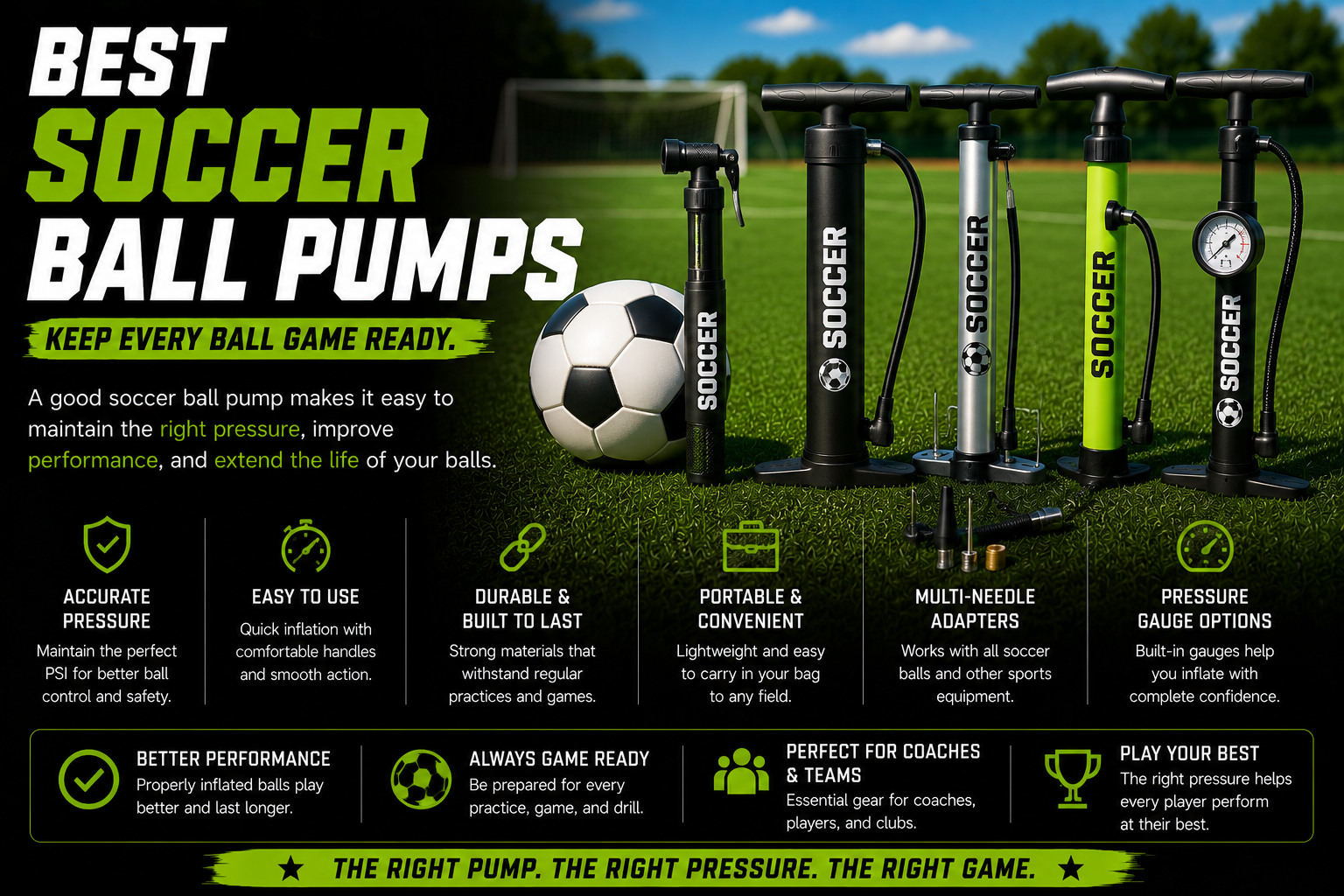
The best soccer ball pump for most players is a compact hand pump with extra needles and a flexible hose. Coaches and teams should consider a stronger pump with a pressure gauge or electric pump so multiple balls can be inflated quickly and consistently.
Best Soccer Ball Pumps at a Glance
Best Soccer Ball Pumps — Quick Comparison
| Pump Type | Best For | Main Advantage | Buying Tip |
|---|---|---|---|
| Hand Pump | Most players and parents | Portable, affordable, easy to keep in a bag | Choose one with a flexible hose |
| Pressure Gauge Pump | Coaches and match prep | Helps avoid underinflated or overinflated balls | Best for consistent ball feel |
| Electric Pump | Teams and multiple balls | Fast inflation with less effort | Check battery life and portability |
| Needle Kit | Backup and emergencies | Prevents one broken needle from ruining practice | Always keep extras in the coach bag |
| Mini Pump | Player backpacks | Small and lightweight | Best as a backup, not for team use |
Why Every Soccer Player Needs a Ball Pump
A soccer ball that is too soft can feel slow, heavy, and unpredictable. A ball that is too hard can feel uncomfortable and harder to control. A basic soccer ball pump helps players keep their ball closer to the right feel for passing, shooting, juggling, and training.
Parents often forget about pumps until the ball is already flat before practice. Coaches need them even more because team balls lose air over time, especially when they are used several times per week.
For the full soccer ball category, visit the Soccer Balls Hub. You can also compare Best Soccer Balls for Kids, Best Training Soccer Balls, and Best Match Soccer Balls.
Soccer Ball Pump Features That Matter
Needles bend, break, and get lost. A good pump should include backups.
A hose reduces pressure on the valve and makes pumping safer.
A gauge helps coaches keep balls consistent for practice and games.
Players and coaches should be able to keep the pump in a soccer bag.
Best Hand Pump for Soccer Balls
A hand pump is the best choice for most players and parents. It is affordable, easy to carry, and simple to keep inside a soccer backpack or gear bag.
The best hand pumps for soccer balls include a flexible hose and extra needles. The hose helps prevent the needle from bending inside the valve, which is one of the most common pump problems.
- Best for players, parents, and everyday use.
- Easy to keep inside a soccer backpack.
- Affordable and simple to use.
- Look for extra needles included.
- Flexible hose helps protect the ball valve.
For gear organization, compare Best Soccer Bags and Best Soccer Backpacks.
Best Soccer Ball Pump for Coaches
Coaches should use a stronger pump than most individual players need. A coach may need to inflate several soccer balls before practice, check ball pressure before a game, or fix a flat ball quickly during training.
For coaches, a pressure gauge is very useful because it helps keep all balls at a more consistent feel. This matters when players are passing, shooting, and training with several balls during the same session.
| Coach Need | Best Pump Feature | Why It Helps |
|---|---|---|
| Multiple balls | High-volume or electric pump | Saves time before practice. |
| Consistent feel | Pressure gauge | Helps avoid balls being too soft or too hard. |
| Emergency fixes | Extra needles | Prevents one broken needle from stopping setup. |
| Team bag storage | Compact design | Fits inside a coach or team equipment bag. |
For coach gear, read the Coaching Equipment Hub, Soccer Coaching Gear Checklist, and Best Team Equipment Bags.
Best Electric Pump for Soccer Balls
Electric pumps are best for coaches, teams, clubs, and families with multiple players. They are faster than hand pumps and require less effort when inflating several balls.
The downside is that electric pumps cost more and may need charging or batteries. They are not always necessary for one player, but they can be very useful for team managers and coaches who handle several balls every week.
- Best for coaches and teams with multiple balls.
- Faster than manual pumping.
- Useful before games and tournaments.
- Check battery life before buying.
- Still keep a manual pump as backup.
Best Soccer Ball Pump with Pressure Gauge
A pump with a pressure gauge is useful when you want more control over how firm the ball feels. This is especially helpful for coaches, older players, and anyone using match balls or training balls regularly.
A pressure gauge helps reduce guesswork. Instead of pumping until the ball “feels close,” coaches can keep multiple balls more consistent for drills, shooting, passing, and scrimmages.
- Best for coaches and serious players.
- Helps avoid overinflating soccer balls.
- Makes team balls feel more consistent.
- Useful for match balls and training sessions.
- Good upgrade from a basic hand pump.
What Should Be in a Soccer Ball Pump Kit?
| Item | Why It Matters | Best For |
|---|---|---|
| Hand pump | Basic inflation for balls before practice | Players and parents |
| Flexible hose | Protects the valve and needle | Everyone |
| Extra needles | Needles break or get lost easily | Players, coaches, teams |
| Pressure gauge | Checks ball firmness more accurately | Coaches and match prep |
| Small pouch | Keeps pump parts organized | Soccer bags and coach bags |
How to Pump a Soccer Ball Correctly
The most important rule is to insert the needle carefully and avoid bending it. A little care can protect both the pump needle and the ball valve.
- Moisten the needle slightly before inserting it.
- Insert the needle straight into the valve.
- Do not force or bend the needle.
- Pump slowly and check the ball firmness.
- Use a pressure gauge when possible.
- Remove the needle straight out when finished.
- Store the needle safely so it does not bend.
Hand Pump vs Electric Pump
| Pump Type | Best For | Tradeoff |
|---|---|---|
| Hand Pump | Players, parents, and simple use | Takes more effort for multiple balls. |
| Electric Pump | Coaches, teams, and clubs | Costs more and may need charging. |
| Gauge Pump | Match prep and consistent training | Slightly bulkier than basic pumps. |
| Mini Pump | Backup in soccer bags | Not ideal for inflating many balls. |
Common Soccer Ball Pump Mistakes
- Forcing the needle into the valve.
- Pumping without extra needles nearby.
- Overinflating the ball until it feels too hard.
- Using a bent needle and damaging the valve.
- Leaving the pump at home on game day.
- Buying a tiny pump for an entire team.
- Not storing the needle safely.
- Ignoring ball pressure before tournaments.
Who Needs a Soccer Ball Pump?
Final Verdict: What Is the Best Soccer Ball Pump?
The best soccer ball pump for most players is a compact hand pump with a flexible hose and extra needles. It is affordable, portable, and easy to keep inside a soccer bag.
For coaches and teams, a pump with a pressure gauge or an electric pump is usually better because it saves time and keeps multiple balls more consistent. The smartest setup is one main pump, extra needles, and a backup pump in the team bag.
Shop Soccer Ball PumpsRelated Soccer Gear Guides
Best Soccer Ball Pumps FAQ
What is the best pump for soccer balls?
The best pump for most soccer balls is a compact hand pump with a flexible hose and extra needles. Coaches may prefer a pump with a pressure gauge or electric pump.
Do soccer players need their own ball pump?
Yes. Players who train at home or bring their own ball should keep a small pump in their soccer bag.
Are electric pumps good for soccer balls?
Electric pumps are good for coaches and teams because they can inflate multiple balls quickly with less effort.
Why do soccer ball pumps need extra needles?
Needles can bend, break, or get lost. Extra needles prevent a flat ball from ruining practice or warmups.
Should I use a pressure gauge for soccer balls?
A pressure gauge is helpful because it keeps balls more consistent and helps avoid overinflating or underinflating them.
Can overinflating a soccer ball damage it?
Yes. Overinflating can make the ball too hard and may put stress on the seams, bladder, or valve.
What pump should soccer coaches use?
Coaches should use a durable pump with extra needles and ideally a pressure gauge. Teams with many balls may benefit from an electric pump.
Where should I keep a soccer ball pump?
Players should keep a small pump in their soccer backpack. Coaches should keep a pump, gauge, and extra needles in the team equipment bag.
We may earn a commission from qualifying purchases at no extra cost to you.