
Soccer Player Nutrition Guide
A good soccer player nutrition plan helps athletes fuel training, recover faster, stay hydrated, and perform with more consistency. Soccer players need carbohydrates for energy, protein for recovery, fluids for hydration, and balanced meals that support long practices, intense games, tournaments, and busy weekly schedules.
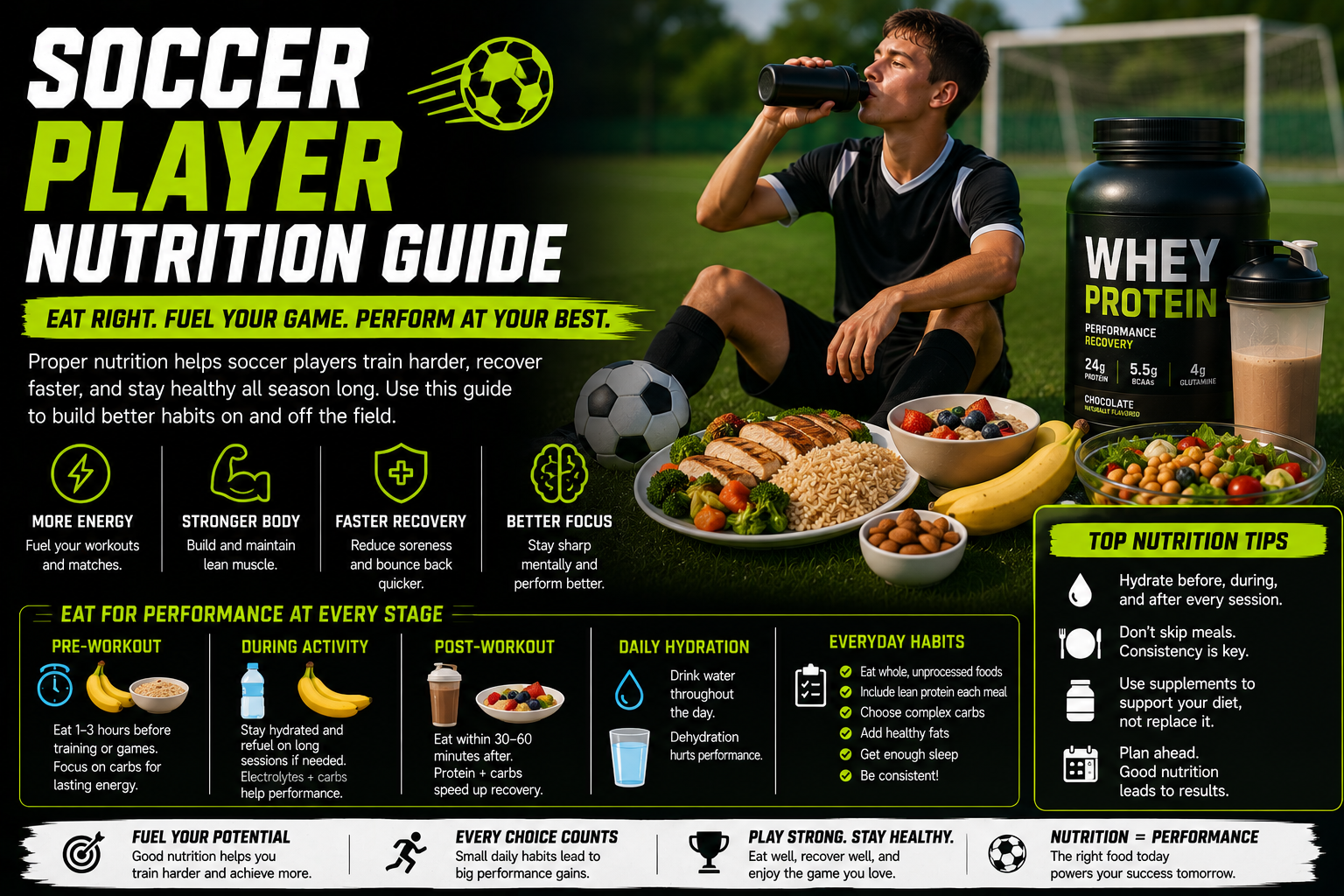
The best soccer nutrition plan includes carbs before training, protein and carbs after games, steady hydration throughout the day, balanced meals, recovery snacks, and tournament foods that are familiar and easy to digest. Players should avoid testing new foods, shakes, or supplements right before important games.
Soccer Nutrition Plan at a Glance
Soccer Player Nutrition Quick Comparison
| Nutrition Area | Main Goal | Best Options | Helpful Guide |
|---|---|---|---|
| Carbohydrates | Fuel running, sprinting, and game energy | Rice, pasta, potatoes, oats, bread, fruit, cereal | Game Day Meal Plan |
| Protein | Support recovery and muscle repair | Eggs, yogurt, chicken, fish, beans, tofu, shakes | Best Protein for Soccer Players |
| Hydration | Maintain performance and reduce fatigue | Water, electrolytes, recovery drinks, water bottles | Best Soccer Water Bottles |
| Recovery | Refuel after training and games | Milk, smoothies, yogurt, sandwiches, balanced meals | Best Recovery Drinks |
| Tournament Food | Stay fueled across multiple games | Sandwiches, fruit, yogurt, bars, rice bowls, shakes | Tournament Nutrition |
Why Nutrition Matters for Soccer Players
Soccer is a demanding sport because players run, sprint, change direction, jump, tackle, recover, and repeat those efforts for long periods. Nutrition helps support that workload before, during, and after soccer.
A player who eats too little may feel tired, slow, unfocused, or sore. A player who eats the wrong foods too close to kickoff may feel heavy or uncomfortable. The best soccer nutrition plan is simple, repeatable, and built around foods the player already tolerates well.
For more focused guides, visit the Soccer Nutrition Hub, Best Protein for Soccer Players, Best Protein for Young Athletes, and Nutrition for Youth Soccer Players.
Soccer Nutrition Priorities
Carbohydrates help players run, sprint, and maintain energy.
Protein and carbs after soccer support muscle repair and refueling.
Fluids and electrolytes help players handle heat and long sessions.
Consistent meals matter more than one perfect game-day snack.
What Should Soccer Players Eat Before a Game?
Before soccer, the goal is energy without stomach problems. Most players do best with familiar carbohydrate-based meals and moderate protein. Heavy, greasy, or high-fiber meals too close to kickoff can feel uncomfortable.
- Eat a balanced meal 2–4 hours before kickoff when possible.
- Use carbohydrates like rice, pasta, potatoes, oats, bread, or fruit.
- Add moderate protein like eggs, chicken, yogurt, turkey, beans, or tofu.
- Keep fats and very heavy foods lower close to game time.
- Drink fluids steadily before arriving at the field.
- Do not test new foods before important matches.
Soccer Meal Timing Guide
| Timing | Goal | Meal / Snack Ideas |
|---|---|---|
| Night Before | Build fuel stores | Rice bowl, pasta, potatoes, lean protein, vegetables, water |
| 3–4 Hours Before | Main pre-game meal | Chicken and rice, turkey sandwich, eggs and toast, oatmeal, pasta |
| 60–90 Minutes Before | Light top-off snack | Banana, applesauce, toast, granola bar, cereal, crackers |
| After Soccer | Recovery | Chocolate milk, yogurt, smoothie, sandwich, eggs, dinner meal |
| Evening | Refuel and repair | Protein, carbs, vegetables, fluids, and sleep |
Best Carbs for Soccer Players
Carbohydrates are the main fuel source for soccer. Players who under-eat carbs may struggle with energy during intense practices, second halves, and tournament weekends.
Good carb sources include rice, pasta, potatoes, oats, cereal, bread, tortillas, fruit, applesauce, granola, crackers, and sports drinks when appropriate for long or hot sessions.
- Rice and pasta for meals before games.
- Potatoes or sweet potatoes with dinner.
- Oats, cereal, toast, or fruit at breakfast.
- Bananas, applesauce, or granola bars before training.
- Simple carbs between tournament games when digestion matters.
Best Protein for Soccer Players
Protein helps soccer players recover after practices, games, and strength training. It supports muscle repair, growth, and consistency across busy weeks.
Good protein options include eggs, Greek yogurt, milk, chicken, turkey, fish, lean meats, beans, lentils, tofu, protein shakes, and protein bars when convenience matters.
- Use protein after training or games.
- Pair protein with carbs for better recovery meals.
- Use whole foods first when possible.
- Use shakes when meals are delayed or travel makes eating hard.
- Choose products that digest well and have simple labels.
Full guide: Best Protein for Soccer Players.
Best Recovery Meals After Soccer
| Recovery Meal | Why It Works | Best For |
|---|---|---|
| Greek yogurt with fruit and granola | Protein plus carbs | After practice |
| Chicken and rice bowl | Balanced recovery meal | Dinner after games |
| Turkey sandwich with fruit | Portable protein and carbs | Tournaments |
| Chocolate milk | Simple recovery drink | Quick post-game option |
| Eggs, toast, and fruit | Whole-food recovery | Morning games |
| Smoothie with yogurt and fruit | Easy when appetite is low | Late practices |
Soccer Hydration Plan
Hydration affects energy, focus, and comfort on the field. Soccer players should drink regularly throughout the day, not only during the match.
Water is enough for many practices, but long games, hot weather, heavy sweating, and tournaments may require electrolytes or sports drinks. Players should test hydration strategies during training before relying on them in games.
- Drink water throughout the day before soccer.
- Bring a bottle to every practice and game.
- Use electrolytes during hot weather or heavy sweating.
- Replace fluids after games and tournaments.
- Monitor urine color and thirst as basic hydration clues.
- Avoid waiting until the player is already thirsty.
Helpful guide: Best Soccer Water Bottles.
Nutrition by Soccer Situation
Eat steady meals, hydrate early, and recover after training.
Use familiar pre-game carbs and avoid heavy new foods.
Pack portable meals, snacks, drinks, and recovery backups.
Use easy recovery foods like smoothies, yogurt, milk, or sandwiches.
Soccer Tournament Nutrition Plan
Tournament nutrition requires planning because players may have multiple games, heat, travel, parking delays, and limited food options. The best foods are familiar, portable, and easy to digest.
- Pack sandwiches, rice bowls, yogurt, fruit, crackers, bars, and water.
- Use a cooler for milk, yogurt, smoothies, sandwiches, and prepared meals.
- Eat lighter between games and larger meals after the final match.
- Pair protein with carbs for recovery between games.
- Bring electrolytes for hot weather or heavy sweating.
- Do not rely only on concession stand food.
Full guide: Soccer Tournament Nutrition Guide.
Best Soccer Snacks by Situation
| Situation | Snack Ideas | Goal |
|---|---|---|
| Before Practice | Banana, toast, cereal, applesauce, granola bar | Quick energy |
| After Practice | Yogurt, milk, smoothie, sandwich, eggs | Recovery |
| Between Games | Fruit, crackers, half sandwich, bar, electrolyte drink | Light refuel |
| Long Travel | Wraps, trail mix, yogurt cooler, protein bar, water | Reliable food access |
| Late Night | Smoothie, milk, yogurt, rice bowl, leftovers | Easy recovery |
Nutrition for Youth Soccer Players
Youth soccer players need food that supports both sports and healthy growth. Parents should focus on balanced meals, hydration, recovery snacks, and simple routines instead of complicated supplements.
Most youth players do best with real foods first: eggs, yogurt, milk, rice, pasta, chicken, fish, beans, fruit, vegetables, sandwiches, and familiar snacks. Protein powders can be convenient sometimes, but they should not become the main plan.
- Food first for kids and teens.
- Use carbs before soccer for energy.
- Use protein after soccer for recovery.
- Keep hydration simple and consistent.
- Avoid high-caffeine or extreme supplement products.
- Ask a qualified professional if there are medical or dietary concerns.
Full guide: Nutrition for Youth Soccer Players.
Game Day Meal Plan Example
| Game Time | Meal Plan Example | Notes |
|---|---|---|
| Morning Game | Toast, eggs, banana, yogurt, water | Keep it familiar and not too heavy. |
| Afternoon Game | Rice or pasta meal 3–4 hours before, snack before warmup | Use carbs plus moderate protein. |
| Evening Game | Balanced lunch, pre-game snack, recovery dinner after | Hydrate throughout the day. |
| Two Games Same Day | Main meal early, light snacks between, recovery meal after | Avoid heavy foods between games. |
Full guide: Soccer Game Day Meal Plan.
What Soccer Players Should Avoid Before Games
- New foods the player has never tested.
- Very greasy or heavy meals close to kickoff.
- Too much protein right before playing if it feels heavy.
- Too much fiber immediately before games.
- Skipping meals and trying to play on low energy.
- Waiting until warmups to start hydrating.
- High-caffeine products, especially for younger players.
- Relying only on candy or concession snacks.
Final Verdict: What Is the Best Soccer Player Nutrition Plan?
The best soccer player nutrition plan is simple: eat enough, use carbohydrates for energy, include protein for recovery, hydrate throughout the day, and choose familiar foods before games. Players should build consistent habits instead of chasing complicated supplements.
For most players, meals matter more than products. Shakes, bars, sports drinks, and recovery drinks can help when convenient, but the foundation should be balanced meals, steady hydration, enough sleep, and smart recovery after soccer.
Shop Soccer Nutrition GearRelated Soccer Nutrition Guides
Soccer Player Nutrition FAQ
What should soccer players eat before a game?
Soccer players should usually eat familiar carbohydrate-based meals with moderate protein before games, such as rice, pasta, potatoes, toast, eggs, yogurt, chicken, fruit, or sandwiches.
What should soccer players eat after a game?
After soccer, players should include protein plus carbohydrates, such as yogurt with fruit, chocolate milk, a turkey sandwich, chicken and rice, eggs and toast, or a balanced dinner.
Do soccer players need protein?
Yes. Protein helps soccer players recover and repair muscle after practices, games, and strength training, especially when paired with enough carbs and fluids.
Are carbs good for soccer players?
Yes. Carbohydrates are important because soccer requires running, sprinting, cutting, and repeated high-intensity efforts.
What should youth soccer players eat?
Youth soccer players should focus on balanced meals with carbs, protein, fruits, vegetables, fluids, and recovery snacks rather than complicated supplements.
What should soccer players drink during games?
Water is enough for many players, but electrolytes or sports drinks can help during hot weather, long matches, heavy sweating, or tournament days.
What foods should soccer players avoid before games?
Players should avoid new foods, very greasy meals, heavy foods too close to kickoff, excessive caffeine, and anything that has caused stomach discomfort before.
What is the best tournament food for soccer?
Good tournament foods include sandwiches, fruit, yogurt, rice bowls, crackers, bars, milk, smoothies, water, and electrolyte drinks packed in a cooler when needed.
We may earn a commission from qualifying purchases at no extra cost to you. This article is for general informational purposes only and is not medical advice.