Best Soccer Balls for Kids
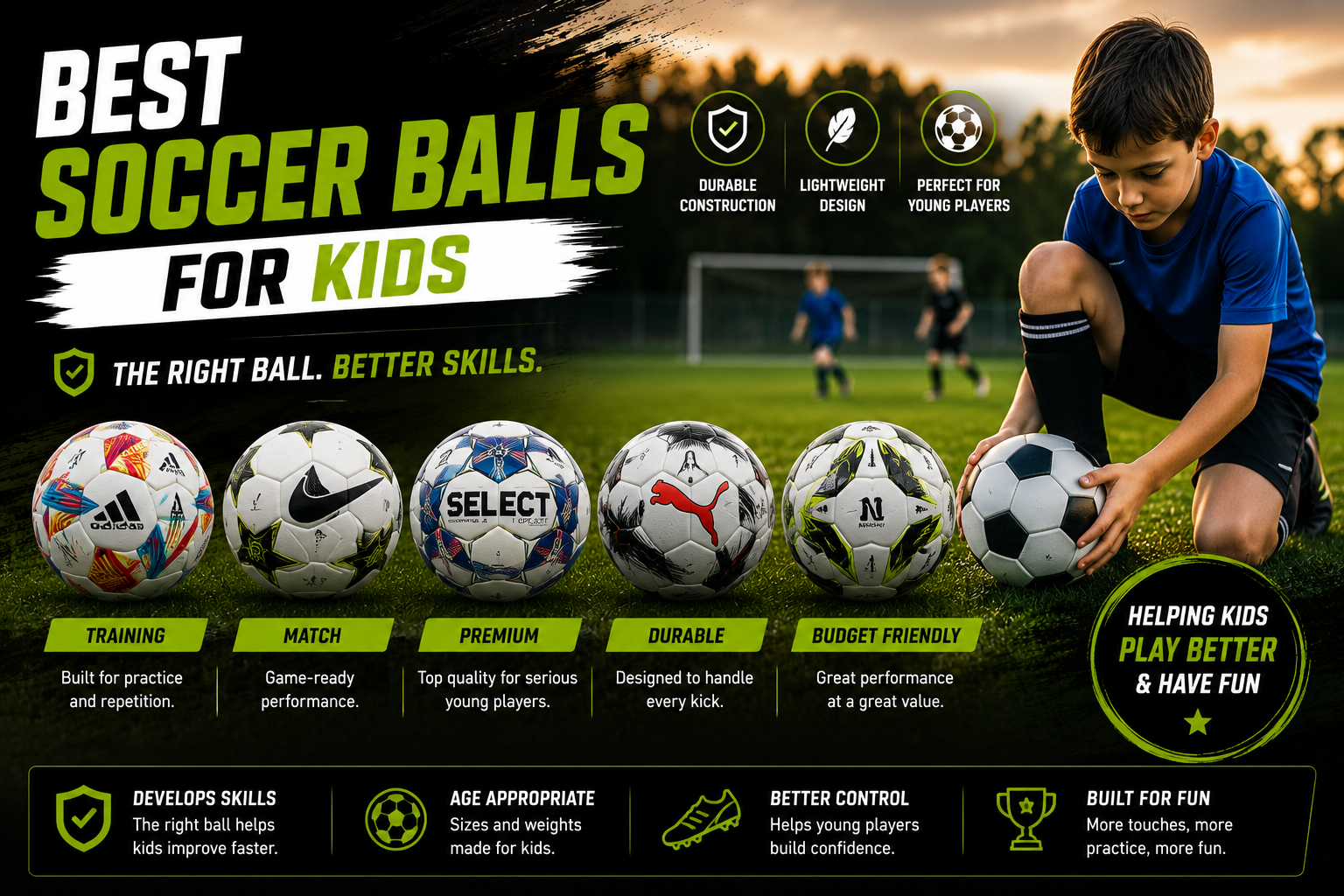
The best soccer ball for kids depends mostly on age, size, skill level, and how the ball will be used. Younger players need smaller soccer balls that are easier to kick and control, while older youth players need durable training balls that match league rules and support real skill development.
Affiliate disclosure: We may earn a commission from qualifying purchases, at no additional cost to you.
Quick answer
Choose ball size before brand: size 3 for most U8 players, size 4 for most U9–U12 players, and size 5 from U13 onward unless the league specifies otherwise. A durable machine-stitched training ball is the best first purchase for most families.
At a glance
Best Soccer Balls for Kids compared
Use the purpose, fit, surface, and budget columns to narrow the shortlist before checking current sizes and availability.
| Pick | Best for | Fit or use | Surface | Shop |
|---|---|---|---|---|
| 1Durable Size 3 Training Ball | Best for younger kids | U8 guideline | Training | See options |
| 2Quality Size 4 Training Ball | Best overall youth | U9–U12 guideline | Training | See options |
| 3Size 5 Youth Match Ball | Best for older youth | U13+ guideline | Matches | See options |
| 4Low-Bounce Futsal Ball | Best indoors | Age-sized option | Futsal | See options |
Our shortlist
The strongest options by need
Each choice serves a different player or use case. Confirm the exact product generation, size, and surface label before checkout.
Durable Size 3 Training Ball
A lighter, manageable ball for early touches, dribbling, and confidence.
Quality Size 4 Training Ball
The standard development size for many U9–U12 leagues and home practice.
Size 5 Youth Match Ball
Regulation adult size for many U13+ players; choose only when age rules allow.
Low-Bounce Futsal Ball
Reduced bounce supports close control on hard indoor courts.
Buying advice
How to choose correctly
A famous logo cannot compensate for the wrong fit, size, surface, or intended use.
Identify the player’s age, level, field or court, practice frequency, and the problem the equipment must solve.
Follow the current manufacturer chart, measure when relevant, and avoid buying excessive room for growth.
Stable, comfortable equipment used correctly is more valuable than premium features the player cannot benefit from.
Choose durability and function appropriate to the player’s stage rather than paying automatically for the highest tier.
How we evaluate
A parent-first selection method
We separate the strongest options by need and state the limitations instead of presenting one universal winner.
- Age, playing level, and intended use
- Fit, comfort, and safe equipment selection
- Surface or environment compatibility
- Durability relative to price
- Clear reasons to choose or skip each option
Questions answered
Best Soccer Balls for Kids FAQ
What size soccer ball should a child use?
Most U8 players use size 3, most U9–U12 players use size 4, and many U13+ players use size 5. Confirm the league rule because local programs can differ.
What is the best soccer ball for a beginner?
A durable age-appropriate training ball with predictable bounce is usually better than an expensive match ball.
Should kids use a size 4 or size 5 ball?
Use the size required for the child’s age group. Moving to size 5 too early can make technique harder and less enjoyable.
Are training balls good for kids?
Yes. They are designed for repeated practice and usually offer better value and durability than match balls.
Are match balls worth it for kids?
They can be worthwhile for competitive older players, but most children benefit more from a durable training ball.
How much air should a kids soccer ball have?
Inflate within the pressure range printed near the valve. The ball should feel firm but still compress slightly under a thumb.
Can kids use adult soccer balls?
Only when their age group uses size 5. Younger players should practice with the correct smaller size.
Choose for the player—not the logo
Confirm the exact model, size, intended use, and current availability before ordering.
Check current optionsExplore this topic