Best Soccer Cleats for Toddlers
Compare toddler soccer cleats with easy closures, flexible soles, comfortable fit, and age-appropriate traction for first practices.
Affiliate disclosure: We may earn a commission from qualifying purchases, at no additional cost to you.
Quick answer
For toddlers and preschoolers, the best cleat is simple to put on, flexible enough for natural movement, comfortable immediately, and matched to the field. Prioritize fit and easy closures over elite materials or position-specific marketing.
Current shortlist
Five indoor or surface-matched directions to compare
These are useful starting points, not a promise that one shape fits every player. Product generations and stock change, so confirm the exact outsole and size shown by the seller.
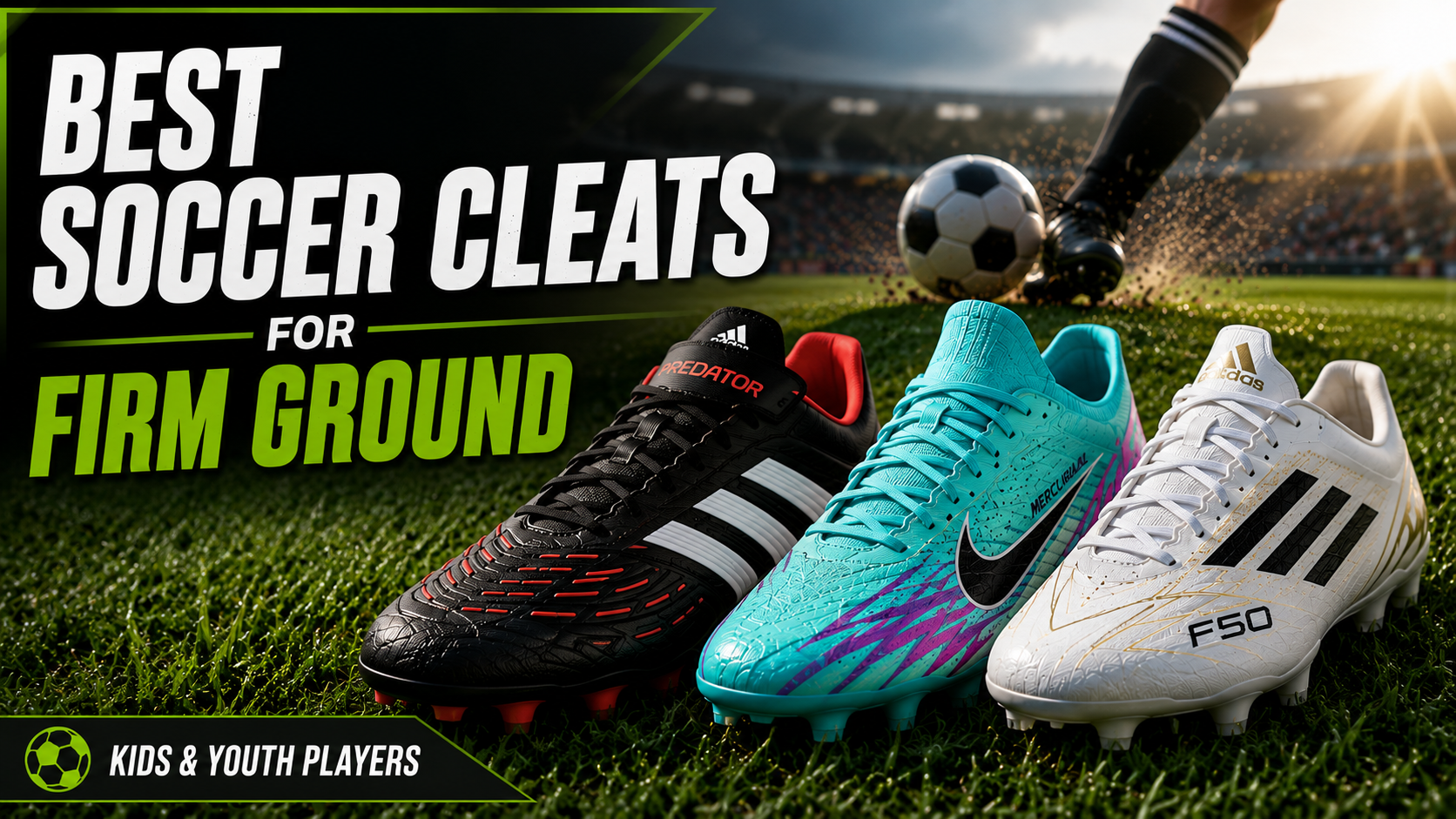
Nike Jr. Tiempo Club Flex MG
Designed for little kids with an accessible closure concept and a multi-ground outsole for common youth fields. Verify current sizing, outsole label, and availability before ordering.
Nike Jr. Mercurial Vapor Club MG
A widely available youth model with a simple low-cut shape and multi-ground configuration. Verify current sizing, outsole label, and availability before ordering.
adidas Goletto kids FG/MG
A straightforward beginner cleat family often offered in small youth sizing and firm/multi-ground formats. Verify current sizing, outsole label, and availability before ordering.
PUMA Future Play kids FG/AG
A softer entry-level family for children who dislike rigid uppers, subject to correct sizing. Verify current sizing, outsole label, and availability before ordering.
Turf version of a familiar youth model
If the league plays on short synthetic turf, choose the turf outsole instead of outdoor studs. Verify current sizing, outsole label, and availability before ordering.
Decision table
Compare the details that change the choice
| Factor | Primary direction | What to look for |
|---|---|---|
| Closure | Child and parent can secure it consistently | Practice independence |
| Flex | Bends naturally at forefoot | Avoid stiff, heavy feel |
| Fit | Small usable toe room; stable heel | Recheck during growth spurts |
| Surface | Outsole matches league field | Ask coach before buying |
Choose by surface
The outsole decision comes before the model
The same shoe family may be sold with indoor, turf, artificial-grass, firm-ground, multi-ground, or soft-ground outsoles. Those versions are not interchangeable. Read the full product name and inspect the outsole instead of relying on the colorway or upper.
Start with the field you actually use
Ask the coach or facility whether the surface is a hard court, short-pile turf, modern artificial grass, or natural grass. “Indoor” can describe the building while the field itself is turf. Likewise, “artificial” can refer to surfaces with very different pile and infill.
Fit is a separate decision
Once the outsole is correct, evaluate length, width, heel hold, and internal volume. A secure performance fit should not require painful pressure. Wear normal soccer socks, test both feet, and make controlled stops and lateral movements before keeping a pair.
Do not buy around marketing alone
Speed, control, and touch labels help organize product families, but they do not override foot shape. A comfortable shoe with the correct outsole will normally be more useful than an elite model that pinches, slips, or mismatches the surface.
Practical safety note
Surface compatibility affects traction and how easily the foot releases during turns. Facility rules, league rules, weather, field condition, and manufacturer guidance should control the final choice. Replace footwear when studs or rubber traction elements are worn unevenly or the sole begins separating.
Buying process
A four-step way to choose
Confirm the surface
Get the field or court type from the league, coach, or facility. Never infer it only from the word indoor.
Filter by outsole
Look for the exact IC, TF, AG, FG, MG, FG/MG, or SG designation and read the brand’s intended-use language.
Choose the foot shape
Compare natural, contoured, wide, and higher-volume shapes. Do not add unnecessary length merely to solve width pressure.
Test real movement
In clean conditions, walk, stop, rise onto the toes, and shuffle laterally. Reject painful pressure or repeated heel lift.
Questions answered
Best Soccer Cleats for Toddlers FAQ
Do toddlers need soccer cleats?
It depends on the league and surface. Some beginner programs permit athletic shoes; confirm the rules before purchasing.
Should toddler cleats have room to grow?
Allow modest practical room, but avoid oversized shoes that slide, rub, or make running less stable.
Are laces or hook-and-loop closures better?
Either can work. Choose the closure that produces a secure, repeatable fit and is manageable for the child and parent.
Can toddlers wear firm-ground cleats on turf?
Use the outsole recommended for the specific field. Turf shoes are generally a better match for short synthetic turf.
How often should parents check fit?
Check before the season, after growth spurts, and whenever the child reports pain or begins resisting the shoes.
Match the shoe to the surface and foot
Confirm the outsole label, test the fit in soccer socks, and choose secure comfort over model hype. Current colors and inventory can change without changing the core buying logic.
Check current options on AmazonExplore this topic