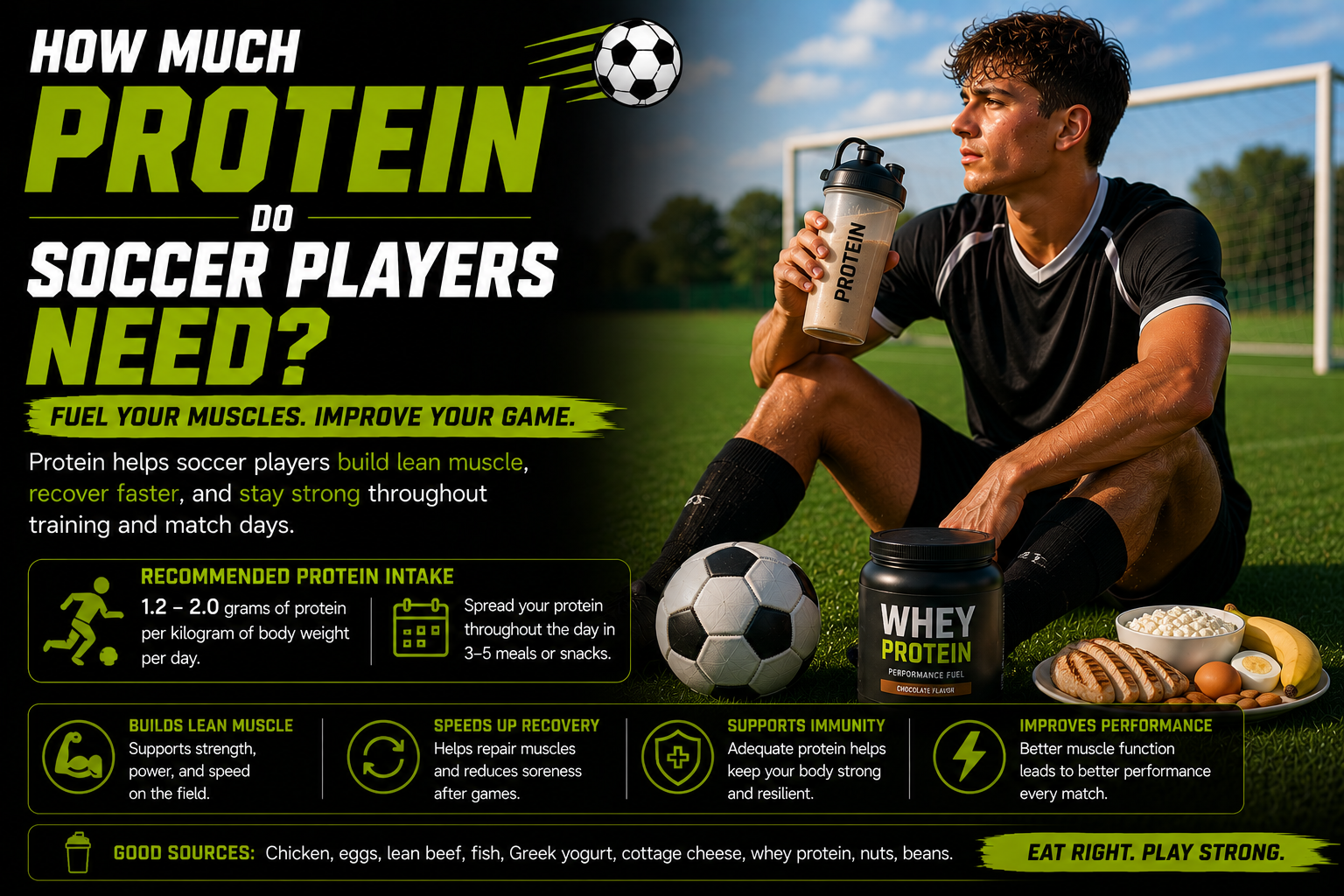
How Much Protein Do Soccer Players Need? (Daily Intake Guide)
Soccer Protein Guide

How Much Protein Do Soccer Players Need?

Soccer players need enough protein to support recovery, muscle repair, growth, strength training, and consistency across busy weeks of practices, games, tournaments, and workouts. The right daily protein intake depends on age, body size, training load, goals, appetite, and total food intake.

How much protein do soccer players need daily intake guide
Quick Answer:
Soccer players generally need consistent protein across the day, especially after training and games. Many active athletes commonly aim for a protein range around 1.2–2.0 grams per kilogram of body weight per day, depending on training load, age, recovery needs, and goals. Youth players should focus on food-first protein and ask a qualified professional for personalized guidance.

Soccer Protein Plan at a Glance

Daily IntakeProtein should be spread across meals and snacks, not saved for one huge serving.
After SoccerProtein plus carbohydrates supports recovery after games and practices.
Food FirstEggs, yogurt, milk, chicken, fish, beans, tofu, and lean meats should lead.
ShakesProtein shakes can help when meals are delayed, but they should not replace food.

Soccer Player Protein Intake Quick Comparison

Player Type Protein Focus Best Sources Helpful Guide
Youth Soccer Player Healthy growth, recovery, and balanced meals Eggs, milk, yogurt, chicken, beans, tofu, fish Protein for Young Athletes
Teen Soccer Player Recovery from soccer and strength training Greek yogurt, eggs, chicken, turkey, milk, lean meats Youth Soccer Nutrition
Competitive Player Consistent recovery across practices and matches Chicken, fish, lean beef, dairy, beans, tofu, shakes Best Protein for Soccer Players
Tournament Player Portable recovery between games Yogurt, milk, sandwiches, bars, shakes, eggs Tournament Nutrition
Low-Appetite Player Easy protein when food feels hard after soccer Smoothies, milk, yogurt, shakes, drinkable protein Shake Timing

Why Soccer Players Need Protein

Soccer is a high-output sport. Players run, sprint, accelerate, decelerate, change direction, jump, challenge, defend, press, and repeat those actions over and over. That workload creates a recovery demand after practices, games, tournaments, and gym sessions.

Protein helps support muscle repair and recovery. It is especially important after hard games, strength training, long tournaments, and weeks with multiple sessions. But protein is only one part of the plan. Soccer players also need carbohydrates for fuel, fluids for hydration, and enough total calories to support training.

For the full nutrition foundation, read the Soccer Player Nutrition Guide, Best Protein for Soccer Players, and the main Soccer Nutrition Hub.

Protein Priorities for Soccer Players

Recover

Protein helps support muscle repair after practices, games, tournaments, and strength sessions.

Spread It Out

Most players do better with protein across meals and snacks instead of one huge serving.

Pair With Carbs

After soccer, protein works best in a recovery meal that also includes carbohydrates and fluids.

Food First

Whole foods should be the foundation, with shakes and bars used for convenience when needed.

How Much Protein Do Soccer Players Need Per Day?

Protein needs depend on the player. Age, body weight, training volume, strength training, growth, recovery goals, injury history, appetite, and total food intake all matter. A player training once per week does not need the same plan as a competitive player training several days per week.

A common sports nutrition range for many active athletes is about 1.2–2.0 grams of protein per kilogram of body weight per day. Soccer players may fall within that range depending on training load and goals. This article is general information, not medical advice, and athletes with special needs should work with a qualified professional.

  • Use daily consistency instead of one huge protein meal.
  • Include protein at breakfast, lunch, dinner, and recovery snacks.
  • Pair protein with carbohydrates after practices and games.
  • Use whole foods first whenever possible.
  • Use shakes or bars only when convenience is needed.
  • For youth players, prioritize balanced meals and healthy growth.

Protein Intake Example by Body Weight

Body Weight Approx. Weight in Kilograms Example Daily Protein Range Notes
80 lb 36 kg About 43–72 g/day Use food-first meals and parent guidance for youth players.
100 lb 45 kg About 54–90 g/day Spread protein across meals and snacks.
120 lb 54 kg About 65–108 g/day Useful for active teen players with regular training.
150 lb 68 kg About 82–136 g/day Training load and strength work affect needs.
180 lb 82 kg About 98–164 g/day Competitive adults may need higher consistency.

These are general examples, not personalized prescriptions. A sports dietitian, doctor, or qualified professional can help with individual needs.

Best Protein Sources for Soccer Players

Most soccer players should build their protein plan from regular foods. Protein powder can be useful, but it should not replace breakfast, lunch, dinner, snacks, hydration, and carbohydrates.

  • Eggs for breakfast or post-game recovery meals.
  • Greek yogurt with fruit and granola.
  • Milk or chocolate milk after games if tolerated.
  • Chicken, turkey, fish, or lean meat with rice, pasta, or potatoes.
  • Beans, lentils, tofu, or tempeh for plant-based players.
  • Cottage cheese, cheese, or yogurt snacks if tolerated.
  • Protein shakes when a full meal is delayed.
  • Protein bars for travel, tournaments, or emergency backup.

For product-style guidance, read Best Protein for Soccer Players.

How to Build a Daily Soccer Protein Plan

1. Add breakfast protein

Use eggs, yogurt, milk, cottage cheese, tofu, or a smoothie to start the day.

2. Include lunch protein

Use chicken, turkey, tuna, beans, tofu, yogurt, or leftovers with carbs.

3. Recover after soccer

Pair protein with carbs after practices and games to support recovery.

4. Use backups wisely

Use shakes or bars when meals are delayed, not as the main nutrition plan.

Protein Timing for Soccer Players

Protein timing does not need to be complicated. The most important goal is to eat enough protein across the day and include protein after soccer when recovery matters.

After a game or practice, protein should usually be paired with carbohydrates. Soccer players use a lot of energy, so a recovery snack that is only protein may miss the refueling part of the equation.

  • Use protein at breakfast, lunch, and dinner.
  • Add protein after practices, games, and workouts.
  • Pair protein with carbs after soccer.
  • Use a snack if a full meal is delayed.
  • Do not rely on a huge protein serving at night to fix a low-protein day.
  • Do not test a new protein shake before an important match.

Helpful timing guide: Protein Shake Before or After Soccer?

Protein Timing Guide for Soccer Players

Timing Protein Goal Meal or Snack Ideas
Breakfast Start daily protein early Eggs and toast, yogurt with fruit, smoothie, milk, tofu scramble
Lunch Support afternoon training energy Turkey sandwich, chicken rice bowl, beans and rice, tuna wrap
Before Soccer Keep protein moderate with carbs Eggs with toast, yogurt with cereal, chicken and rice, sandwich
After Soccer Support recovery and repair Chocolate milk, yogurt with fruit, smoothie, sandwich, eggs, dinner meal
Evening Continue recovery Balanced dinner with protein, carbs, vegetables, and fluids

Protein Before vs After Soccer

Protein can be part of a pre-game meal, but it should not crowd out carbohydrates. Before soccer, the main priority is energy from carbs plus moderate protein. After soccer, protein becomes more important because the body is recovering from match demands.

  • Before soccer: use moderate protein with carbohydrates.
  • Before soccer: avoid very heavy protein meals close to kickoff.
  • After soccer: use protein plus carbohydrates for recovery.
  • After soccer: use a snack if dinner is delayed.
  • After soccer: drink fluids and replace what was lost through sweat.

For food timing around games, read What Should Soccer Players Eat Before a Game? and What Should Soccer Players Eat After a Game?.

Protein Needs by Soccer Situation

Practice Day

Use protein across meals and add recovery food after training.

Game Day

Use moderate protein before kickoff and protein-plus-carbs after the match.

Tournament Day

Pack portable protein like yogurt, milk, sandwiches, bars, or tested shakes.

Strength Training

Protein consistency matters more when players are also lifting or building strength.

Protein for Youth Soccer Players

Youth soccer players need protein for recovery, normal growth, and overall nutrition, but the approach should be food-first and balanced. Kids and teens should not be pushed into extreme supplement routines or adult-style bodybuilding habits.

Good youth protein options include eggs, milk, yogurt, chicken, turkey, fish, beans, lentils, tofu, cheese, smoothies, and balanced family meals. Protein powder may be convenient in some cases, but it should not become the main nutrition plan for young athletes.

  • Focus on balanced meals before supplements.
  • Use protein after soccer with carbohydrates.
  • Include protein at normal meals and snacks.
  • Avoid high-caffeine or stimulant-style products.
  • Do not use extreme high-protein dieting for youth athletes.
  • Ask a qualified professional for personalized youth nutrition advice.

Helpful youth guides: Best Protein for Young Athletes and Nutrition for Youth Soccer Players.

High-Protein Soccer Meal Ideas

Meal or Snack Protein Source Best Timing
Eggs, toast, and fruit Eggs Breakfast or after morning games
Greek yogurt with granola and berries Greek yogurt Snack or recovery meal
Chicken and rice bowl Chicken Lunch, dinner, or post-game meal
Turkey sandwich with fruit Turkey Travel games and tournaments
Beans and rice bowl Beans Plant-based meals
Smoothie with yogurt and milk Yogurt and milk After soccer when appetite is low
Tofu stir-fry with rice Tofu Plant-based dinner

Do Soccer Players Need Protein Shakes?

Soccer players do not automatically need protein shakes. Many players can meet their needs with food. Shakes can help when meals are delayed, appetite is low after soccer, travel makes food difficult, or a player needs a convenient recovery option.

The mistake is treating shakes as magic. A protein shake without enough total food, carbohydrates, hydration, and sleep will not fix poor recovery habits. Shakes should support the plan, not replace it.

  • Use shakes when a full meal is delayed.
  • Use shakes after soccer if appetite is low.
  • Pair shakes with carbs like fruit, oats, toast, or a sandwich.
  • Choose simple formulas that digest well.
  • Test shakes during normal training weeks before game day.
  • For youth players, ask a parent, coach, doctor, or qualified professional when unsure.

Full guide: Protein Shake Before or After Soccer?

Soccer Protein Checklist

Meals first

Use eggs, yogurt, milk, chicken, fish, beans, tofu, and balanced meals before supplements.

Post-game recovery

Use protein plus carbohydrates after games, practices, and workouts.

Daily consistency

Spread protein through the day instead of waiting until one large dinner.

Smart backups

Use shakes and bars for travel, tournaments, and delayed meals.

Common Protein Mistakes Soccer Players Make

  • Eating almost no protein during the day, then trying to catch up at night.
  • Using protein shakes but not eating enough real food.
  • Forgetting carbohydrates after soccer.
  • Eating a huge protein meal right before kickoff and feeling heavy.
  • Copying bodybuilding nutrition instead of soccer nutrition.
  • Using high-caffeine protein products, especially for younger players.
  • Not planning portable protein for tournaments.
  • Skipping recovery food after late practices or games.

Protein matters, but soccer players should not build the entire nutrition plan around protein alone. Carbs, fluids, sleep, and total food intake are just as important for performance and recovery.

Final Verdict: How Much Protein Do Soccer Players Need?

Soccer players need enough protein every day to support recovery, muscle repair, training, games, and busy weekly schedules. Many active athletes commonly fall around 1.2–2.0 grams per kilogram of body weight per day, but the right amount depends on age, body size, training load, goals, and individual needs.

The best approach is food-first: eat protein at meals, include protein after soccer, pair it with carbohydrates and fluids, and use shakes or bars only when convenience makes them useful. Youth soccer players should keep the plan balanced and avoid extreme supplement habits.

Shop Protein Options

Related Soccer Nutrition Guides

How Much Protein Do Soccer Players Need FAQ

How much protein do soccer players need per day?

Many active athletes commonly aim for about 1.2–2.0 grams of protein per kilogram of body weight per day, but soccer players should adjust based on age, training load, recovery needs, and professional guidance.

Do soccer players need protein after games?

Yes. Protein after games helps support muscle repair and recovery, especially when paired with carbohydrates and fluids.

Is protein more important before or after soccer?

Protein can be part of a pre-game meal, but it is especially useful after soccer for recovery. Before soccer, carbohydrates are usually the main fuel priority.

What are the best protein foods for soccer players?

Good protein foods include eggs, Greek yogurt, milk, chicken, turkey, fish, lean meat, beans, lentils, tofu, tempeh, cottage cheese, and balanced meals.

Do youth soccer players need protein powder?

Youth soccer players usually do not need protein powder if they eat enough balanced meals. Protein shakes can be convenient sometimes, but food-first nutrition should be the foundation.

Should soccer players drink protein shakes?

Protein shakes can help soccer players when meals are delayed, appetite is low, or travel makes food difficult, but shakes should support meals rather than replace them.

Can soccer players eat too much protein?

Eating excessive protein can crowd out carbs, fluids, and other important foods. Soccer players should avoid extreme diets and seek qualified guidance for personalized intake.

Should protein be paired with carbs after soccer?

Yes. Protein plus carbohydrates is a better recovery combination after soccer because protein supports repair while carbs help refuel energy used during the game.

We may earn a commission from qualifying purchases at no extra cost to you. This article is for general informational purposes only and is not medical advice.

Scroll to Top