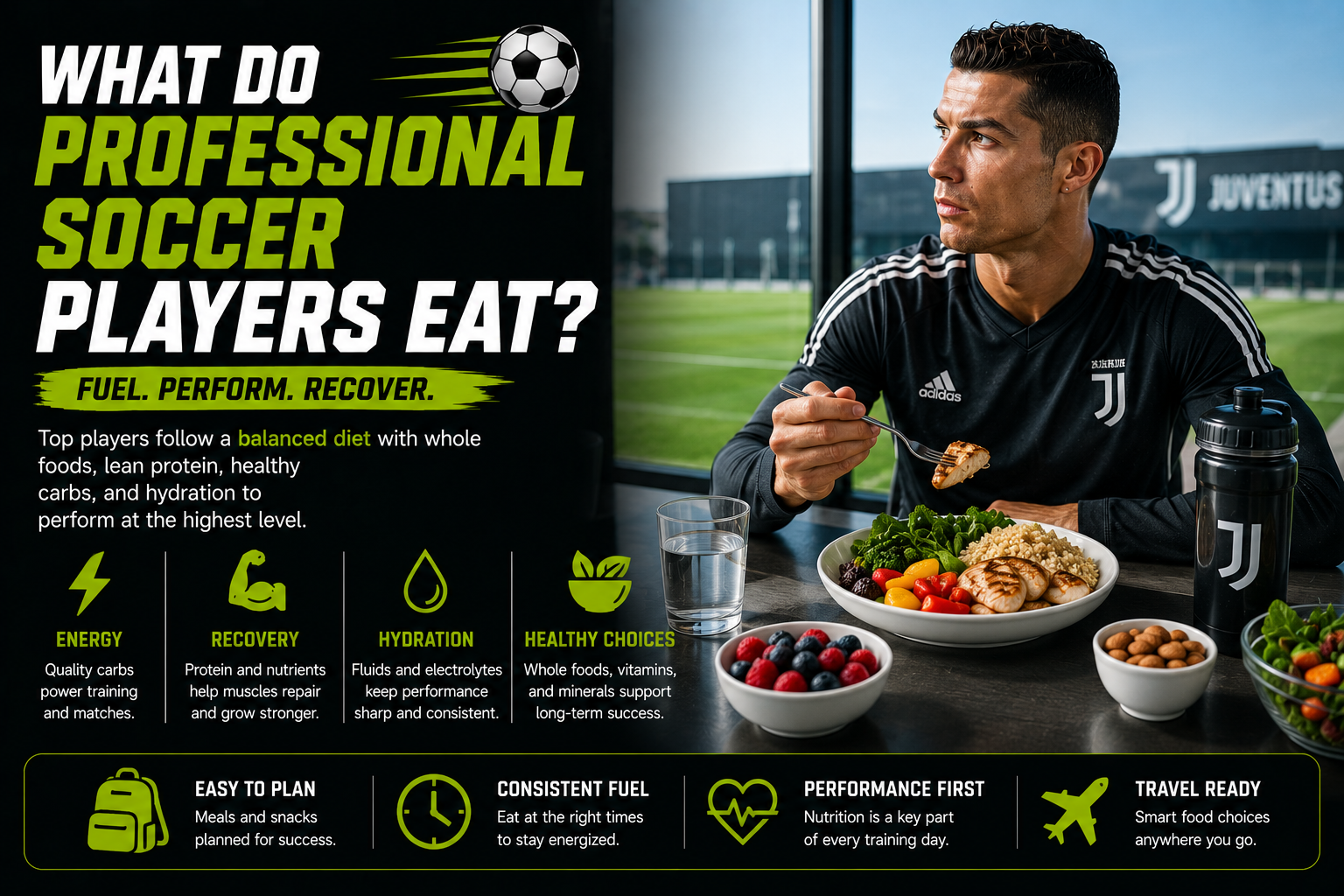
What Do Professional Soccer Players Eat? (Nutrition Secrets Revealed)
Pro Soccer Nutrition

What Do Professional Soccer Players Eat?

Professional soccer players usually eat balanced, performance-focused meals built around carbohydrates for energy, protein for recovery, fluids for hydration, and nutrient-dense foods that help them train, play, and recover consistently. Their exact meals vary by club, culture, body size, training load, and match schedule, but the foundation is simple: fuel before, hydrate during, and recover after.

What do professional soccer players eat nutrition secrets revealed
Quick Answer:
Professional soccer players commonly eat meals like oatmeal, eggs, yogurt, fruit, rice bowls, pasta, chicken, fish, lean meats, potatoes, vegetables, smoothies, sandwiches, recovery drinks, and plenty of water. Before games, they focus on carbohydrates and hydration. After games, they use protein, carbs, and fluids to recover.

Professional Soccer Player Nutrition at a Glance

Carbs for FuelRice, pasta, potatoes, oats, bread, fruit, and cereal support soccer energy.
Protein for RecoveryEggs, yogurt, chicken, fish, turkey, beans, tofu, and lean meats support repair.
HydrationWater and electrolytes help players handle sweat, heat, and match intensity.
ConsistencyPros repeat simple habits instead of relying on random game-day meals.

What Pro Soccer Players Eat by Timing

Timing Main Goal Common Foods Helpful Guide
Breakfast Start the day fueled Oats, eggs, yogurt, fruit, toast, smoothies Nutrition Guide
Pre-Game Meal Fuel performance Rice, pasta, potatoes, chicken, sandwich, fruit, water Pre-Game Nutrition
Pre-Game Snack Top off energy Banana, applesauce, toast, crackers, cereal bar Soccer Snacks
After Training Recover and refuel Smoothie, yogurt, milk, sandwich, rice bowl, protein plus carbs Recovery Nutrition
After Game Repair and rehydrate Chicken and rice, pasta, eggs, smoothie, milk, electrolytes Post-Game Nutrition

Do Professional Soccer Players Follow Strict Diets?

Professional soccer players usually follow structured nutrition plans, but that does not always mean extreme dieting. Most teams want players to eat enough food to train hard, recover well, stay hydrated, and maintain performance across a long season.

The biggest difference between pro players and casual players is consistency. Pros are more likely to plan meals around training, control timing before matches, recover right after games, and avoid random food choices during important performance windows.

For a complete soccer nutrition foundation, read the Soccer Nutrition Hub, Soccer Game Day Meal Plan, and Hydration for Soccer Players.

Pro Soccer Nutrition Priorities

Fuel Training

Professional players eat enough carbohydrates to support daily training and repeated high-intensity work.

Recover Fast

Protein, carbs, fluids, and sleep help players prepare for the next session.

Hydrate Early

Pros do not wait until warmups to start drinking fluids.

Stay Familiar

Game day meals are usually tested and repeated, not improvised.

What Do Professional Soccer Players Eat for Breakfast?

Pro soccer breakfasts usually depend on training time and match schedule. The goal is to provide energy without making the player feel heavy. Breakfast often includes carbohydrates, protein, fruit, and fluids.

  • Oatmeal with banana, berries, or honey.
  • Eggs with toast and fruit.
  • Greek yogurt with granola and berries.
  • Cereal with milk and fruit.
  • Smoothie with fruit, yogurt, milk, and oats.
  • Toast, bagel, or bread with a light spread.
  • Water with breakfast and throughout the morning.

For younger players, see Nutrition for Youth Soccer Players.

Sample Pro-Style Soccer Meal Plan

Meal Example Foods Purpose
Breakfast Oatmeal, eggs, fruit, yogurt, water Start the day fueled and hydrated
Pre-Training Snack Banana, toast, cereal bar, applesauce Light energy before training
Lunch Chicken rice bowl, pasta, potatoes, vegetables, water Refuel after training or prepare for later session
Post-Training Recovery Smoothie, yogurt, milk, sandwich, fruit Carbs plus protein for recovery
Dinner Fish, chicken, lean meat, beans, rice, pasta, potatoes, vegetables Recovery and preparation for the next day

What Do Pro Soccer Players Eat Before a Game?

Before a game, professional soccer players usually focus on carbohydrates, moderate protein, and hydration. The meal is normally familiar and timed several hours before kickoff.

  • Rice with chicken, fish, tofu, or lean protein.
  • Pasta with simple sauce and protein.
  • Potatoes or sweet potatoes with lean protein.
  • Turkey sandwich with fruit.
  • Oatmeal, eggs, toast, and yogurt for morning games.
  • Banana, applesauce, crackers, or toast closer to kickoff.
  • Water and electrolytes when heat or sweating is high.

Full guide: What Should Soccer Players Eat Before a Game?

How to Eat Like a Pro Soccer Player

1. Plan carbs

Use rice, pasta, oats, potatoes, bread, cereal, fruit, or tortillas around training.

2. Add protein

Use eggs, yogurt, milk, chicken, fish, turkey, beans, tofu, or lean meats.

3. Hydrate daily

Drink water throughout the day and use electrolytes when heat or sweat demands it.

4. Recover after

Use protein plus carbs after soccer instead of skipping food after hard sessions.

What Do Pro Soccer Players Eat After Games?

After games, professional soccer players usually focus on recovery. That means fluids, carbohydrates, and protein. The exact meal depends on travel, time of day, appetite, and team schedule.

  • Recovery drink or smoothie after the match.
  • Chocolate milk, milk, or yogurt if tolerated.
  • Chicken and rice or pasta with protein.
  • Eggs, toast, and fruit after morning matches.
  • Turkey or chicken sandwich after travel games.
  • Water and electrolytes after heavy sweating.
  • A full balanced meal after the initial recovery snack.

Helpful guides: What Should Soccer Players Eat After a Game? and Best Recovery Drinks for Soccer Players.

Pro Soccer Foods by Category

Category Common Foods Why It Matters
Carbohydrates Rice, pasta, potatoes, oats, bread, cereal, fruit Main fuel source for soccer energy
Protein Eggs, yogurt, milk, chicken, fish, turkey, beans, tofu Supports muscle repair and recovery
Fruits & Vegetables Berries, bananas, oranges, greens, peppers, carrots Supports overall health and daily nutrition
Fluids Water, electrolytes, milk, smoothies, recovery drinks Supports hydration and post-game recovery
Convenience Fuel Bars, shakes, sandwiches, applesauce, trail snacks Useful for travel, tournaments, and delayed meals

Do Professional Soccer Players Eat Pasta?

Yes, many soccer players use pasta as a carbohydrate source, especially around matches or heavy training periods. Pasta is not magic, but it is practical because it is easy to prepare, familiar, and carb-focused.

Players may also use rice, potatoes, oats, bread, fruit, tortillas, and cereal. The point is not that every player must eat pasta. The point is that soccer players need enough carbohydrates to fuel repeated high-intensity movement.

Pro Habits Regular Players Can Copy

Eat Before Training

Do not arrive under-fueled. Use a meal or snack that fits the timing.

Pack Recovery

Bring yogurt, milk, smoothie, sandwich, fruit, or a recovery drink after soccer.

Use Water Daily

Hydration is a daily habit, not only something players do at halftime.

Avoid Experiments

New foods, shakes, and supplements should be tested during training, not match day.

What Do Pro Soccer Players Snack On?

Professional soccer snacks usually depend on training timing, travel, and recovery needs. Snacks are used to support energy before sessions and recovery after sessions.

  • Bananas, apples, oranges, berries, or grapes.
  • Greek yogurt with fruit or granola.
  • Toast, bagels, crackers, pretzels, or rice cakes.
  • Smoothies with fruit and yogurt.
  • Sandwiches or wraps for travel.
  • Protein bars or shakes when meals are delayed.
  • Water and electrolytes when needed.

Full snack guide: Best Snacks for Soccer Players.

Pro-Style Nutrition by Soccer Situation

Situation What Pros Usually Prioritize Simple Player Version
Morning training Breakfast with carbs, protein, and fluids Oatmeal, banana, eggs, yogurt, water
Afternoon game Main meal 3–4 hours before kickoff Chicken and rice, pasta, sandwich, fruit
Late match Balanced meals earlier and recovery after Lunch, snack, light pre-game carb, smoothie after
Travel day Prepared snacks and hydration plan Fruit, crackers, sandwich, yogurt cooler, water
Tournament day Light refuel between matches Applesauce, banana, pretzels, half sandwich, electrolytes

Do Pro Soccer Players Use Protein Shakes?

Some professional players use protein shakes, but shakes are usually a convenience tool, not the whole nutrition plan. Food-first meals still matter.

Protein shakes may help after training, after games, during travel, or when a full meal is delayed. They work best when paired with carbohydrates and fluids.

  • Use shakes after soccer when meals are delayed.
  • Pair protein with carbs like banana, oats, fruit, toast, or a meal.
  • Do not use shakes as a replacement for all real food.
  • Test shakes before relying on them on match day.
  • For youth players, avoid high-caffeine or stimulant-style products.

Helpful guides: Protein Shake Before or After Soccer? and How Much Protein Do Soccer Players Need?

Pro-Style Game Day Checklist

Pre-game meal

Eat familiar carbs with moderate protein 2–4 hours before kickoff.

Snack backup

Pack banana, applesauce, crackers, pretzels, or a tested bar.

Hydration

Bring water and electrolytes for hot weather or heavy sweat.

Recovery

Use protein plus carbs after the game and eat a full meal when possible.

What Youth Players Can Learn from Pro Soccer Nutrition

Youth players do not need to copy professional players perfectly. Pros have chefs, nutritionists, recovery staff, and controlled schedules. Young players need a simpler version that fits school, family meals, practices, games, and growth.

  • Eat a real meal before soccer when time allows.
  • Bring snacks instead of relying on concessions.
  • Drink water earlier in the day.
  • Recover after games with protein, carbs, and fluids.
  • Avoid energy drinks and extreme supplement habits.
  • Keep meals familiar before important games.
  • Sleep and total food intake matter as much as one perfect meal.

Full youth guide: Nutrition for Youth Soccer Players.

Common Nutrition Mistakes Soccer Players Make

  • Skipping breakfast before training or games.
  • Eating too little carbohydrate for the amount of soccer played.
  • Only focusing on protein and forgetting fuel.
  • Waiting until warmups to start hydrating.
  • Using new supplements before important matches.
  • Skipping recovery food after hard games.
  • Relying only on fast food during travel weekends.
  • Copying pro routines without adjusting for age, schedule, and needs.

Professional habits work best when they are simplified and made realistic. The goal is not perfection. The goal is consistency.

Final Verdict: What Do Professional Soccer Players Eat?

Professional soccer players eat balanced meals built around carbohydrates, protein, fluids, fruits, vegetables, and recovery foods. Common options include oats, eggs, yogurt, fruit, rice, pasta, potatoes, chicken, fish, lean meats, beans, tofu, smoothies, sandwiches, water, and electrolytes.

The real secret is not one special food. It is planning. Pros fuel before training, hydrate early, snack smart, recover after games, and repeat habits consistently. Regular players can copy that structure with simple food-first meals and practical game-day planning.

Shop Soccer Nutrition Gear

Related Soccer Nutrition Guides

What Do Professional Soccer Players Eat FAQ

What do professional soccer players eat before a game?

Professional soccer players usually eat familiar carbohydrate-focused meals with moderate protein and fluids before a game, such as rice, pasta, potatoes, chicken, sandwiches, oats, fruit, and water.

What do professional soccer players eat after a game?

After a game, professional soccer players usually focus on recovery with protein, carbohydrates, and fluids, such as smoothies, yogurt, milk, rice bowls, pasta, chicken, eggs, or recovery drinks.

Do pro soccer players eat pasta?

Yes. Many soccer players eat pasta because it is a practical carbohydrate source, especially before matches or during heavy training periods.

Do professional soccer players drink protein shakes?

Some professional soccer players use protein shakes after training or games when meals are delayed, but shakes usually support a food-first recovery plan rather than replace meals.

What do pro soccer players eat for breakfast?

Common breakfasts include oatmeal, eggs, toast, Greek yogurt, fruit, cereal, milk, smoothies, and water depending on training and game timing.

Do professional soccer players eat carbs?

Yes. Carbohydrates are important for soccer because they help fuel running, sprinting, pressing, and repeated high-intensity actions.

What snacks do professional soccer players eat?

Common soccer snacks include bananas, fruit, yogurt, smoothies, toast, crackers, pretzels, sandwiches, bars, and recovery drinks depending on timing.

Can youth players eat like professional soccer players?

Youth players can copy the simple habits, such as eating before soccer, hydrating early, packing snacks, and recovering after games, but they should keep nutrition food-first and age-appropriate.

We may earn a commission from qualifying purchases at no extra cost to you. This article is for general informational purposes only and is not medical advice.

Scroll to Top